
Picture this: a dollop of creamy, tangy mayonnaise, bursting with the bright flavors of lemon and fresh dill. This Lemon Dill Mayonnaise is not just a condiment; it’s a flavor enhancer that can elevate any dish. With its zesty kick and smooth texture, it’s perfect for sandwiches, seafood, and even as a dip. Plus, it’s incredibly easy to make at home, using just a handful of ingredients that you likely already have on hand. Ready to whip up the freshest mayo around? Let’s dive into the details!
Why You’ll Love This Recipe
This mayonnaise is a delightful twist on a classic. It’s a versatile addition to your kitchen repertoire.
- Bright, zesty flavor from fresh lemon.
- Herbaceous notes thanks to fragrant dill.
- Quick and easy to prepare at home.
- Perfect for sandwiches, salads, or dipping.
- Customizable to suit your taste.
My Experience Making This Recipe
The first time I made this Lemon Dill Mayonnaise, I was blown away by how fresh and vibrant it tasted. I remember slathering it on a turkey sandwich and thinking, “Why did I ever buy mayo?”
Since then, this recipe has become a staple in my kitchen. Family and friends rave about it, and I always get requests for the recipe!
Recipe Overview
- Recipe Name: Lemon Dill Mayonnaise
- Servings: 8
- Prep Time: 10 minutes
- Cook Time: 0 minutes
- Total Time: 10 minutes
- Course: Condiment
- Cuisine: American
- Calories per Serving: 100
Equipment You Will Need
- Mixing bowl
- Whisk or electric mixer
- Measuring spoons
- Storage container
Ingredients for Lemon Dill Mayonnaise
- 1 cup mayonnaise
- 1 tablespoon fresh lemon juice
- 1 teaspoon lemon zest
- 1 tablespoon fresh dill, chopped
- 1/2 teaspoon garlic powder
- Salt and pepper to taste
Ingredient Notes and Substitutions
- Mayonnaise: This is the base of the recipe, providing creaminess. You can use Greek yogurt for a lighter option.
- Lemon juice: Adds acidity and brightness. Lime juice can be used as a substitute for a different flavor.
- Dill: Fresh dill enhances the flavor profile. Dried dill can work in a pinch, but use less.
- Garlic powder: Provides depth. Fresh minced garlic can also be used, but adjust the quantity to taste.
How to Make Lemon Dill Mayonnaise
Step 1: Gather Your Ingredients
Start by measuring out all your ingredients. Having everything ready makes the mixing process smooth and easy.
Step 2: Combine the Mayonnaise and Lemon Juice
In a mixing bowl, add the mayonnaise and fresh lemon juice. This creates a tangy base that brightens the flavor.
Step 3: Add Lemon Zest
Stir in the lemon zest. This will intensify the lemon flavor and add a lovely aroma to your mayo.
Step 4: Mix in the Dill
Add the chopped dill to the mixture. This herb adds a refreshing note that complements the lemon beautifully.
Step 5: Incorporate Garlic Powder
Add garlic powder to the mix. It brings an extra layer of flavor that enhances the overall taste.
Step 6: Season to Taste
Season with salt and pepper. Start with a small amount, then adjust according to your preference.
Step 7: Whisk Until Smooth
Using a whisk or electric mixer, blend the ingredients until smooth and creamy. This ensures everything is well incorporated.
Step 8: Chill Before Serving
Transfer the mayo to a storage container and refrigerate for at least 30 minutes. Chilling allows the flavors to meld beautifully.
Pro Tip: For an even fresher taste, make this mayo a day ahead of time!
Tips for the Best Lemon Dill Mayonnaise
- Use fresh ingredients for the best flavor; fresh lemon and dill shine in this recipe.
- Adjust the lemon juice based on your tartness preference; a little more can really brighten the mayo.
- Experiment with other herbs like tarragon or parsley for a unique twist.
- Keep it refrigerated to maintain freshness and quality; homemade mayo has no preservatives.
- Serve it cold for the best taste and texture.
Common Mistakes to Avoid
- Not using fresh lemon juice; bottled juice lacks the vibrant flavor that fresh provides.
- Overmixing; this can make the mayo too thin. Aim for a smooth, creamy consistency.
- Skipping the chilling step; flavors develop and improve after resting in the fridge.
- Using dried dill in excess; it’s potent, so use less than fresh dill to avoid overpowering the mayo.
Serving Suggestions
This Lemon Dill Mayonnaise pairs wonderfully with a variety of dishes. Try it with:
- Grilled fish or seafood.
- Fresh vegetable sticks for dipping.
- Turkey or chicken sandwiches.
- Potato salad for a creamy twist.
- As a topping for burgers or wraps.
Variations to Try
- Add sriracha for a spicy kick that contrasts with the lemon.
- Mix in some capers for a briny, tangy flavor that works well with seafood.
- Substitute Greek yogurt for half the mayo for a lighter version.
- Incorporate some Dijon mustard for a subtle kick and depth.
Dietary Adaptations
- Gluten-free: This recipe is naturally gluten-free.
- Dairy-free: Made with mayonnaise, it is dairy-free; just choose a vegan mayo.
- Vegan/Vegetarian: Use vegan mayonnaise for a plant-based option.
- Low-carb/Keto: This mayo is low in carbs, making it suitable for keto dieters.
Storage and Reheating
Refrigerator
Store the mayo in an airtight container in the fridge. It will last up to a week.
- Label the container with the date to track freshness.
- Always use clean utensils to avoid contamination.
Freezer
Freezing mayonnaise is not recommended as it can change the texture. Homemade mayo is best fresh.
- Consider making smaller batches to avoid waste.
Reheating
No reheating is needed for mayonnaise. Use it cold for the best flavor and texture.
Nutrition Information
| Nutrient | Amount |
|---|---|
| Calories | 100 |
| Total Fat | 10g |
| Saturated Fat | 1g |
| Carbohydrates | 1g |
| Fiber | 0g |
| Sugar | 0g |
| Protein | 0g |
| Sodium | 100mg |
| Cholesterol | 5mg |
This recipe is meant to provide a tasty addition to your meals, but nutritional values can vary based on the specific brands used.
Frequently Asked Questions
Can I substitute mayonnaise with yogurt?
Yes, using Greek yogurt will give you a tangy and creamy alternative, but it will alter the flavor.
How long can I store homemade mayonnaise?
Homemade mayonnaise can be stored in the refrigerator for up to a week.
Can I make this ahead of time?
Absolutely! Making it a day in advance allows the flavors to meld beautifully.
What can I do if the mayo is too thick?
If it’s too thick, whisk in a little water or extra lemon juice until you reach your desired consistency.
Can I add other flavors to this mayonnaise?
Yes! Feel free to experiment with different herbs and spices to create your own unique version.
Final Thoughts
This Lemon Dill Mayonnaise is a delightful way to elevate your meals with fresh flavors. Once you try it, you’ll wonder how you lived without it!
Explore more delicious recipes like Garlic Mayo or try a spicy twist with Chipotle Aioli. Happy cooking!
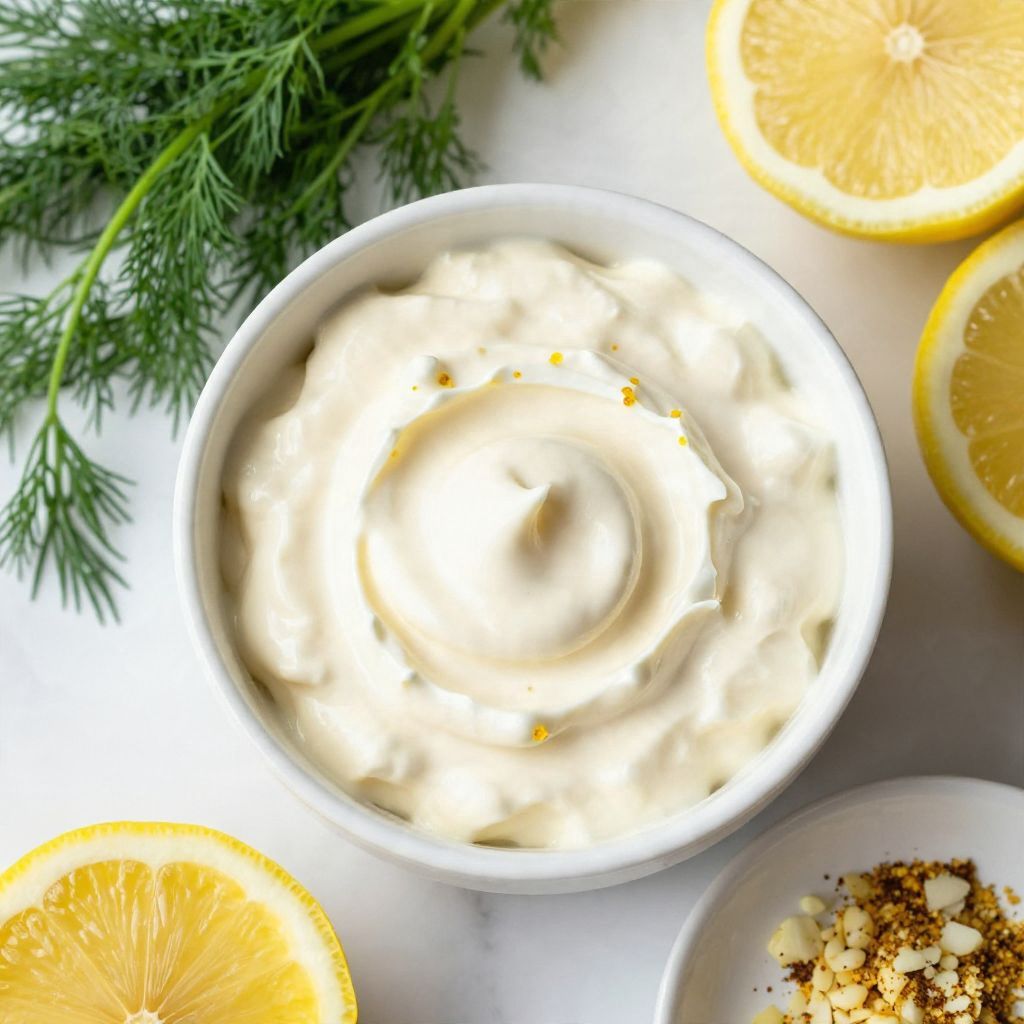
Lemon Dill Mayonnaise
Ingredients
Equipment
Method
- Gather all your ingredients.
- In a mixing bowl, add the mayonnaise and fresh lemon juice.
- Stir in the lemon zest.
- Add the chopped dill to the mixture.
- Add garlic powder to the mix.
- Season with salt and pepper.
- Whisk or blend the ingredients until smooth and creamy.
- Transfer the mayo to a storage container and refrigerate for at least 30 minutes before serving.