
There’s something incredibly comforting about a warm bowl of Korean Rice Cake Soup, especially on chilly days. This dish, known as tteokguk, is a traditional New Year’s meal in Korea, symbolizing the start of a new year and good fortune.
With its savory broth, chewy rice cakes, and tender toppings, this soup is not only delicious but also a beautiful blend of flavors and textures. Plus, it comes together quickly, making it perfect for those busy weeknights or when you want to impress guests with minimal effort.
Why You’ll Love This Recipe
This recipe is a delightful blend of taste and tradition. It’s sure to warm your heart and fill your stomach.
- Comforting and hearty with every spoonful.
- Quick to prepare, perfect for busy days.
- Versatile; you can customize toppings to your liking.
- A beautiful dish that looks as good as it tastes.
My Experience Making This Recipe
I still remember the first time I made Korean Rice Cake Soup. The aroma of the simmering broth filled my kitchen, and my family couldn’t wait to dig in.
It was met with smiles all around, and the delightful chewiness of the rice cakes quickly became a family favorite. Each bowl was a celebration of flavors that brought us closer together.
Recipe Overview
- Recipe Name: Korean Rice Cake Soup
- Servings: 4
- Prep Time: 10 minutes
- Cook Time: 20 minutes
- Total Time: 30 minutes
- Course: Soup
- Cuisine: Korean
- Calories per Serving: 300
Equipment You Will Need
- Large pot
- Cutting board
- Sharp knife
- Measuring cups and spoons
- Wooden spoon or ladle
Ingredients for Korean Rice Cake Soup
- 6 cups beef broth or water
- 1 cup Korean rice cakes (tteok)
- 1/2 pound beef brisket, thinly sliced
- 2 eggs
- 1 green onion, chopped
- 2 cloves garlic, minced
- 1 tablespoon soy sauce
- Salt and pepper to taste
- Sesame oil for drizzling
Ingredient Notes and Substitutions
- Korean rice cakes: These provide the unique chewy texture. Substitute with any other chewy rice noodles if unavailable.
- Beef brisket: It adds richness to the soup. You can use chicken or tofu for a lighter option.
- Beef broth: This enhances the flavor. Vegetable broth works well for a vegetarian version.
How to Make Korean Rice Cake Soup
Step 1: Prepare the Broth
In a large pot, bring the beef broth or water to a boil. This liquid will be the heart of your soup, so make sure it’s flavorful.
Step 2: Add the Beef
Add the sliced beef brisket to the boiling broth. Cooking the beef first allows it to tenderize and infuse the broth with flavor.
Step 3: Incorporate the Garlic
Stir in the minced garlic and soy sauce. This combination will deepen the flavor of your broth.
Step 4: Add the Rice Cakes
Once the beef is nearly cooked, add the Korean rice cakes. They need only a few minutes to cook and become tender.
Step 5: Cook the Eggs
In a separate bowl, beat the eggs. Slowly drizzle the eggs into the soup while stirring to create egg ribbons.
Step 6: Season to Taste
Taste your soup and add salt and pepper as needed. Seasoning at this stage ensures every bite is flavorful.
Step 7: Garnish and Serve
Remove the pot from heat and add the chopped green onion. This adds a fresh flavor and a pop of color.
Step 8: Drizzle with Sesame Oil
Before serving, drizzle a little sesame oil over the top. This adds a nutty aroma that enhances the overall experience.
Pro Tip: Let the soup sit for a few minutes before serving to allow the flavors to meld beautifully.
Tips for the Best Korean Rice Cake Soup
- Use fresh rice cakes for the best texture; they should be soft, not hard.
- Don’t skip the sesame oil; it brings a wonderful depth of flavor.
- Feel free to add vegetables like spinach for more nutrition and color.
- Keep an eye on cooking time for the rice cakes; you want them chewy, not mushy.
- Make the broth ahead of time to save on prep time during busy days.
Common Mistakes to Avoid
- Overcooking the rice cakes will make them mushy. Aim for chewy perfection.
- Skipping the seasoning can lead to bland soup. Taste as you go.
- Not using enough broth can result in a soupy dish. Always start with plenty.
- Using too much soy sauce can overpower the flavors. Balance is key.
Serving Suggestions
This soup can be enjoyed on its own or paired with various sides. Here are some tasty options:
- Kimchi for a spicy kick.
- Steamed dumplings for a delicious addition.
- Pickled vegetables to balance the flavors.
- Rice on the side for those who want extra carbs.
Variations to Try
- Add mushrooms for an earthy flavor and extra texture.
- Incorporate tofu for a vegetarian protein boost.
- Use chicken instead of beef for a lighter version.
- Add a splash of chili oil for some heat.
Dietary Adaptations
- Gluten-free: Use gluten-free soy sauce to avoid gluten.
- Dairy-free: This recipe is naturally dairy-free.
- Vegan/Vegetarian: Swap beef for mushrooms or tofu and use vegetable broth.
- Low-carb/Keto: Replace rice cakes with shirataki noodles for a keto-friendly option.
Storage and Reheating
Refrigerator
Store leftovers in an airtight container in the fridge. They will keep well for 2-3 days.
- Reheat on the stovetop for best results.
- Add a splash of water or broth to loosen the soup.
Freezer
You can freeze the soup, but it’s best to leave out the rice cakes. They can become too soft after freezing.
- Freeze in portion-sized containers for easy thawing.
- Use within 1-2 months for the best quality.
Reheating
Thaw overnight in the fridge before reheating. Heat gently on the stovetop until warmed through.
- Add fresh rice cakes during reheating if desired.
- Stir occasionally to heat evenly.
Nutrition Information
| Nutrient | Amount |
|---|---|
| Calories | 300 |
| Total Fat | 10g |
| Saturated Fat | 3g |
| Carbohydrates | 45g |
| Fiber | 2g |
| Sugar | 2g |
| Protein | 12g |
| Sodium | 800mg |
| Cholesterol | 80mg |
This nutritional information is approximate and may vary based on specific ingredients used.
Frequently Asked Questions
Can I make this soup ahead of time?
Yes, you can prepare the broth and store it in advance, but add the rice cakes just before serving for the best texture.
What can I substitute for rice cakes?
If you cannot find rice cakes, you can use any chewy pasta or noodles as a substitute.
How should I store leftovers?
Store leftovers in an airtight container in the fridge for 2-3 days, or freeze for longer storage.
Why are my rice cakes too soft?
Overcooking the rice cakes can cause them to become mushy. Keep an eye on them, as they only need a few minutes.
Can I add more vegetables?
Absolutely! Feel free to add spinach, carrots, or mushrooms for added flavor and nutrition.
Final Thoughts
Making Korean Rice Cake Soup is a delightful experience that brings warmth and joy. I encourage you to try this recipe and savor the love and tradition that comes with each bowl.
Don’t forget to explore more delicious recipes, like Galbitang Recipe and Puerto Rican Rice Recipe, to keep your cooking adventures going!
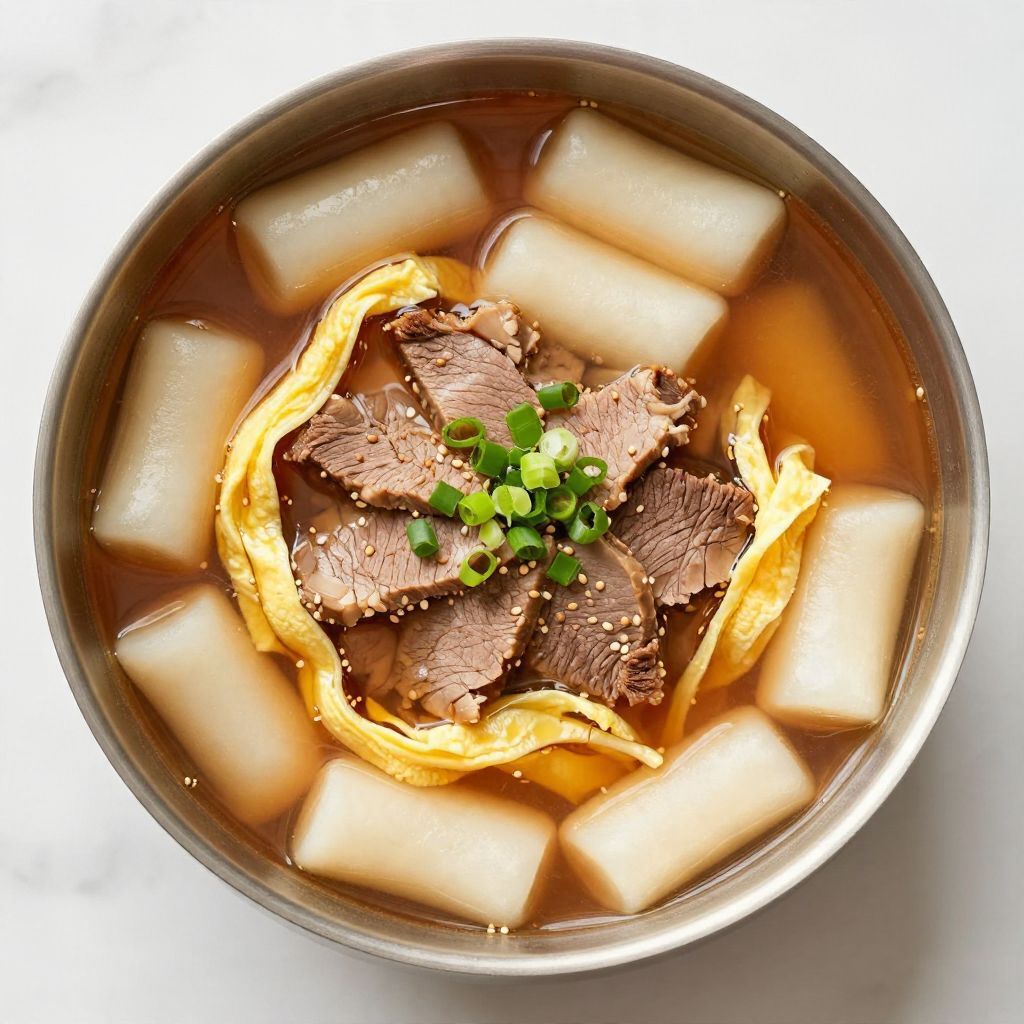
Korean Rice Cake Soup
Ingredients
Equipment
Method
- In a large pot, bring the beef broth or water to a boil.
- Add the sliced beef brisket to the boiling broth.
- Stir in the minced garlic and soy sauce.
- Once the beef is nearly cooked, add the Korean rice cakes.
- In a separate bowl, beat the eggs. Slowly drizzle the eggs into the soup while stirring.
- Taste the soup and add salt and pepper as needed.
- Remove the pot from heat and add the chopped green onion.
- Drizzle a little sesame oil over the top before serving.