
There’s something magical about biting into a warm, chewy bagel studded with juicy blueberries, the tartness of the fruit cutting through the subtle sweetness of the dough. Homemade blueberry bagels are a weekend project that feels far more impressive than the effort required, transforming your kitchen into a casual New York-style bagel shop for a few hours.
These bagels deliver that coveted dense crumb and chewy crust that store-bought versions rarely match. The trick lies in proper kneading, a cold overnight fermentation, and a quick boil before baking, which creates that signature bagel texture that keeps people coming back for more.
Why You’ll Love This Recipe
This bagel recipe rewards your effort with authentic bakery-quality results that taste nothing like commercial versions. You’ll control every ingredient and can adjust the sweetness and blueberry distribution to your exact preference.
- Chewy, dense interior with a satisfying bite
- Fresh blueberries burst throughout every slice
- Better than store-bought bagels at a fraction of the cost
- Freezer-friendly for weeks of fresh bagel mornings
- Impressive enough to serve at brunch but simple enough for a weekday project
My Experience Making This Recipe
I’ll be honest: my first batch of bagels looked more like lumpy hockey pucks than the sleek rings I envisioned. But I pushed through, adjusted my technique on round two, and by the third batch, I was pulling golden, perfectly boiled bagels from my oven with genuine pride.
The real magic happened the morning after, when I sliced one open still warm from the toaster. The blueberries had softened just slightly, their juice staining the crumb purple in places, and the texture was exactly what I’d been chasing: chewy outside, pillowy inside.
My kids devoured them with cream cheese within minutes, and my neighbor who tasted one now asks if I’m baking bagels that weekend. That’s when you know you’ve nailed it.
Recipe Overview
- Recipe Name: Homemade Blueberry Bagels
- Servings: 8 bagels
- Prep Time: 30 minutes
- Fermentation Time: 12 to 16 hours (overnight)
- Cook Time: 20 minutes
- Total Time: 13 hours 20 minutes (mostly hands-off)
- Course: Breakfast or Brunch
- Cuisine: American with Jewish bakery roots
- Calories per Serving: 245 calories
Equipment You Will Need
- Large mixing bowl
- Dough hook attachment for stand mixer (or your hands for kneading)
- Kitchen scale for accuracy
- Plastic wrap or damp towel for covering dough
- Bench scraper or knife for dividing dough
- Parchment paper or silicone mat
- Large pot for boiling water
- Slotted spoon or spider strainer for removing bagels from water
- Baking sheet
- Instant-read thermometer for dough temperature
Ingredients for Blueberry Bagels
- Bread flour: 500 grams (about 3.75 cups)
- Water: 325 milliliters (about 1.3 cups), room temperature
- Salt: 10 grams (about 2 teaspoons)
- Instant yeast: 2 grams (about 1/2 teaspoon)
- Sugar or honey: 15 grams (about 1 tablespoon)
- Fresh blueberries: 150 grams (about 1 cup), patted dry
- Baking soda: 15 grams (about 1 tablespoon) for the boiling water
- Water for boiling: 2 liters (about 8 cups)
Ingredient Notes and Substitutions
- Bread flour: Its higher protein content creates the chewy texture that defines a true bagel. All-purpose flour will work but yields a softer, less chewy result. Substitute all-purpose flour if that’s what you have on hand, understanding the texture will be less authentic.
- Fresh blueberries: Fresh berries burst with juice and flavor, creating pockets of tartness throughout. Frozen blueberries can replace fresh ones; thaw and pat them very dry first to prevent excess moisture.
- Instant yeast: This acts as the leavening agent for the dough’s rise. Active dry yeast works as a direct substitute with the same amount, though it may take slightly longer to rise.
- Sugar or honey: A small amount feeds the yeast and adds subtle sweetness to balance the blueberries. Honey adds a richer flavor; use either interchangeably.
- Baking soda in boiling water: This changes the pH of the water, creating a darker crust and chewier interior. You can substitute 2 tablespoons of malt syrup or barley malt powder, which bagel shops often use.
How to Make Blueberry Bagels
Step 1: Mix the Dough
Combine 500 grams of bread flour, 325 milliliters of room temperature water, 10 grams of salt, 2 grams of instant yeast, and 15 grams of sugar in a large mixing bowl. Mix on medium speed with a dough hook for 8 to 10 minutes until the dough becomes smooth, elastic, and slightly tacky.
You’re developing gluten strands here, which is what gives the bagel its chewy texture. The dough should pull away from the sides of the bowl but still stick slightly to the bottom.
Step 2: Add the Blueberries
Pat the blueberries dry with paper towels to remove excess moisture, which prevents them from breaking apart during mixing. Add them to the dough and mix on low speed for 2 to 3 minutes until evenly distributed throughout.
Avoid overmixing at this stage, which can crush the berries and turn the dough purple. You want visible pockets of whole blueberries in the finished bagel.
Step 3: Bulk Fermentation
Cover the bowl with plastic wrap and let it rest at room temperature (about 68 to 72 degrees Fahrenheit) for 4 to 6 hours until the dough rises about 50 percent. This first rise develops flavor and strength in the dough.
You don’t need to do any folding or handling during this time. Just let it sit undisturbed in a warm spot away from direct sunlight.
Step 4: Cold Overnight Fermentation
Transfer the dough to the refrigerator and let it rest for 12 to 16 hours overnight. This long, cold fermentation creates deeper flavor and makes the dough easier to shape while preventing overproofing.
The cold also allows the blueberries to remain intact rather than breaking down from prolonged warm fermentation. Remove the dough from the refrigerator about 30 minutes before shaping to let it come up in temperature slightly.
Step 5: Divide and Shape the Dough
Turn the dough out onto a lightly floured work surface and divide it into 8 equal pieces using a bench scraper or knife. Each piece should weigh about 110 grams if you’re using a scale.
Working with one piece at a time, roll it into a tight ball, then use your thumb to poke a hole in the center. Stretch the dough into a ring shape about 4 inches in diameter with a 1.5 inch hole in the center, keeping the thickness even throughout.
Step 6: Second Proof
Place the shaped bagels on parchment paper, leaving 2 inches between each one. Cover loosely with plastic wrap and let them rest at room temperature for 45 minutes to 1 hour.
They should rise noticeably but not double in size, which would cause them to become bread-like instead of bagel-like. Gently pressing a bagel with your finger should leave a slight indent that springs back slowly.
Step 7: Prepare Boiling Water
Fill a large pot with 2 liters of water and bring it to a rolling boil. Add 15 grams of baking soda to the boiling water, stirring to dissolve.
This alkaline water is crucial; it creates the chewy crust and slight browning that you can’t achieve any other way. Never skip this step if you want authentic bagels.
Step 8: Boil the Bagels
Working with 2 or 3 bagels at a time to avoid crowding, gently place them into the boiling baking soda water. They should sink briefly then float to the surface within 30 seconds.
Boil for 45 seconds on the first side, then flip and boil for another 45 seconds on the second side. The boiling sets the exterior and stops further rise, ensuring a dense, chewy interior. Remove with a slotted spoon and place back on parchment paper.
Step 9: Bake the Bagels
Preheat your oven to 425 degrees Fahrenheit. Transfer the boiled bagels to a baking sheet and bake for 18 to 22 minutes until golden brown on top.
The bagels are done when they’re deeply golden and sound hollow when tapped on the bottom. Let them cool on a wire rack for at least 15 minutes before slicing, which allows them to set inside.
Pro Tip: Don’t slice your bagels immediately after they come out of the oven. The interior continues to set as they cool, and slicing too early can make them gummy. Wait at least 15 minutes, but 30 minutes is even better for the best texture.
Tips for the Best Blueberry Bagels
- Use a kitchen scale to measure flour and water precisely. Volume measurements can vary based on how you scoop, leading to inconsistent results. Weighing ingredients removes guesswork and gives you reliable bagels every time.
- Don’t skip the overnight cold fermentation. This step develops the bagel’s flavor and makes shaping easier. It also prevents the dough from overproofing and becoming too airy.
- Keep your blueberries as dry as possible before mixing them in. Excess moisture makes them burst and turn the dough purple instead of keeping them as distinct pockets of fruit. Pat them with paper towels just before adding to the bowl.
- Boil your bagels at a full rolling boil and maintain that temperature throughout. Water that’s too cool produces a soft, bread-like crust instead of the chewy exterior that defines a bagel. A rolling boil is non-negotiable.
- Check your water temperature before adding yeast. If the water is too warm, it kills the yeast; too cold, and fermentation stalls. Aim for 65 to 75 degrees Fahrenheit for best results.
Common Mistakes to Avoid
- Overmixing the dough after adding blueberries crushes the fruit and turns your bagels an unappealing purple color. Mix on low speed for just 2 to 3 minutes until the berries are distributed, then stop.
- Skipping the cold fermentation or shortening it creates dough that’s harder to shape and less flavorful. This step is where your bagels develop their character, so don’t rush it.
- Bagels that are too puffy after the second proof become bread instead of bagels. They should rise noticeably but still hold their shape and have a slightly firm feel when gently pressed.
- Boiling bagels in plain water without baking soda produces a soft, bread-like crust. The alkaline environment is what creates the signature chewy exterior and slight browning.
- Slicing bagels while they’re still hot traps steam inside and makes them gummy. Let them cool for at least 15 to 30 minutes before cutting so the crumb sets properly.
Serving Suggestions
Blueberry bagels shine with simple toppings that let the fruit and texture take center stage. Warm from the toaster, they need just a smear of cream cheese or a thin layer of butter to complete breakfast.
- Cream cheese and honey for a classic sweet pairing
- Lightly buttered with a sprinkle of cinnamon sugar
- Toasted with smoked salmon and capers for a savory twist
- Ricotta cheese with fresh mint and a drizzle of blueberry jam
- Almond butter and sliced banana for a protein-packed breakfast
Variations to Try
- Blueberry and Lemon: Add 1 tablespoon of lemon zest to the dough for brightness that plays beautifully with the blueberry tartness. The citrus adds complexity without overpowering the fruit.
- Blueberry and Walnut: Mix 100 grams of chopped walnuts into the dough along with the blueberries for added texture and a nutty depth. This creates a heartier bagel that’s especially good with cream cheese.
- Blueberry and Poppy Seed: Sprinkle poppy seeds on the bagels just after boiling but before baking for a classic New York bagel shop look. The seeds add a pleasant crunch and nutty flavor.
- Triple Berry: Replace some of the blueberries with raspberries and blackberries for a mixed berry version. Use berries that are similar in size so they cook evenly, and keep the total berry weight at 150 grams.
- Blueberry and Vanilla: Add 1 teaspoon of vanilla extract to the dough for subtle sweetness and warmth. This variation works especially well with a cream cheese schmear.
Dietary Adaptations
- Gluten-free: Substitute bread flour with a high-protein gluten-free blend that includes xanthan gum. The result will be less chewy and slightly more tender, but still recognizable as a bagel. You may need to add an extra 25 milliliters of water since gluten-free flour absorbs more liquid.
- Dairy-free: This recipe contains no dairy in the dough itself, so it’s naturally dairy-free. Just avoid butter or cream cheese toppings; try coconut cream or vegan cream cheese instead.
- Vegan: The basic bagel dough is already vegan since it contains only flour, water, salt, yeast, and sugar. Keep blueberries as your only mix-in and serve with vegan spreads like dairy-free cream cheese or almond butter.
- Low-carb or keto: Bagels are inherently high in carbs due to their flour base, so they’re not ideal for strict low-carb diets. If you want to try, use keto-friendly flour blends, but expect significantly different results in texture and flavor.
Storage and Reheating
Refrigerator
Store cooled bagels in an airtight container or resealable bag for up to 5 days. They stay fresh and chewy when sealed away from air.
- Place parchment paper between bagels to prevent them from sticking together
- Avoid storing while warm, which traps steam and makes them gummy
Freezer
Bagels freeze beautifully for up to 2 months without losing quality. Slice them before freezing for easy toasting.
- Wrap each bagel individually in plastic wrap, then place in a freezer bag
- Label the bag with the date so you remember how long they’ve been frozen
- Sliced frozen bagels toast directly from the freezer without thawing
Reheating
The best way to reheat bagels is always in a toaster or toaster oven. This restores the chewy exterior while warming the interior.
- Thaw bagels at room temperature for 30 to 45 minutes before toasting if you prefer softer bagels
- Toast frozen bagels directly in the toaster until golden and warmed through, about 3 to 4 minutes
- Avoid microwaving, which makes bagels rubbery and steamy
Nutrition Information
| Nutrient | Amount |
|---|---|
| Calories | 245 |
| Total Fat | 1.2 grams |
| Saturated Fat | 0.1 grams |
| Carbohydrates | 50 grams |
| Fiber | 2.1 grams |
| Sugar | 5.3 grams |
| Protein | 8.5 grams |
| Sodium | 385 milligrams |
| Cholesterol | 0 milligrams |
These values are calculated based on the ingredients listed and assume no additional toppings. Actual values vary based on your specific ingredients and how the dough is divided.
Frequently Asked Questions
Can I use frozen blueberries instead of fresh?
Yes, frozen blueberries work perfectly. Thaw them completely and pat them very dry with paper towels to remove excess moisture, which prevents the dough from becoming too wet and soggy.
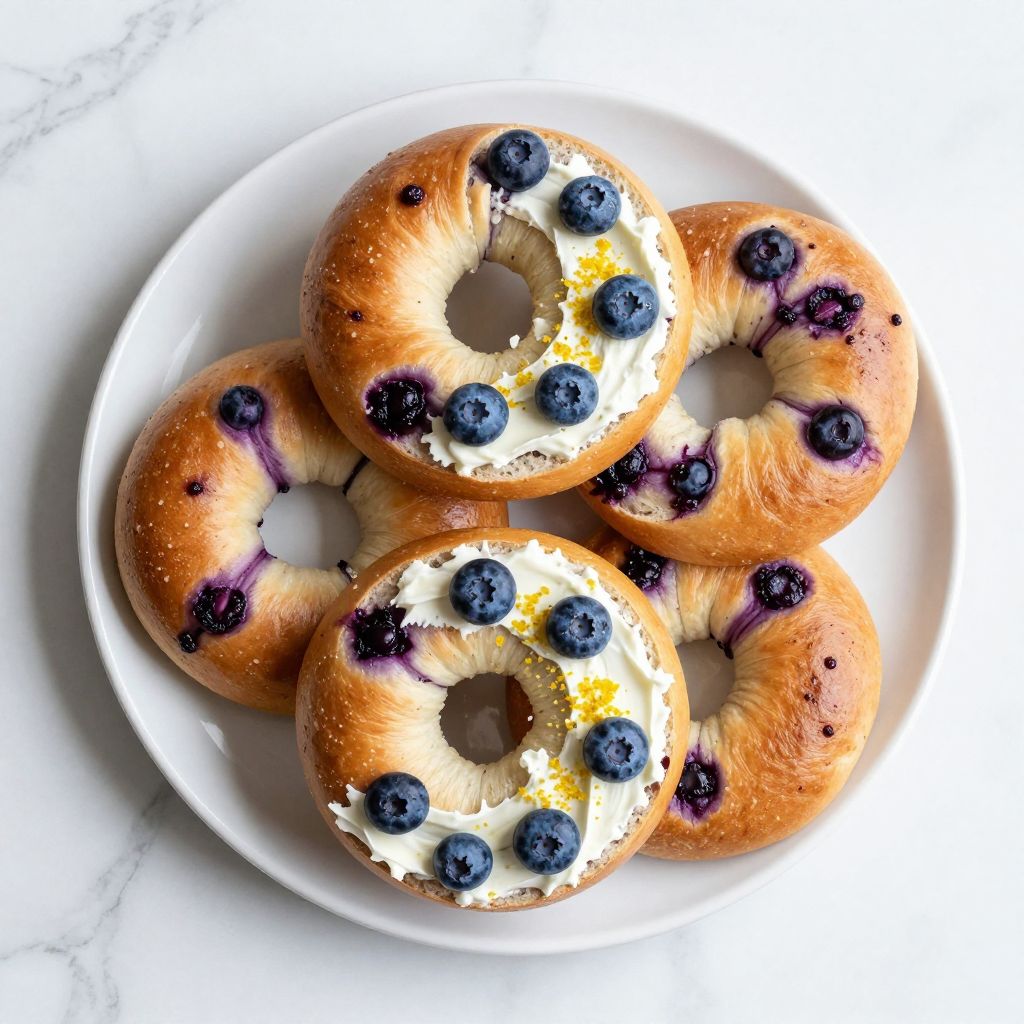
Homemade Blueberry Bagels
Ingredients
Equipment
Method
- Combine 500 grams of bread flour, 325 milliliters of room temperature water, 10 grams of salt, 2 grams of instant yeast, and 15 grams of sugar in a large mixing bowl. Mix on medium speed with a dough hook for 8 to 10 minutes until the dough becomes smooth, elastic, and slightly tacky.
- Pat the blueberries dry with paper towels to remove excess moisture. Add them to the dough and mix on low speed for 2 to 3 minutes until evenly distributed throughout.
- Cover the bowl with plastic wrap and let it rest at room temperature (about 68 to 72 degrees Fahrenheit) for 4 to 6 hours until the dough rises about 50 percent.
- Transfer the dough to the refrigerator and let it rest for 12 to 16 hours overnight. Remove the dough from the refrigerator about 30 minutes before shaping.
- Turn the dough out onto a lightly floured work surface and divide it into 8 equal pieces using a bench scraper or knife. Each piece should weigh about 110 grams.
- Working with one piece at a time, roll it into a tight ball, then use your thumb to poke a hole in the center. Stretch the dough into a ring shape about 4 inches in diameter with a 1.5 inch hole in the center, keeping the thickness even throughout.
- Place the shaped bagels on parchment paper, leaving 2 inches between each one. Cover loosely with plastic wrap and let them rest at room temperature for 45 minutes to 1 hour.
- Fill a large pot with 2 liters of water and bring it to a rolling boil. Add 15 grams of baking soda to the boiling water, stirring to dissolve.
- Working with 2 or 3 bagels at a time, gently place them into the boiling baking soda water. Boil for 45 seconds on the first side, then flip and boil for another 45 seconds on the second side. Remove with a slotted spoon and place back on parchment paper.
- Preheat your oven to 425 degrees Fahrenheit. Transfer the boiled bagels to a baking sheet and bake for 18 to 22 minutes until golden brown on top.
- Let them cool on a wire rack for at least 15 minutes before slicing.