
There’s something magical about the aroma of freshly baked bread wafting through your home. Making Ciabatta Bread is a delightful experience, and this easy recipe ensures you enjoy a crusty exterior with a soft, airy crumb inside. With just a few simple ingredients and a little patience, you’ll create a loaf that rivals those from your favorite bakery, perfect for sandwiches or simply enjoying with olive oil. Let’s get started on this delicious journey!
Why You’ll Love This Recipe
This recipe stands out for its simplicity and flavor.
- Only requires a few basic ingredients.
- Results in a crispy crust and soft, chewy interior.
- Perfect for sandwiches or as a side with dinner.
- Versatile enough to customize with herbs or olives.
My Experience Making This Recipe
The first time I made ciabatta, I was amazed at how easy it was. Watching the dough rise and transform into a beautiful loaf made me feel like a true baker.
As my family gathered around the table, the warm bread was an instant hit. Each bite was filled with that crunchy crust and airy texture that makes ciabatta so special.
Recipe Overview
- Recipe Name: Ciabatta Bread
- Servings: 1 large loaf
- Prep Time: 15 minutes (plus rising time)
- Cook Time: 30 minutes
- Total Time: 2 hours (including rising)
- Course: Bread
- Cuisine: Italian
- Calories per Serving: 200
Equipment You Will Need
- Mixing bowl
- Dough scraper
- Baking sheet
- Parchment paper
- Kitchen towel or plastic wrap
Ingredients for Ciabatta Bread
- 3 cups all-purpose flour
- 1 1/4 cups warm water (about 110°F)
- 1 teaspoon active dry yeast
- 1 teaspoon salt
Ingredient Notes and Substitutions
- All-purpose flour: This gives the bread its structure. You can substitute with bread flour for a chewier texture.
- Warm water: Activates the yeast for optimal rising. Use room temperature water if you don’t have warm water handy.
- Active dry yeast: This helps the dough rise. Instant yeast can also be used without adjustment.
- Salt: Enhances flavor. For a lower-sodium option, use less salt.
How to Make Ciabatta Bread
Step 1: Activate the Yeast
In a mixing bowl, combine the warm water and yeast. Let it sit for about 5 minutes until it becomes frothy, which indicates that the yeast is active.
Step 2: Mix the Dough
Add the flour and salt to the yeast mixture. Stir with a wooden spoon until a shaggy dough forms.
Step 3: Knead the Dough
Transfer the dough to a floured surface. Knead gently for about 5-7 minutes, just until it comes together; it will be sticky.
Step 4: First Rise
Place the dough in a lightly oiled bowl and cover it with a towel. Let it rise in a warm area until doubled in size, about 1 hour.
Step 5: Shape the Dough
Once risen, gently turn the dough onto a floured surface without deflating it too much. Divide it in half and shape each piece into a rectangle.
Step 6: Second Rise
Place the shaped dough on a floured baking sheet and cover it again. Allow it to rise for another 30 minutes until puffy.
Step 7: Preheat the Oven
While the dough is rising, preheat your oven to 425°F (220°C). This ensures a hot environment for a perfect crust.
Step 8: Bake the Bread
Bake the ciabatta for 25-30 minutes until golden brown. The bread should sound hollow when tapped on the bottom.
Pro Tip: Don’t skip the second rise; it enhances the texture and flavor of the bread.
Tips for the Best Ciabatta Bread
- Use a kitchen scale for accurate flour measurement; too much flour can lead to dense bread.
- Let the dough rise in a warm spot, like near the oven or a sunny window.
- For extra flavor, add dried herbs or garlic to the dough.
- Use a pizza stone if you have one for a crispier crust.
- Stay patient during rising times; good bread takes time!
Common Mistakes to Avoid
- Using cold water can slow yeast activation. Always use warm water.
- Skipping the second rise leads to dense bread. Don’t rush this step!
- Over-kneading can toughen the dough. Knead just until smooth.
- Not letting the bread cool before slicing can make it gummy. Allow it to rest for at least 30 minutes.
Serving Suggestions
Freshly baked ciabatta is delightful on its own or paired with various dishes.
- Serve with olive oil and balsamic vinegar for dipping.
- Use it for sandwiches filled with your favorite ingredients.
- Toast slices and top with bruschetta for a tasty appetizer.
- Enjoy alongside soups or stews to soak up flavors.
Variations to Try
- Add rosemary or thyme to the dough for an aromatic twist.
- Incorporate sun-dried tomatoes for a Mediterranean flavor profile.
- Mix in cheese like Parmesan for added richness.
- Try a whole wheat flour version for a nuttier taste.
- Experiment with black olives for a briny kick.
Dietary Adaptations
- Gluten-free: Substitute with a gluten-free all-purpose flour blend.
- Dairy-free: This recipe is naturally dairy-free; no adjustments needed.
- Vegan: The recipe is vegan-friendly; enjoy as is!
- Low-carb/keto: This bread is not suitable for low-carb diets due to flour content.
Storage and Reheating
Refrigerator
Store leftover ciabatta in an airtight container for up to 3 days.
- Wrap it in a kitchen towel before placing in the container.
- This helps maintain moisture while preventing sogginess.
Freezer
For longer storage, freeze slices in a freezer bag for up to 3 months.
- Make sure to remove as much air as possible from the bag.
- Label the bag with the date for easy tracking.
Reheating
Reheat frozen ciabatta by toasting it straight from the freezer or warming it in the oven.
- For the oven, preheat to 350°F (175°C) and warm for about 10 minutes.
- This restores its crusty texture beautifully.
Nutrition Information
| Nutrient | Amount |
|---|---|
| Calories | 200 |
| Total Fat | 1g |
| Saturated Fat | 0g |
| Carbohydrates | 42g |
| Fiber | 2g |
| Sugar | 0g |
| Protein | 7g |
| Sodium | 390mg |
| Cholesterol | 0mg |
Nutrition values are estimates and can vary based on specific ingredients used.
Frequently Asked Questions
Can I make this dough ahead of time?
Yes, you can prepare the dough and let it rise overnight in the fridge for enhanced flavor.
What if my dough is too sticky?
Flour your hands and work surface well when handling the dough to manage its stickiness.
How can I tell if my bread is done?
The bread should be golden brown and sound hollow when tapped on the bottom.
Can I use instant yeast instead of active dry?
Yes, you can use instant yeast without changing any other ingredients.
What can I do with leftover bread?
Use it for croutons, bread pudding, or simply toast it for breakfast.
Final Thoughts
Baking Ciabatta Bread is a rewarding experience that fills your home with warmth and inviting aromas. I encourage you to give this easy recipe a try and enjoy the satisfaction of homemade bread.
Whether you savor it fresh or with your favorite toppings, this ciabatta is sure to impress. Explore more delicious recipes like easy slow cooker ribs or try making a sourdough baguette next!
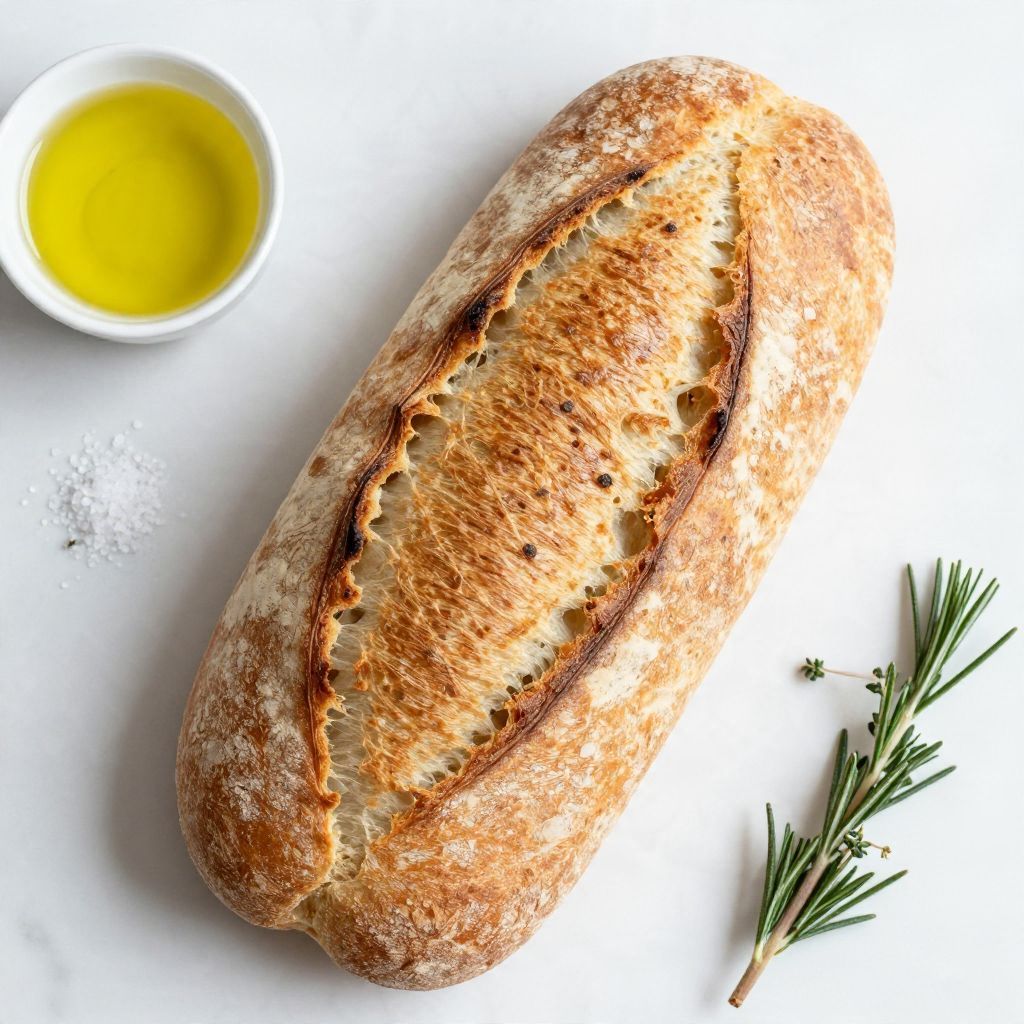
Ciabatta Bread
Ingredients
Equipment
Method
- In a mixing bowl, combine the warm water and yeast. Let it sit for about 5 minutes until it becomes frothy.
- Add the flour and salt to the yeast mixture. Stir with a wooden spoon until a shaggy dough forms.
- Transfer the dough to a floured surface. Knead gently for about 5-7 minutes, just until it comes together; it will be sticky.
- Place the dough in a lightly oiled bowl and cover it with a towel. Let it rise in a warm area until doubled in size, about 1 hour.
- Once risen, gently turn the dough onto a floured surface without deflating it too much. Divide it in half and shape each piece into a rectangle.
- Place the shaped dough on a floured baking sheet and cover it again. Allow it to rise for another 30 minutes until puffy.
- While the dough is rising, preheat your oven to 425°F (220°C).
- Bake the ciabatta for 25-30 minutes until golden brown. The bread should sound hollow when tapped on the bottom.