
There’s something magical about the moment when fresh cranberries hit a hot pan and the kitchen fills with the bright, tart aroma of citrus and spice. Cranberry sauce with orange transforms a humble holiday side dish into something people actually crave, not just tolerate on the plate.
This recipe skips the overly sweet, gelatinous canned version and delivers a vibrant, jammy sauce with real depth. The orange juice and zest bring a natural sweetness and complexity that makes the cranberries sing, while a touch of warmth from spices keeps things interesting. Best of all, you can make it ahead, freeze it, and pull it out whenever you need a showstopper side that tastes homemade and genuine.
Why You’ll Love This Recipe
This isn’t just another cranberry sauce recipe. It’s the one that makes people ask for your secret, then realize there isn’t one, only fresh ingredients and a little care.
- Bright, citrusy flavor that balances tartness with natural sweetness, no refined sugar overload
- Takes only 20 minutes from pantry to table, perfect for busy holiday cooking
- Freezes beautifully up to three months, so you can prep weeks ahead
- Works as a condiment, topping, or filling, making it endlessly useful
- Naturally vegan and gluten-free without any modification or substitution needed
My Experience Making This Recipe
The first time I made this version, I was skeptical about skipping the brown sugar and going heavy on fresh orange. Within two minutes of simmering, my doubts evaporated as the aroma filled my kitchen.
My family actually asked for seconds, which never happened with the canned version. The texture hits that perfect sweet spot: thick enough to hold its shape on a plate but still spoonable, with whole berries that burst on your tongue.
I’ve now made this every holiday season and even tucked jars into gift baskets. It’s become the one dish people remember and request.
Recipe Overview
- Recipe Name: Cranberry Sauce with Orange
- Servings: 8 to 10 servings
- Prep Time: 5 minutes
- Cook Time: 15 minutes
- Total Time: 20 minutes
- Course: Side Dish
- Cuisine: American
- Calories per Serving: 75 calories
Equipment You Will Need
- Medium saucepan with lid
- Wooden spoon or silicone spatula for stirring
- Microplane or box grater for zesting the orange
- Citrus juicer or hand reamer
- Measuring cups and spoons
- Glass storage containers or mason jars for storage
Ingredients for Cranberry Sauce with Orange
- 12 ounces fresh cranberries, rinsed and picked over
- 3/4 cup fresh orange juice, squeezed from about 2 medium oranges
- Zest of 1 medium orange, finely grated
- 1/3 cup coconut sugar or maple syrup
- 1/4 teaspoon sea salt
- 1/4 teaspoon ground cinnamon
- Pinch of ground nutmeg
- 1 tablespoon fresh ginger, minced (optional but recommended)
Ingredient Notes and Substitutions
- Fresh cranberries: They’re tart little powerhouses that release pectin as they cook, naturally thickening the sauce without any cornstarch or gelatin. Frozen cranberries work fine, though fresh berries deliver brighter flavor and better texture.
- Orange juice: Fresh-squeezed tastes infinitely better than bottled and brings real citrus oils to the party. No fresh oranges on hand, use bottled, but reduce the amount by one tablespoon since it’s often more concentrated.
- Orange zest: It carries the most flavorful citrus oils and makes a huge difference in brightness. If you don’t have a microplane, use the smallest holes on a box grater, or substitute one teaspoon of vanilla extract for a softer citrus note, though you’ll lose some punch.
- Coconut sugar or maple syrup: Both provide subtle depth that white sugar lacks. Regular granulated sugar works but tastes one-dimensional; honey adds floral notes that some love, others find distracting.
- Cinnamon and nutmeg: These warm spices round out the sharp tartness without overpowering the fruit. Omit them entirely if you prefer pure cranberry-orange flavor, though you’ll lose some depth.
How to Make Cranberry Sauce with Orange
Step 1: Prepare Your Ingredients
Rinse the cranberries under cool water and pick out any stems or shriveled berries. Squeeze your oranges to get fresh juice, then zest one of them on the smallest holes of your grater.
Step 2: Combine Liquid and Sweetener
Pour the orange juice and coconut sugar into a medium saucepan over medium-high heat. Stir for one minute until the sugar starts to dissolve, which helps it distribute evenly and prevents clumping when you add the berries.
Step 3: Bring to a Simmer
Let the mixture come to a gentle simmer. You’ll see small bubbles breaking the surface, not a rolling boil, which would cook off the delicate orange aroma.
Step 4: Add Cranberries and Spices
Add all the cranberries, orange zest, salt, cinnamon, nutmeg, and fresh ginger if using. The cranberries will sink at first, which is normal.
Step 5: Simmer and Stir Occasionally
Lower the heat to medium and let the sauce bubble gently for 10 to 12 minutes, stirring every couple of minutes. Watch for berries to burst and the liquid to thicken slightly, darkening from bright red to a deep ruby color.
Step 6: Check for Doneness
Most berries should have split open, and when you drag your spoon across the bottom of the pan, it should leave a brief trail before the sauce flows back. If it still looks too thin, cook for another minute or two.
Step 7: Taste and Adjust Seasoning
Remove from heat and let cool for one minute, then taste a small spoonful. Add another pinch of salt if the orange flavor feels flat, or a squeeze more orange juice if you want extra brightness.
Step 8: Cool Before Serving
Transfer to a serving bowl or storage containers and let cool to room temperature. The sauce will continue to thicken as it cools, reaching the ideal spoonable consistency.
Pro Tip: Don’t skip the orange zest. It’s where all the aromatic oils live, and it’s the single biggest difference between this recipe and standard cranberry sauce.
Tips for the Best Cranberry Sauce with Orange
- Use fresh orange juice instead of bottled whenever possible, since fresh juice carries bright flavor that bottled versions lose over time.
- Don’t stir constantly. A few stirs every couple of minutes prevents sticking while letting the berries cook evenly and burst naturally.
- Let the sauce cool completely before storing or serving, since it firms up significantly as it cools and thickens much more than it appears in the pan.
- Taste before serving, even if you made it days ahead, since flavors can shift slightly in storage and you might want to adjust sweetness or citrus.
- If your sauce breaks (becomes too watery), simmer it uncovered for another minute or two to reduce it down.
- Make it up to two weeks ahead and refrigerate in an airtight container, letting flavors meld and deepen.
Common Mistakes to Avoid
- Cooking on too high heat: A rolling boil will scorch the bottom and cook off the delicate orange aroma, leaving you with flat, bitter sauce. Medium heat ensures gentle, even cooking.
- Using bottled orange juice exclusively: It’s convenient but tastes thin and tinny compared to fresh. At minimum, use a blend of fresh and bottled.
- Over-sweetening: This is the most common problem with homemade cranberry sauce. Remember, the sauce thickens and flavors concentrate as it cools, so what tastes slightly tart in the pan will taste more balanced once cool.
- Skipping the zest: Zest is packed with flavor oils that juice alone can’t provide. Leaving it out leaves you with a one-dimensional sauce missing brightness and complexity.
- Serving hot: The texture won’t fully develop until the sauce cools completely, so you’ll get soupy, loose sauce instead of the ideal jammy consistency.
Serving Suggestions
This sauce shines anywhere cranberries typically appear, but it’s versatile enough to surprise you on unexpected dishes. Serve it warm or at room temperature alongside whatever needs a bright, tart counterpoint.
- Spooned over roasted turkey or duck at holiday dinners
- Swirled into plain Greek yogurt or whipped cream cheese as an unexpected appetizer dip
- Spread on warm cornbread or biscuits for breakfast or brunch
- Topped onto roasted root vegetables like sweet potatoes or parsnips for added complexity
- Layered into a cheese board between sharp cheddar and blue cheese for a sweet-tart contrast
Variations to Try
- Spiced Cranberry Sauce: Add one tablespoon of apple cider vinegar and a pinch of cayenne pepper for a slightly savory, spicy kick that pairs beautifully with pork or ham.
- Cranberry Sauce with Star Anise: Drop two whole star anise into the pan for the last five minutes of cooking for a subtle licorice note that feels elegant and different.
- Cranberry Pomegranate Sauce: Replace half the orange juice with pomegranate juice for deeper color and a more complex berry flavor that feels fancy with minimal extra effort.
- Cranberry Sauce with Cardamom: Substitute the cinnamon and nutmeg with one teaspoon of ground cardamom for a warmer, more exotic spice profile that pairs well with lamb or game.
- Candied Orange Cranberry Sauce: Add a tablespoon of candied orange peel chopped fine at the end for texture and a concentrated citrus sweetness.
Dietary Adaptations
- Gluten-Free: This recipe is naturally gluten-free as written, requiring no modifications or ingredient swaps.
- Dairy-Free: Already dairy-free; it stands on its own without any changes needed.
- Vegan: Completely vegan as written, with no animal products in any ingredient.
- Low-Carb or Keto: Replace coconut sugar with monk fruit sweetener or erythritol at a one-to-one ratio, though the sauce will be slightly less thick since sugar provides body; add one tablespoon of chia seeds if you want more body without adding carbs.
Storage and Reheating
Refrigerator
Pour cooled sauce into airtight glass containers and refrigerate for up to two weeks. The flavor actually improves after one or two days as spices have time to infuse.
- Check the seal before storing to ensure no air can enter
- Let come to room temperature before serving, or warm gently if you prefer it hot
- If a thin layer of liquid pools on top after a few days, just stir it back in
Freezer
Freeze in ice cube trays first, then pop cubes into freezer bags for up to three months. This lets you thaw only what you need.
- Leave one inch of headspace in containers since the sauce expands slightly when frozen
- Label with the date so you remember when you made it
- Thaw overnight in the refrigerator before using
Reheating
If you want warm sauce, heat gently in a small saucepan over low heat for two to three minutes, stirring occasionally. Never microwave, since it can cause uneven heating and separation.
- Add a tablespoon of fresh orange juice if the sauce seems too thick after thawing
- Taste and adjust seasoning if flavors have muted slightly from freezing
Nutrition Information
| Nutrient | Amount |
|---|---|
| Calories | 75 |
| Total Fat | 0.2g |
| Saturated Fat | 0g |
| Carbohydrates | 19g |
| Fiber | 2g |
| Sugar | 14g |
| Protein | 0.3g |
| Sodium | 65mg |
| Cholesterol | 0mg |
These values are approximate and calculated per serving assuming 9 servings total. Nutrition can vary based on exact orange size and how much zest you use.
Frequently Asked Questions
Can I use bottled orange juice instead of fresh?
Yes, bottled works fine in a pinch, though fresh juice delivers noticeably brighter flavor. If you use bottled, reduce the amount by one tablespoon since it’s often more concentrated, and add one teaspoon of fresh zest to compensate for lost aroma.
What if my sauce is too thin after cooking?
Simmer it uncovered for another minute or two to reduce it, or stir in one tablespoon of cornstarch mixed with two tablespoons of cold water and simmer for 30 seconds until thickened. Remember, the sauce continues to thicken significantly as it cools.
Can I make this ahead and freeze it?
Absolutely, and honestly it’s the best approach for holiday cooking. Freeze in airtight containers or ice cube trays for up to three months, then thaw overnight in the refrigerator before serving.
How do I know when the berries are fully cooked?
Most berries should have split open and the sauce should darken to a deep ruby color. When you drag a spoon across the bottom of the pan, it should leave a brief trail before the sauce flows back.
What’s the difference between this and canned cranberry sauce?
Fresh sauce has bright, tart berry flavor with real citrus character, while canned is heavily sweetened and often gelatinous from additives. This version also takes only 20 minutes and tastes genuinely homemade.
Can I reduce the sugar?
You can lower it slightly, but cranberries are naturally very tart and need some sweetness to balance. Try reducing to one quarter cup and taste before serving to see if you like the extra pucker.
Final Thoughts
Making cranberry sauce from scratch is one of those small kitchen moves that feels fancy but actually takes less time than opening a can and stirring it into a bowl. The difference in flavor is honestly staggering, and you’ll wonder why you ever settled for anything else.
This recipe rewards you twice: once when the aroma fills your kitchen, and again when guests taste it and ask what you did differently. Make it once and you’ll be making it forever.
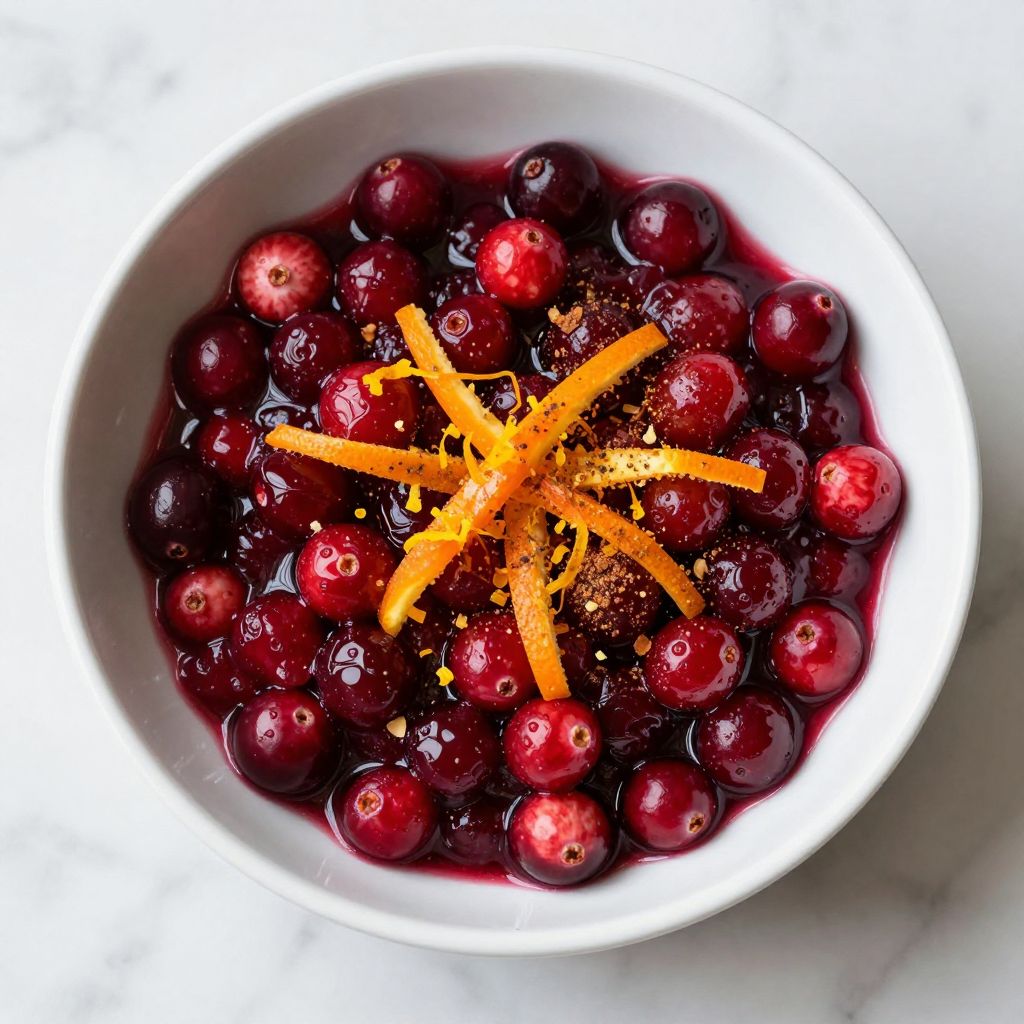
Cranberry Sauce with Orange
Ingredients
Equipment
Method
- Rinse the cranberries under cool water and pick out any stems or shriveled berries. Squeeze your oranges to get fresh juice, then zest one of them on the smallest holes of your grater.
- Pour the orange juice and coconut sugar into a medium saucepan over medium-high heat. Stir for one minute until the sugar starts to dissolve.
- Let the mixture come to a gentle simmer with small bubbles breaking the surface, not a rolling boil.
- Add all the cranberries, orange zest, salt, cinnamon, nutmeg, and fresh ginger if using.
- Lower the heat to medium and let the sauce bubble gently for 10 to 12 minutes, stirring every couple of minutes. Watch for berries to burst and the liquid to thicken slightly, darkening from bright red to a deep ruby color.
- Check for doneness: Most berries should have split open, and when you drag your spoon across the bottom of the pan, it should leave a brief trail before the sauce flows back. If it still looks too thin, cook for another minute or two.
- Remove from heat and let cool for one minute, then taste a small spoonful. Add another pinch of salt if the orange flavor feels flat, or a squeeze more orange juice if you want extra brightness.
- Transfer to a serving bowl or storage containers and let cool to room temperature. The sauce will continue to thicken as it cools, reaching the ideal spoonable consistency.