
Picture this: perfectly cooked chicken breast that’s impossibly juicy, with a silky interior and a golden crust that sears in seconds. That’s what sous vide chicken breast delivers every single time, and it’s honestly a game-changer for anyone tired of dry, rubbery poultry. This cooking method uses a water bath set to an exact temperature, which means your chicken cooks through evenly and stays tender no matter how thick the breast is.
What makes this recipe special is the combination of precision cooking and simplicity. You season, seal, cook low and slow in the water bath, then finish with a quick sear for that restaurant-quality crust. The entire process takes about 90 minutes from start to finish, and most of that is hands-off time where you can do literally anything else.
Why You’ll Love This Recipe
Sous vide chicken is reliable, adaptable, and delivers consistent results that make you look like you actually know what you’re doing in the kitchen.
- Perfectly juicy chicken breast every single time, no more guessing or cutting into it to check doneness
- Hands-off cooking means you prep it and forget it while you handle other tasks
- Works beautifully for meal prep since you can cook several breasts at once and portion them throughout the week
- Incredibly versatile for salads, bowls, tacos, pasta, or eating straight with a side of vegetables
- Minimal cleanup since everything cooks in a sealed bag with just a quick pan sear at the end
My Experience Making This Recipe
I first tried sous vide chicken about three years ago when a friend with a fancy immersion circulator wouldn’t stop raving about it. I was skeptical, honestly, because it felt like overkill for something as straightforward as cooking chicken.
The moment I cut into my first piece and saw that perfect pale pink center, followed by that gorgeous golden crust after the sear, I got it. The texture was unreal, like nothing I’d achieved with traditional pan-searing or baking. My partner, who’s usually indifferent about chicken, actually asked for seconds.
Now I use this method at least twice a week for weeknight dinners and meal prep. It’s become my go-to when I’m cooking for people I want to impress, and it’s honestly foolproof enough that I recommend it to everyone who complains about dry chicken.
Recipe Overview
- Recipe Name: Sous Vide Chicken Breast
- Servings: 4
- Prep Time: 10 minutes
- Cook Time: 80 minutes
- Total Time: 90 minutes
- Course: Main
- Cuisine: Modern
- Calories per Serving: 285
Equipment You Will Need
- Immersion circulator or sous vide cooker
- Large pot or container (at least 5 quarts)
- Vacuum sealer or heavy-duty freezer bags with a water displacement method
- Instant-read thermometer
- Cast iron skillet or heavy stainless steel pan
- Paper towels
- Tongs
- Slotted spoon
Ingredients for Sous Vide Chicken Breast
- 4 boneless, skinless chicken breasts (6 to 8 ounces each)
- 2 tablespoons kosher salt
- 1 tablespoon freshly ground black pepper
- 2 teaspoons garlic powder
- 1 teaspoon onion powder
- 1 teaspoon dried thyme
- 2 tablespoons olive oil (for searing)
- 2 tablespoons butter (for searing)
- Water for the bath
Ingredient Notes and Substitutions
- Chicken breasts: Uniform thickness matters here since sous vide depends on precise temperature and time. If your breasts vary wildly in thickness, pound them gently to an even 1.5-inch thickness.
- Kosher salt: It dissolves evenly and provides clean seasoning without the bitter metallic taste of table salt. Sea salt works perfectly as a swap with no real compromise.
- Dried thyme: It adds an earthy backbone to the chicken without overwhelming it. Fresh thyme works too, though you’ll want to use about three times the amount since it’s milder when dried.
- Olive oil and butter for searing: The combination gives you a high smoke point and rich, nutty flavor for the crust. You can use ghee alone if you prefer, or avocado oil if you need a higher heat threshold.
How to Make Sous Vide Chicken Breast
Step 1: Set Up Your Water Bath
Fill your pot with water and attach the immersion circulator to the side, making sure the water level is high enough to reach the fill line on your device. Set the temperature to 165 degrees Fahrenheit, which produces perfectly cooked, moist chicken with no food safety concerns.
Step 2: Pat the Chicken Dry
Remove chicken breasts from the package and blot them thoroughly with paper towels. Removing surface moisture helps the seasoning adhere better and prevents a watery environment inside the bag.
Step 3: Season Generously
In a small bowl, combine the salt, black pepper, garlic powder, onion powder, and thyme. Rub the seasoning mixture evenly over all sides of each chicken breast, making sure to coat them completely.
Step 4: Prepare Your Bags for Sealing
If you’re using a vacuum sealer, place one seasoned chicken breast into each bag and leave some space at the seal line. If you don’t have a vacuum sealer, use heavy-duty freezer bags and use the water displacement method: seal three sides of the bag, then slowly lower it into water until the water pushes the air out, then seal the final side.
Step 5: Vacuum Seal Carefully
Run each bag through your vacuum sealer according to the manufacturer’s instructions, or use the water displacement method if sealing by hand. Proper sealing prevents water from entering the bag and ensures even cooking throughout the chicken.
Step 6: Submerge the Bags
Once your water bath reaches 165 degrees Fahrenheit, carefully place the sealed bags into the water using a slotted spoon. Make sure the chicken is completely submerged and not touching the heating element on your immersion circulator.
Step 7: Cook for 80 Minutes
Set a timer for 80 minutes and walk away. This timing ensures the chicken reaches a safe internal temperature throughout while maintaining maximum tenderness and moisture.
Step 8: Prepare Your Searing Pan
While the chicken cooks, heat a cast iron skillet or heavy stainless steel pan over medium-high heat for about two minutes. Add the olive oil and butter, letting them heat until the butter foams and the oil shimmers, which means your pan is ready for a proper sear.
Step 9: Remove and Dry the Chicken
Once the timer goes off, carefully remove each bag from the water bath using tongs and set them on a clean work surface. Open the bags and transfer the chicken to a plate lined with paper towels, patting each piece dry on both sides so the exterior will sear properly.
Step 10: Sear for the Crust
Place each chicken breast into the hot pan and sear for 90 seconds without moving it, which allows the exterior to develop a golden brown crust. Flip and sear the other side for another 90 seconds, then transfer to a clean plate.
Pro Tip: Don’t skip the searing step even if you’re short on time; it takes less than five minutes total and transforms the chicken from bland-looking to restaurant-quality while adding crucial texture and flavor depth.
Tips for the Best Sous Vide Chicken Breast
- Keep your water bath at exactly 165 degrees Fahrenheit throughout the entire cooking process. If the temperature fluctuates, cooking time may vary and doneness becomes unpredictable.
- Use uniform chicken breasts or pound them to the same thickness so they cook evenly. Uneven thickness creates hot spots and cold spots within the same piece.
- Pat the chicken completely dry after removing it from the bag before searing. Excess moisture creates steam, which prevents browning and wastes your beautiful crust opportunity.
- Don’t overcrowd your pan during searing or the chicken will steam instead of sear. Cook in batches if needed, giving each piece room to make contact with the hot surface.
- Let your seared chicken rest for five minutes before slicing so the juices redistribute throughout the meat. Cutting into it immediately releases those delicious juices onto your plate instead of keeping them inside.
- Make extra and refrigerate for meal prep; these keep beautifully for four to five days and work in literally any chicken application.
Common Mistakes to Avoid
- Setting the water bath too low or too high: Even a couple of degrees off changes the final texture and safety profile. Always use a reliable thermometer and trust it over guessing.
- Skipping the searing step to save time: You’ll end up with pale, mushy chicken that looks unappetizing and lacks the textural contrast that makes this method special.
- Overcrowding the bag: Stacking chicken breasts on top of each other prevents even water circulation and creates cooking inconsistencies.
- Sealing the bag improperly: Air pockets and water leaks compromise the cooking process and can create unsafe conditions if water enters during cooking.
- Using thin, flimsy bags: Cheap freezer bags can puncture during cooking or fail to maintain a good seal, compromising the entire dish.
Serving Suggestions
This chicken shines on its own but becomes even better when paired with complementary sides that let the juicy, tender meat be the star. Think fresh vegetables, light sauces, and bright flavors that cut through the richness.
- Serve sliced over a bed of mixed greens with lemon vinaigrette and fresh herbs for a simple salad
- Pair with roasted vegetables like asparagus, Brussels sprouts, or root vegetables for a complete dinner plate
- Shred and use in grain bowls with quinoa, farro, or rice plus your favorite toppings and dressings
- Slice thinly and layer into tacos with fresh cabbage slaw, avocado, and salsa for an easy weeknight meal
- Dice and toss into pasta with a light cream sauce, garlic, and fresh vegetables for cozy comfort food
Variations to Try
- Italian herbs version: Replace the thyme with Italian seasoning, add fresh basil and sun-dried tomato to the bag, then finish with a squeeze of lemon juice after searing for a Mediterranean vibe.
- Cajun spice version: Use cayenne pepper, smoked paprika, and a touch of garlic and onion powder for heat and depth, then serve with cornbread and collard greens.
- Asian-inspired version: Season with soy sauce, sesame oil, ginger, and garlic in the bag, then finish with a sprinkle of sesame seeds and scallions after searing.
- Herb butter infusion: Add a pat of herb butter (softened butter mixed with fresh rosemary, thyme, and garlic) to the bag before sealing for ultra-aromatic chicken.
- Citrus and white wine version: Include lemon slices, white wine, and fresh herbs like dill in the bag for a lighter, more delicate flavor profile.
Dietary Adaptations
- Gluten-free: This recipe is naturally gluten-free as written; just verify that any spice blends you use haven’t been cross-contaminated during processing.
- Dairy-free: Skip the butter during searing and use olive oil or avocado oil alone with no flavor loss since the chicken itself carries enough depth.
- Low-carb and keto: This recipe fits perfectly into both diets since chicken breast is pure protein and the cooking method doesn’t add carbs; serve with cauliflower rice or zucchini noodles.
- Paleo: This recipe aligns with paleo eating completely when you use compliant seasonings and skip the butter in favor of ghee or olive oil.
Storage and Reheating
Refrigerator
Store cooked chicken in an airtight container for up to four to five days at 40 degrees Fahrenheit or below. Make sure the chicken has cooled to room temperature before sealing to prevent condensation.
- Whole pieces keep better than sliced chicken
- Store in the coolest part of your fridge away from other raw proteins
Freezer
Wrap individual pieces in plastic wrap, then place in a freezer bag for up to two months. Proper wrapping prevents freezer burn and keeps the chicken tasting fresh.
- Label with the date so you know when you cooked it
- Flat freezing in bags saves space and speeds up thawing
Reheating
Reheat gently to avoid drying out the chicken. The best method is low and slow in a covered pan with a splash of broth or water.
- Reheat in a 300-degree oven covered with foil for ten to fifteen minutes until warmed through
- Pan-sear briefly over medium heat with a touch of oil for a crispy exterior
- Slice and add directly to hot pasta or soup for gentle reheating without extra cooking
Nutrition Information
| Nutrient | Amount |
|---|---|
| Calories | 285 |
| Total Fat | 12g |
| Saturated Fat | 4g |
| Carbohydrates | 2g |
| Fiber | 0g |
| Sugar | 0g |
| Protein | 42g |
| Sodium | 820mg |
| Cholesterol | 98mg |
These values are approximate and based on standard-sized chicken breasts with skin removed, cooked with the oil and butter specified for searing. Actual nutrition may vary slightly based on the exact size of your chicken and the amount of fat that adheres during cooking.
Frequently Asked Questions
Can I use chicken with the skin on for sous vide cooking?
Yes, but it requires a different approach. Remove the skin before sous vide cooking because it won’t crisp properly in the water bath, then apply it back or sear the chicken to render it.
What if I don’t have a vacuum sealer?
The water displacement method works perfectly well; seal three sides of a freezer bag, lower it slowly into water until water pushes the air out, then seal the final side. It takes 30 seconds longer but produces equally good results.
How thick should my chicken breasts be?
Aim for 1.5 inches of uniform thickness across all breasts so they cook evenly in 80 minutes. If they’re thicker than two inches, pound them gently with a meat mallet until they reach the target thickness.
Can I cook chicken to a lower temperature for less doneness?
Food safety guidelines recommend a minimum internal temperature of 165 degrees Fahrenheit for poultry, so no lower is safe. At 165 degrees, the chicken is completely safe while remaining incredibly juicy.
What’s the maximum time I can leave chicken in the water bath after cooking finishes?
You can safely hold chicken in the 165-degree water bath for up to two hours without food safety concerns. After two hours, remove it and cool it quickly in an ice bath, then refrigerate or freeze.
Can I cook multiple chicken breasts at the same time?
Yes, you can cook as many as fit in your pot without stacking them on top of each other. Just make sure they’re all submerged and not touching the circulator heating element.
Does adding butter or oil to the bag change the cooking results?
A small pat of butter or splash of oil in the bag adds flavor, but it’s not necessary for the cooking process itself. The 80-minute cook time remains the same with or without added fat.
Final Thoughts
Sous vide chicken breast honestly changed how I approach weeknight cooking. What started as a skeptical experiment became a reliable technique I use constantly because it removes all the anxiety around doneness and dryness.
Try this recipe this week, even if you’re new to sous vide. You’ll understand immediately why this method deserves all the hype, and you’ll have a foolproof technique for perfectly cooked chicken whenever you need it.
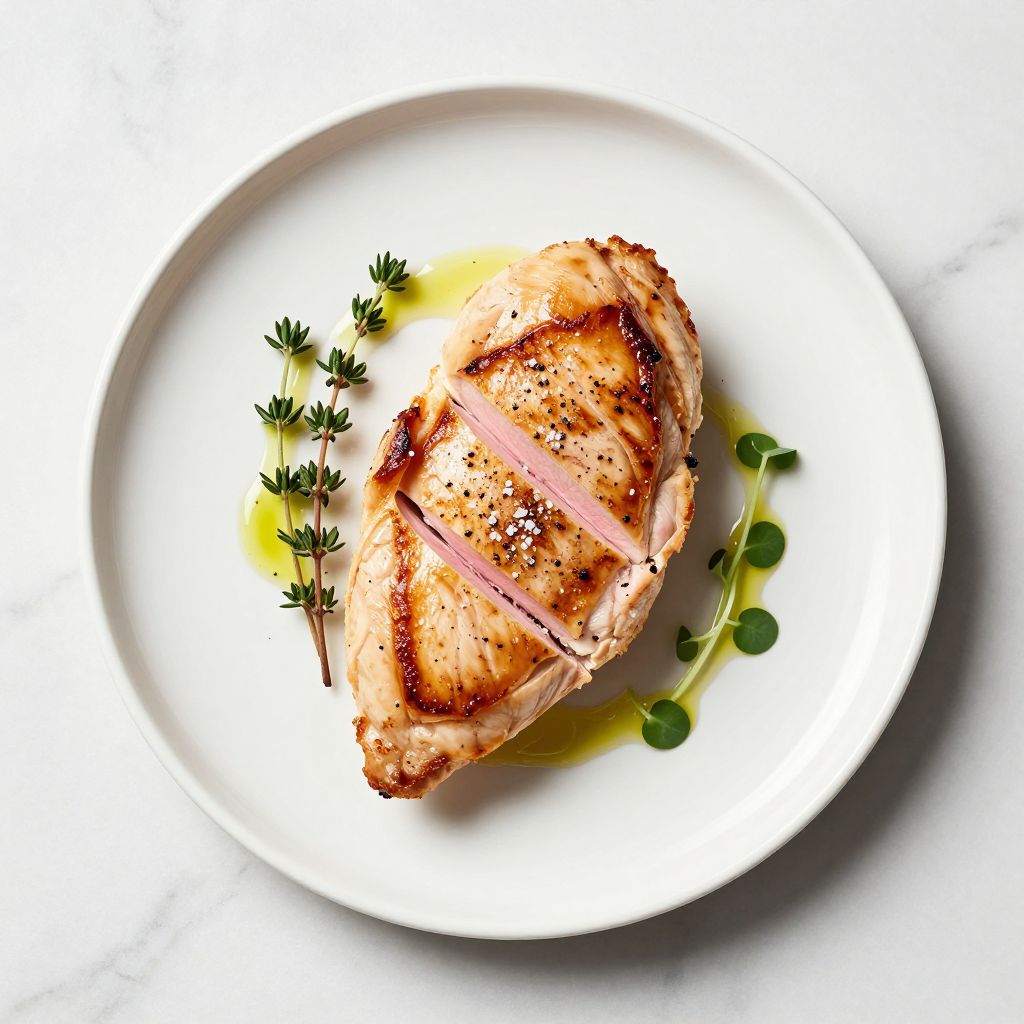
Sous Vide Chicken Breast
Ingredients
Equipment
Method
- Fill your pot with water and attach the immersion circulator to the side, making sure the water level is high enough to reach the fill line on your device. Set the temperature to 165 degrees Fahrenheit.
- Remove chicken breasts from the package and blot them thoroughly with paper towels to remove surface moisture.
- In a small bowl, combine the salt, black pepper, garlic powder, onion powder, and thyme. Rub the seasoning mixture evenly over all sides of each chicken breast.
- Place one seasoned chicken breast into each vacuum seal bag or heavy-duty freezer bag, leaving space at the seal line.
- Vacuum seal each bag according to manufacturer's instructions, or use the water displacement method by slowly lowering the bag into water until air is pushed out, then seal.
- Once the water bath reaches 165 degrees Fahrenheit, carefully place the sealed bags into the water using a slotted spoon. Make sure the chicken is completely submerged and not touching the heating element.
- Cook for 80 minutes at 165 degrees Fahrenheit.
- While the chicken cooks, heat a cast iron skillet or heavy stainless steel pan over medium-high heat for about 2 minutes. Add the olive oil and butter, letting them heat until the butter foams and the oil shimmers.
- Once the timer goes off, carefully remove each bag from the water bath using tongs. Open the bags and transfer the chicken to a plate lined with paper towels, patting each piece dry on both sides.
- Place each chicken breast into the hot pan and sear for 90 seconds without moving it. Flip and sear the other side for another 90 seconds, then transfer to a clean plate.
- Let the seared chicken rest for 5 minutes before slicing to allow juices to redistribute throughout the meat.