
There’s something primal about biting into a strip of venison jerky that you made yourself, knowing exactly what went into it and how it was prepared. If you’ve ever hunted or have friends who do, you’ve probably wondered how to transform that lean, flavorful meat into something shelf-stable and delicious that doesn’t taste like rubber.
This recipe turns venison into jerky that’s tender, deeply savory, and packed with umami from soy sauce, Worcestershire, and a hint of smoke. Unlike store-bought versions, you control the thickness, spice level, and cure time, which means you get jerky tailored to your exact preferences.
The process is straightforward: season, marinate, arrange on racks, and let your oven or dehydrator do the work. In about 6 to 8 hours, you’ll have strips that stay fresh for weeks and taste infinitely better than anything wrapped in plastic.
Why You’ll Love This Recipe
Venison is naturally lean and rich, and jerky amplifies those qualities while creating a chewy, satisfying snack that pairs perfectly with coffee or beer. You’ll know every ingredient, skip the preservatives, and enjoy a protein-packed treat that costs far less than premium jerky brands.
- Pure venison flavor without fillers or mystery ingredients
- Customizable spice level and marinade intensity
- Shelf-stable for weeks in an airtight container
- High protein, low fat, zero sugar option for paleo and keto diets
- Impressive homemade gift for hunters and outdoor enthusiasts
My Experience Making This Recipe
I first made venison jerky when a friend brought me a backstrap from his elk hunt, and I was honestly nervous about wasting such premium meat. After reading every jerky guide I could find, I realized the secret wasn’t fancy equipment or exotic spices, just consistent heat and proper marinating time.
The smell while it dehydrates is incredible—like a barbecue crossed with a butcher shop, in the best way possible. My family devoured the first batch in two days flat, and now I batch it every fall when venison season wraps up.
The trickiest part isn’t the cooking; it’s resisting the urge to eat it all before it’s completely finished drying. Once you nail the moisture level and seasoning balance, you’ll wonder why you ever bought jerky from anyone else.
Recipe Overview
- Recipe Name: Venison Jerky
- Servings: About 12 to 14 pieces (yields roughly 1 pound finished jerky from 3 pounds raw venison)
- Prep Time: 20 minutes plus overnight marinating
- Cook Time: 6 to 8 hours
- Total Time: 24 to 32 hours
- Course: Snack
- Cuisine: American
- Calories per Serving: 80 to 100
Equipment You Will Need
- Sharp meat knife or butcher’s knife for slicing
- Large mixing bowl for marinating
- Measuring cups and spoons
- Oven with temperature control or food dehydrator
- Wire racks that fit your oven or dehydrator trays
- Paper towels for patting meat dry
- Airtight container or vacuum seal bags for storage
- Meat thermometer to check doneness (optional but helpful)
Ingredients for Venison Jerky
- 3 pounds venison (backstrap or hindquarters, partially frozen for easier slicing)
- 1/4 cup soy sauce
- 2 tablespoons Worcestershire sauce
- 1 tablespoon honey
- 1 teaspoon garlic powder
- 1 teaspoon onion powder
- 1/2 teaspoon black pepper
- 1/4 teaspoon red pepper flakes (adjust to taste)
- 1/2 teaspoon smoked paprika
- 1/2 teaspoon salt
- 1 tablespoon liquid smoke (optional, adds deeper smokiness)
Ingredient Notes and Substitutions
- Venison backstrap: This muscle is the most tender part of the animal and slices cleanly against the grain. You can substitute elk, moose, or even beef sirloin if venison is unavailable, though the flavor will be milder.
- Soy sauce: It provides umami and saltiness that cures the meat while keeping it tender. Tamari works if you need gluten-free, though the flavor will be slightly less complex.
- Worcestershire sauce: Adds tangy depth and subtle sweetness that balances the salt. You can skip it and add an extra teaspoon of apple cider vinegar instead, though the result will be less rich.
- Honey: Balances the saltiness and helps develop a slight glaze when jerky dries. Maple syrup or molasses can replace it, creating a slightly different flavor profile.
- Smoked paprika: Enhances the smokehouse flavor without adding actual smoke. Regular paprika is milder but works if you prefer less intensity.
- Liquid smoke: This is optional but adds authentic smoky depth if you’re not using a smoker. Omit it completely if you prefer a cleaner venison flavor.
How to Make Venison Jerky
Step 1: Prepare and Slice the Venison
Partially freeze your venison for 2 to 3 hours until it’s firm but not rock-hard; this makes slicing much easier and cleaner. Using a sharp knife, slice the meat against the grain (perpendicular to the muscle fibers) into strips about 1/4 inch thick for tender jerky or 3/8 inch thick if you prefer more chew.
Step 2: Mix the Marinade
In a large bowl, whisk together the soy sauce, Worcestershire sauce, honey, garlic powder, onion powder, black pepper, red pepper flakes, smoked paprika, salt, and liquid smoke if using. Stir thoroughly until the honey dissolves and the spices are evenly distributed; this ensures every piece of meat gets consistent flavor.
Step 3: Marinate the Meat
Add the sliced venison to the marinade and stir gently to coat every strip on both sides. Cover the bowl with plastic wrap or a lid and refrigerate for at least 12 hours, preferably 24 hours; longer marinating means deeper flavor and better curing of the lean meat.
Step 4: Prepare Your Drying Setup
If using an oven, preheat it to 160 to 170 degrees Fahrenheit and position racks in the upper and middle areas. If using a dehydrator, set it to 160 degrees; the lower temperature prevents cooking the outside too quickly while the inside stays moist.
Step 5: Pat the Meat Dry
Remove the venison strips from the marinade one at a time and lay them on paper towels, then pat them dry with more towels. Removing excess surface moisture helps the jerky dry evenly and develop better texture instead of steaming in the first hour.
Step 6: Arrange on Racks
Place the dried strips on your oven racks or dehydrator trays in a single layer, making sure pieces don’t overlap or touch. Air circulation is critical; if strips touch, they’ll stick together and dry unevenly.
Step 7: Dry the Jerky
Bake or dehydrate for 6 to 8 hours, depending on strip thickness, humidity, and your equipment. Check the jerky starting at the 5-hour mark; it’s done when it bends slightly and cracks a little on the outside but doesn’t tear completely in half when you fold it.
Step 8: Cool and Store
Remove the jerky from the oven or dehydrator and let it cool completely on the racks for at least 30 minutes. Once cool, transfer it to an airtight container or vacuum-sealed bag; properly dried jerky lasts 2 to 4 weeks at room temperature or 2 to 3 months frozen.
Pro Tip: The bend test is your best friend; undercooked jerky goes moldy within days, while over-dried jerky becomes brittle and loses its pleasant chew, so aim for that sweet spot where it flexes but doesn’t snap.
Tips for the Best Venison Jerky
- Slice against the grain for tender, easy-to-chew jerky; slicing with the grain creates tough, stringy pieces that require serious jaw work.
- Partially freeze the meat before slicing; even a 2-hour chill in the freezer makes a huge difference in getting clean, uniform strips.
- Don’t skip the full marinating time; venison benefits from 24 hours of curing to develop flavor and properly preserve the lean meat.
- Use oven racks or dehydrator trays lined with parchment paper to prevent drips from staining your equipment and to catch any small crumbles.
- Keep your oven or dehydrator door slightly cracked or use the lowest temperature setting; high heat locks in moisture and creates a tough exterior.
- Make a test batch with moderate spice levels first so you know your preferences before committing a large quantity of meat.
Common Mistakes to Avoid
- Slicing with the grain instead of against it: This creates tough, stringy jerky that’s hard to chew and tastes gamy. Always slice perpendicular to the muscle fibers.
- Using too high a temperature: Temperatures above 180 degrees will cook the outside faster than the inside dries, trapping moisture and promoting mold. Stick to 160 to 170 degrees for safe, even drying.
- Skipping the marinade time: Venison is wild meat with a strong flavor that needs proper seasoning and curing. A quick 2-hour soak won’t give you the depth or food safety benefits of a full 24-hour marinate.
- Over-drying the jerky: Rock-hard jerky loses its pleasant chew and becomes unpleasant to eat. The target texture is flexible with a slight crack when bent, not snapping like a stick.
- Storing in regular bags or containers: Jerky needs airtight storage to prevent moisture reabsorption and mold growth. Use vacuum-sealed bags or containers with solid seals.
Serving Suggestions
Venison jerky shines as a standalone snack but pairs beautifully with other flavors and textures. Serve it with cheese, nuts, and dried fruit for a balanced charcuterie board, or pack it for hiking, camping, and travel when you need protein without refrigeration.
- Pair with sharp cheddar, aged gouda, or smoked gouda for a complementary savory combination
- Bundle with roasted almonds, cashews, or pecans for a hunter’s trail mix
- Serve alongside a dark beer, bourbon, or whiskey for a backwoods snacking experience
- Add to a charcuterie board with crusty bread, pickles, and mustard for a rustic appetizer
- Pack in a hiking or camping trip as a lightweight, calorie-dense protein source
Variations to Try
- Spicy Thai Style: Add 1 tablespoon of sriracha, 1 teaspoon of ginger powder, and 1 tablespoon of fish sauce to the marinade for a hot, aromatic jerky with Southeast Asian flavors.
- Teriyaki: Replace the Worcestershire sauce with equal parts mirin and reduce soy sauce to 3 tablespoons, then add 1 teaspoon of ginger powder and 1 teaspoon of sesame oil for a sweet-savory Japanese-inspired version.
- Maple Bourbon: Add 2 tablespoons of bourbon, 1 extra tablespoon of honey, and 1/2 teaspoon of cinnamon to the marinade for a warm, slightly sweet jerky perfect for autumn.
- Garlic and Herb: Skip the red pepper flakes and add 1 tablespoon of fresh rosemary (finely chopped), 1 tablespoon of fresh thyme, and 2 extra teaspoons of garlic powder for an herbaceous, savory profile.
- Chipotle Lime: Replace liquid smoke with 1 tablespoon of chipotle powder, add the juice and zest of one lime, and include 1 tablespoon of apple cider vinegar for a smoky, tangy, slightly spicy jerky.
Dietary Adaptations
- Gluten-Free: Use tamari instead of regular soy sauce and verify that your Worcestershire sauce is certified gluten-free; most other ingredients are naturally free of gluten.
- Dairy-Free: This recipe is naturally dairy-free; just double-check your marinade ingredients for any unexpected dairy additives in pre-made sauces.
- Vegan or Vegetarian: Substitute thinly sliced mushrooms (portobello or king oyster) marinated in the exact same recipe for a umami-packed vegetarian jerky, though the texture and cooking time will differ slightly.
- Low-Carb and Keto: Reduce honey to 1 teaspoon and this recipe fits cleanly into ketogenic macros; venison is extremely lean and pairs perfectly with fat-forward serving suggestions like cheese or nuts.
Storage and Reheating
Refrigerator
Store properly dried jerky in an airtight container or vacuum-sealed bag in the refrigerator for up to 4 weeks. The cool temperature slows any residual moisture movement and preserves the texture and flavor longer than room temperature storage.
- Use glass containers with tight seals or heavy-duty vacuum bags
- Keep in a dark area of the fridge away from temperature fluctuations
- Check occasionally for any signs of mold or off-flavors
Freezer
Freeze jerky in vacuum-sealed bags or airtight containers for 3 to 4 months with zero quality loss. Freezing essentially pauses all aging and moisture changes, making it perfect for long-term storage.
- Label bags with the date and any marinade variations
- Lay flat in the freezer to save space and allow stacking
- Thaw at room temperature for 30 to 45 minutes before eating
Reheating
Jerky doesn’t require reheating since it’s eaten dry, but you can gently warm it in a low oven for added softness if preferred. Never microwave jerky, as it can become tough and chewy rather than tender.
- Warm at 150 degrees for 5 to 10 minutes if you prefer softer texture
- Let cool slightly before eating to avoid burns
- Eat reheated jerky within a day for best quality
Nutrition Information
| Nutrient | Amount |
|---|---|
| Calories | 85 |
| Total Fat | 2g |
| Saturated Fat | 0.5g |
| Carbohydrates | 2g |
| Fiber | 0g |
| Sugar | 1g |
| Protein | 16g |
| Sodium | 320mg |
| Cholesterol | 55mg |
These values are approximate and based on a 3-pound raw venison yield of roughly 1 pound finished jerky divided into 12 pieces. Actual nutrition varies based on the exact cut of meat, marinade absorption, and moisture loss during drying.
Frequently Asked Questions
Can I use beef instead of venison?
Yes, beef sirloin or flank steak works perfectly and follows the exact same recipe and timing. The flavor will be milder and less gamey than venison, but the jerky will be equally tender and shelf-stable.
How long does the whole process take from start to finish?
Plan for 24 to 32 hours total: 20 minutes prep, 12 to 24 hours marinating, and 6 to 8 hours drying. You can speed up marinating by cutting meat thinner, but you shouldn’t rush the drying process without risking moisture problems.
What’s the best way to tell when jerky is done drying?
Bend a piece in half; it should crack slightly on the outside but not break completely, and no moisture should come out when you squeeze it. If it bends without cracking, it needs more time; if it snaps immediately, it’s overdone.
Can I make this in a smoker instead of an oven or dehydrator?
Absolutely, and many jerky enthusiasts prefer it for deeper flavor. Use a thin blue smoke at 160 to 170 degrees, and monitor closely since smoke can accelerate drying and add complexity that regular ovens can’t.
What if I don’t have a food dehydrator or spare oven?
You can tie strips on a wooden rack and hang them outside in dry, cool weather, or build a makeshift solar dehydrator using a cardboard box and plastic wrap. Both methods take longer (8 to 12 hours) but work if you live in a dry climate.
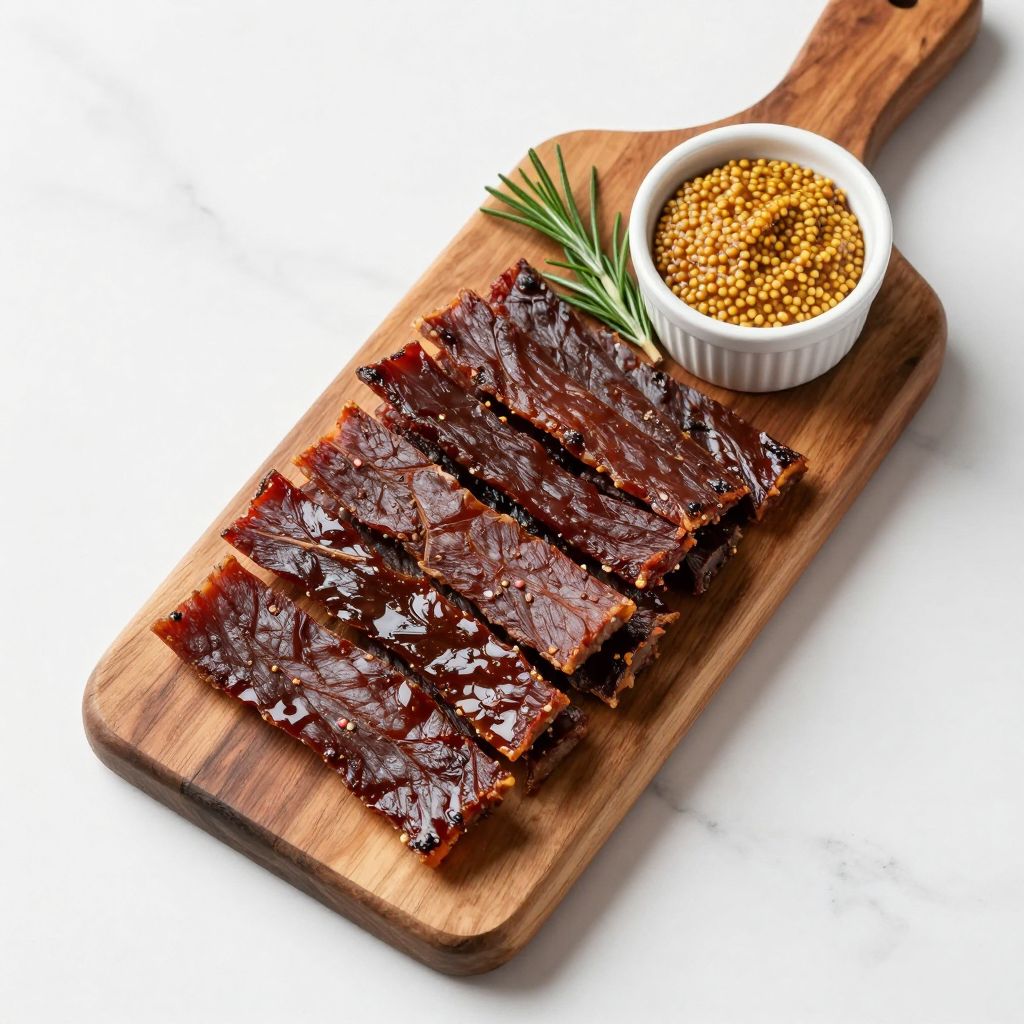
Venison Jerky
Ingredients
Equipment
Method
- Partially freeze your venison for 2 to 3 hours until it's firm but not rock-hard. Using a sharp knife, slice the meat against the grain perpendicular to the muscle fibers into strips about 1/4 inch thick for tender jerky.
- In a large bowl, whisk together the soy sauce, Worcestershire sauce, honey, garlic powder, onion powder, black pepper, red pepper flakes, smoked paprika, salt, and liquid smoke if using. Stir thoroughly until the honey dissolves and the spices are evenly distributed.
- Add the sliced venison to the marinade and stir gently to coat every strip on both sides. Cover the bowl with plastic wrap or a lid and refrigerate for at least 12 hours, preferably 24 hours.
- If using an oven, preheat it to 165 degrees Fahrenheit and position racks in the upper and middle areas. If using a dehydrator, set it to 160 degrees.
- Remove the venison strips from the marinade one at a time and lay them on paper towels, then pat them dry with more towels to remove excess surface moisture.
- Place the dried strips on your oven racks or dehydrator trays in a single layer, making sure pieces don't overlap or touch so air can circulate properly.
- Bake or dehydrate for 6 to 8 hours at 160 to 170 degrees, depending on strip thickness. Check the jerky starting at the 5-hour mark. It's done when it bends slightly and cracks a little on the outside but doesn't tear completely in half when you fold it.
- Remove the jerky from the oven or dehydrator and let it cool completely on the racks for at least 30 minutes. Once cool, transfer it to an airtight container or vacuum-sealed bag. Properly dried jerky lasts 2 to 4 weeks at room temperature or 2 to 3 months frozen.