
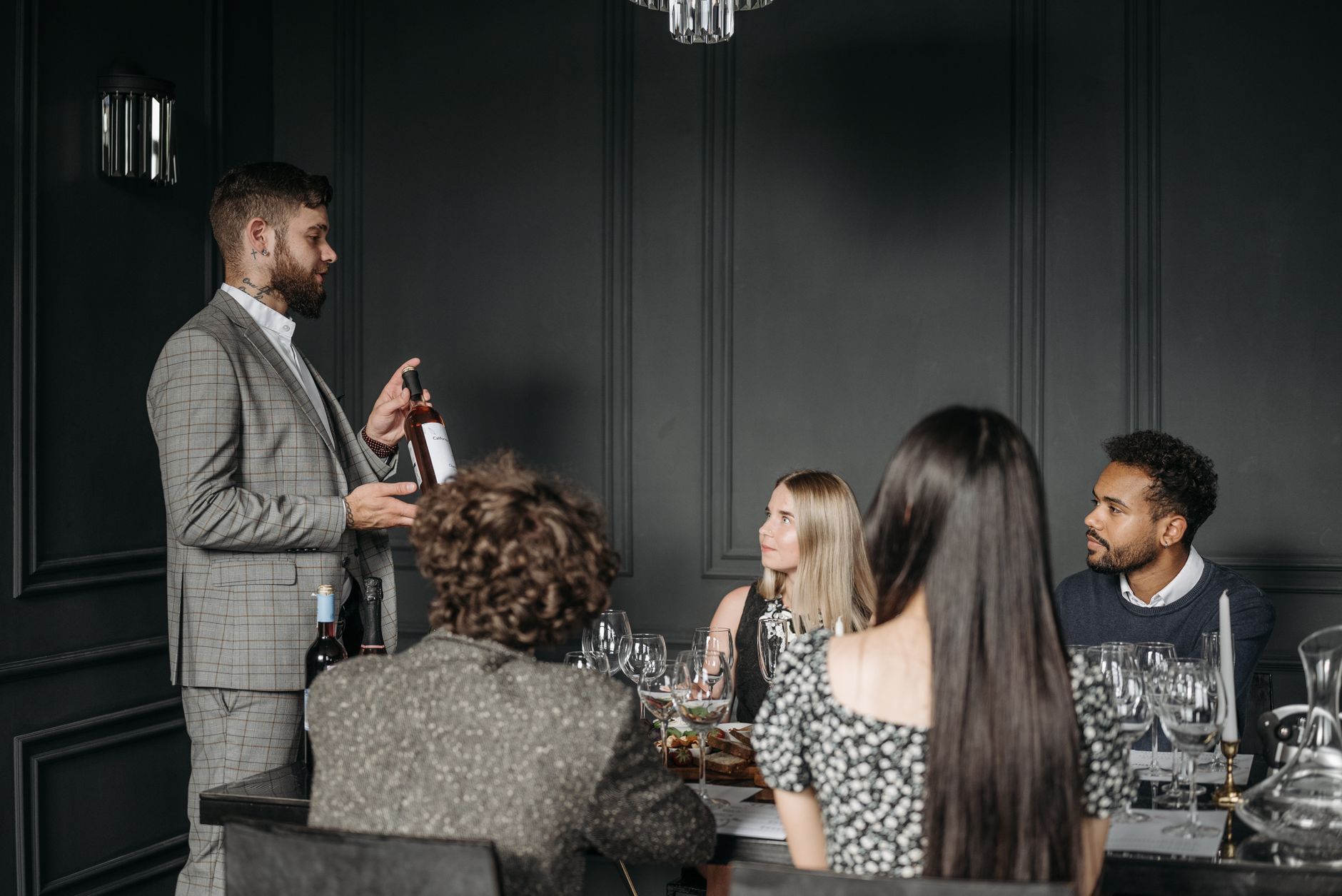
A sommelier, often thought of as a wine steward, is a trained and knowledgeable professional who specializes in all aspects of wine service and wine and food pairing. This role is not just about serving wine at a fine dining restaurant; it expands into a world of tasting, understanding viticulture, and even a meal’s texture and flavor profile.
A sommelier enhances the dining experience through their expertise by selecting and presenting wines that complement dishes beautifully. In this article, we will explore what a sommelier does, their key responsibilities, and how they effectively bridge the gap between wine, food, and memorable culinary experiences.
What Does a Sommelier Do?
A sommelier is a wine professional responsible for curating a restaurant’s wine list, managing wine inventory, and assisting guests in selecting wines that pair perfectly with their meals. Their role also involves educating staff about wine and conducting tastings to refine their palate.
Key Responsibilities of a Sommelier
To better understand the role of a sommelier, let’s break down their main responsibilities:
1. Curating and Managing the Wine List
A sommelier meticulously curates a wine list that reflects the restaurant’s style, cuisine, and guest preferences. This involves selecting a diverse range of wines from different regions, grape varieties, and price points.
2. Wine Pairing
One of the most valuable skills a sommelier possesses is the ability to recommend wine pairings. They consider various factors such as:
- The flavor profile of the dish
- The texture and weight of the food
- Seasoning and cooking methods
For instance, a robust red wine may pair beautifully with a hearty steak, while a crisp white wine can complement a delicate seafood dish.
3. Tasting and Evaluating Wines
Regular wine tasting is a crucial aspect of a sommelier’s job. This involves evaluating the wine’s appearance, aroma, flavor, and finish. A sommelier develops a sophisticated palate, making them capable of detecting subtle notes and assessing wine quality.
4. Staff Education
Educating restaurant staff about the wine list, including details about each wine’s origin, flavor profile, and optimal pairings, is another key responsibility. This enables servers to confidently help diners make informed choices.
5. Inventory Management
A sommelier also manages the wine inventory, ensuring that the restaurant maintains a balanced stock of wines. They monitor supply levels and make orders as necessary to avoid running out of popular selections.
6. Wine Service
During wine service, a sommelier must demonstrate proper techniques for opening and pouring wine. This includes decanting certain wines to enhance their flavors and providing guests with information about the wine they are about to enjoy.
7. Hosting Wine Tastings and Pairing Events
Many sommeliers also organize and host wine tastings or food and wine pairing events, giving guests an opportunity to expand their knowledge and appreciation of wines.
Understanding Wine Tasting
Wine tasting is an art that sommeliers refine through practice. It involves more than simply sipping; it’s a process of analyzing each aspect of the wine using specific steps:
The Tasting Process
- Appearance: Examine the wine’s clarity and color. This can indicate the wine’s age and flavor characteristics.
- Aroma: Swirl the wine in the glass to release its aroma, then take a moment to inhale deeply. Identify the various scents; these can range from fruity and floral to earthy and spicy.
- Taste: Take a small sip and let it coat your palate. Focus on the flavors and textures, identifying key notes and the balance of sweetness, acidity, and tannins.
- Finish: After swallowing, consider the lingering flavors. A long, pleasant finish often signifies a quality wine.
Wine Pairing Essentials
Wine pairing involves more than just matching a wine with food; it’s about creating synergy between flavors. Here are some principles to keep in mind:
1. Complementary Pairing
This approach combines flavors that enhance each other. For example, a buttery Chardonnay can complement a creamy pasta dish.
2. Contrasting Pairing
Contrasting pairings create a balance between different flavor profiles. A tangy Sauvignon Blanc can cut through the richness of fried foods, allowing each to shine.
3. Regional Pairing
Often, wines pair well with the cuisine of their region. For instance, a Chianti pairs beautifully with Italian dishes, capturing the essence of both the wine and food.
Flavor Profiles and Texture Considerations
When selecting wine and food pairings, consider flavor profiles and the texture of both elements:
Flavor Profiles
- Sweetness: Sweet wines can enhance spicy dishes.
- Bitterness: Red wines can balance bitter flavors.
- Acidity: High-acid wines can refresh rich, fatty meals.
Texture
Texture plays a significant role in the experience. Pairing rich texts with full-bodied wines or lighter textures with delicate wines can enhance the overall dining experience.
Common Missteps When Pairing Wine
Even seasoned wine enthusiasts can make mistakes when pairing wine and food. Here are some common pitfalls:
- Ignoring Acidity: A high-acid wine can enhance many dishes, while a low-acid wine may fall flat.
- Choosing Wine Based on Color: Red with red meat and white with seafood is a rule of thumb, but it doesn’t always hold true with flavor profiles.
- Only Considering One Element: Focus on the combined flavors, textures, and aromas, not just the main ingredient of the dish.
Exploring Tools a Sommelier Uses
A sommelier employs various tools to aid their work, each serving a specific purpose:
- Wine Glasses: Each type of wine benefits from specific glass shapes to enhance its characteristics.
- Decanters: Used for aerating wine, helping to release its flavors and aromas.
- Coravin: This tool allows a sommelier to pour a glass of wine without removing the cork, preserving the remaining wine.
- Tasting Journal: Many sommeliers keep notes on wines tasted to help refine their palate.
The Sommelier’s Role in Cultural Context
In various cultures, the role of a sommelier might take on different meanings. For example, in French Michelin-starred restaurants, a sommelier plays an integral part in the guest experience, while in other regions, it may focus more on accessibility and casual drinking experiences.
Culinary Techniques a Sommelier Might Find Useful
A sommelier’s role does not solely revolve around wine. Understanding culinary techniques and how they influence flavors can enhance their recommendations:
1. Sautéing
This technique can impart a depth of flavor that should be considered when pairing wines. For example, a lightly sautéed fish might pair well with a Sauvignon Blanc, while a seared steak could be complemented by a robust Cabernet Sauvignon.
2. Braising
Braising tends to create rich, hearty dishes that often pair well with full-bodied red wines, drawing out the savory flavors.
3. Grilling
Grilling adds a smoky flavor that can enhance the enjoyment of wines, allowing for exciting pairings that highlight this characteristic.
Becoming a Sommelier: Training and Qualifications
To become a sommelier, one often undergoes formal training, which may include:
- Wine education courses
- Hands-on experience working in restaurants
- Certifications such as those offered by the Court of Master Sommeliers or the Wine & Spirit Education Trust (WSET)
These programs equip aspiring sommeliers with the tools necessary to be successful in the field, honing their understanding of wine theory, service, and sensory evaluation.
In-Depth Knowledge of Regions and Grapes
A sommelier must have extensive knowledge of various wine regions and grape varieties. Here’s a breakdown of what they should study:
1. Major Wine Regions
Familiarity with renowned regions, such as Napa Valley, Bordeaux, and Tuscany, is crucial, as wines from these areas have distinct characteristics and styles.
2. Grape Varieties
Knowing the main characteristics of grape varieties like Cabernet Sauvignon, Merlot, Chardonnay, and Pinot Noir helps a sommelier recommend wines that fit specific preferences.
3. Emerging Regions
Staying updated on emerging wine regions allows sommeliers to introduce lesser-known options that may surprise and delight guests.
The Sommelier’s Influence on Dining Experiences
A talented sommelier can elevate the dining experience significantly. Their ability to steer guests toward wines that complement their meal choices can transform a simple meal into a memorable occasion. Their expertise can help create a connection between flavors, encouraging diners to further explore the world of wine.
Conclusion
The world of a sommelier is multifaceted, involving knowledge of wines, wine service, food pairing, and enhancing the guest experience. Sommeliers are vital in ensuring that every aspect of dining is considered, from wine selection to flavor profiles.
For those interested in exploring the rich realm of wine further, learning about specific pairings, or diving into the basics of wine tasting, there is much to discover. Understanding what a sommelier does empowers not only those in the industry but wine enthusiasts and home cooks alike to appreciate the craft better. Whether you are hosting dinner parties or selecting the perfect bottle for a special occasion, the knowledge gained from the world of sommeliers enhances the overall culinary experience.