
The smell of almond paste and pine nuts toasting in the oven takes me straight back to my Italian grandmother’s kitchen, where these chewy, nutty cookies magically appeared during the holidays.
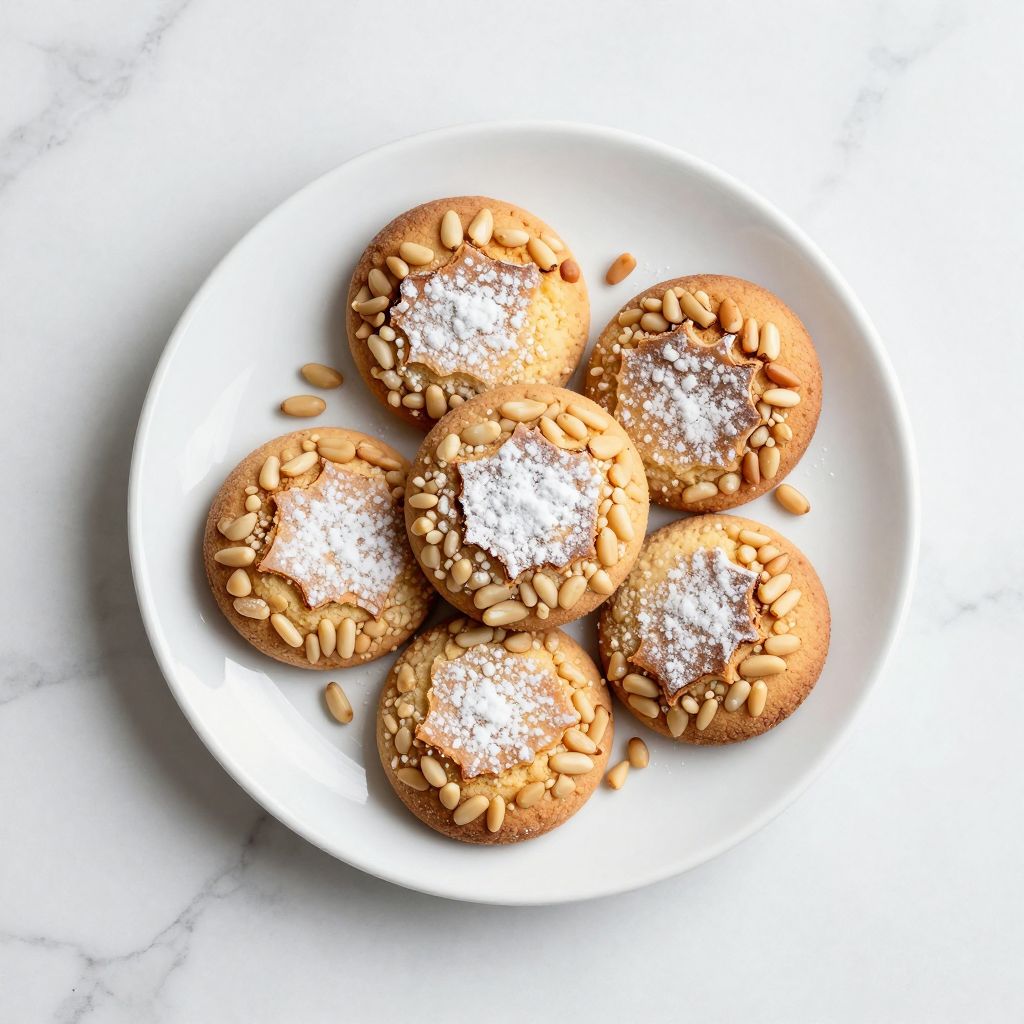
Pignoli cookies are the kind of treat that looks fancy enough to impress but simple enough that you can whip up a batch in under an hour. What makes them special is the contrast: a soft, cake-like center studded with crunchy pine nuts on the outside, wrapped in a delicate almond-flavored exterior that cracks beautifully as they bake.
Why You’ll Love This Recipe
These cookies deliver serious flavor with minimal fuss, and they’re naturally gluten-free if you use the right flour.
- Chewy center with a satisfying crunch from the pine nuts
- Made with almond paste for authentic Italian flavor
- No butter needed, just a few simple pantry staples
- Naturally gluten-free when using certified flour
- Impressive presentation that tastes homemade, not store-bought
My Experience Making This Recipe
I was skeptical the first time I made pignoli cookies because the dough seemed almost too simple. Three ingredients for the base, and yet the transformation that happens in the oven is pure magic.
The moment they came out, golden and crackled on top, I understood why my grandmother guarded her recipe so carefully. The kitchen filled with this warm, nutty aroma that made everyone stop what they were doing and ask, “What’s that smell?”
My kids fought over the ones with the most pine nuts, and my husband asked if he could request them for every birthday from now on. That’s when I knew this recipe was a keeper for our family rotation.
Recipe Overview
- Recipe Name: Pignoli Cookies
- Servings: 24 cookies
- Prep Time: 15 minutes
- Cook Time: 12 minutes
- Total Time: 27 minutes
- Course: Dessert
- Cuisine: Italian
- Calories per Serving: 95
Equipment You Will Need
- Stand mixer or hand mixer
- Large mixing bowl
- Small shallow bowl for rolling
- Baking sheets
- Parchment paper
- Measuring cups and spoons
- Cookie scoop (optional but helpful)
- Cooling racks
Ingredients for Pignoli Cookies
- 8 ounces almond paste, at room temperature
- 1 cup granulated sugar
- 3 large egg whites
- 1 teaspoon vanilla extract
- 1/4 teaspoon almond extract
- 1/2 teaspoon salt
- 1 cup pine nuts, for coating
- Powdered sugar for rolling (optional)
Ingredient Notes and Substitutions
- Almond paste adds the signature nutty depth and tender crumb that makes pignoli cookies special; you can substitute with 3/4 cup almond butter, though the texture will be slightly denser.
- Granulated sugar sweetens the dough and helps create the signature crackled top; coconut sugar works but may darken the cookies faster.
- Egg whites provide structure and help the dough hold together; there’s no direct substitute, but you can use aquafaba (3 tablespoons per egg white) for vegan cookies, though the texture will be less fluffy.
- Vanilla and almond extracts give authentic flavor; if you only have vanilla, use 1 teaspoon total and reduce the almond extract.
- Pine nuts are traditional and worth buying; if the cost bothers you, substitute with chopped blanched almonds or sliced almonds, though you’ll lose some of the authentic Italian feel.
How to Make Pignoli Cookies
Step 1: Prepare Your Baking Station
Preheat your oven to 350 degrees Fahrenheit and line two baking sheets with parchment paper. This prevents sticking and helps the cookies bake evenly on the bottom.
Step 2: Combine Almond Paste and Sugar
In a large bowl, beat the almond paste and granulated sugar together on medium speed for about 2 minutes until the mixture looks crumbly but combined. The almond paste can be stubborn at first, so don’t rush this step.
Step 3: Add Egg Whites Gradually
Add the egg whites one at a time, beating well after each addition until fully incorporated. The dough will go from crumbly to smooth and creamy, which usually takes about 3 minutes total.
Step 4: Mix in Extracts and Salt
Add the vanilla extract, almond extract, and salt, then beat for another 30 seconds until everything is evenly distributed. The dough should smell amazing at this point.
Step 5: Prepare the Pine Nut Coating
Pour the pine nuts into a shallow bowl and set it next to your work area. You’ll be rolling the dough balls in these, so easy access makes the process much faster.
Step 6: Scoop and Roll the Dough
Using a cookie scoop or tablespoon, drop portions of dough into the pine nuts, rolling them gently to coat all sides. The dough is soft, so coat each ball fully but handle it as little as possible so the pine nuts actually stick.
Step 7: Arrange on Baking Sheets
Place the coated dough balls on the prepared baking sheets, spacing them about 2 inches apart. These cookies spread a bit during baking, so give them room to breathe.
Step 8: Bake Until Golden
Bake for 12 to 14 minutes, until the tops are light golden brown and the edges look slightly crispy. The centers should still feel a little soft when you pull them out, which is what keeps them chewy.
Step 9: Cool Properly
Let the cookies cool on the baking sheet for 5 minutes, then transfer them to a cooling rack to finish cooling completely. This prevents them from becoming hard and brittle.
Pro Tip: Don’t overbake these cookies; a few seconds too long and they become cake-like instead of chewy, so pull them out when they still look slightly underdone on top.
Tips for the Best Pignoli Cookies
- Make sure your almond paste is soft and spreadable before mixing; cold almond paste will create lumps in your dough and uneven texture.
- Use room-temperature egg whites so they incorporate smoothly into the almond paste mixture without creating a separated, grainy dough.
- Press the pine nuts gently onto the dough balls; too much force crushes them and they won’t coat evenly.
- Don’t skip the parchment paper; these cookies stick easily without it, and cleanup becomes a nightmare.
- Invest in fresh pine nuts if possible; rancid nuts ruin the whole batch, and they’re expensive enough to warrant careful sourcing.
- Let the cookies rest on the baking sheet before moving them; they’re fragile straight out of the oven and will crumble if you rush.
Common Mistakes to Avoid
- Using cold almond paste creates a lumpy, uneven dough that won’t mix properly and produces cookies with inconsistent texture.
- Overbaking turns these cookies cake-like and dry instead of chewy and tender, which defeats their entire purpose.
- Skipping the cooling time on the sheet results in broken, crumbly cookies that fall apart when you try to transfer them.
- Rolling the dough balls too much causes the pine nuts to embed into the dough rather than coat the surface, losing the textural contrast.
- Not spacing the cookies far enough apart causes them to merge together in the oven and creates uneven baking.
Serving Suggestions
These cookies shine with coffee or tea, and they’re elegant enough for a holiday dessert platter or cookie exchange. Pair them with something to cut through the richness of the almond paste.
- Espresso or strong black coffee for a classic pairing
- Sweetened iced tea with lemon for a refreshing contrast
- Hot chocolate for a cozy, indulgent combination
- Dessert wine like moscato for a sophisticated touch
- Fresh berries on the side for brightness and tartness
Variations to Try
- Chocolate Pignoli: Mix 2 tablespoons cocoa powder into the dough and coat the balls with a mix of pine nuts and chopped dark chocolate for a decadent twist.
- Lemon Pignoli: Add 1 teaspoon of fresh lemon zest and reduce the vanilla extract to 1/2 teaspoon for a bright, citrusy version.
- Coconut Pignoli: Substitute half the pine nuts with shredded coconut to create a tropical variation while keeping some of the signature crunch.
- Pistachio Pignoli: Replace the pine nuts with roasted, salted pistachios for a nuttier, earthier flavor profile and a completely different visual appeal.
- Cardamom Spiced: Add 1/4 teaspoon of ground cardamom to the dough for a warm, slightly floral note that’s common in Middle Eastern almond cookies.
Dietary Adaptations
- Gluten-free: These cookies are naturally gluten-free as written since almond paste and egg whites contain no gluten.
- Dairy-free: This recipe contains no dairy, so it’s already suitable for anyone avoiding milk products.
- Vegan: Replace egg whites with 3 tablespoons aquafaba per egg white and use a vegan granulated sugar; the texture will be less fluffy but still delicious.
- Low-carb or keto: Substitute regular sugar with monk fruit sweetener or erythritol at a 1:1 ratio; the cookies will be less crackly on top but still satisfying.
Storage and Reheating
Refrigerator
Store cooled cookies in an airtight container at room temperature for up to 5 days; refrigeration makes them dry faster. For longer storage, keep them in the fridge where they’ll last about a week.
- Place parchment paper between layers to prevent sticking
- Keep away from moisture and humidity which softens the pine nuts
Freezer
These cookies freeze beautifully for up to 3 months, making them perfect for baking ahead. Layer them with parchment in a freezer-safe container to prevent sticking.
- Thaw at room temperature for about 30 minutes before serving
- Don’t thaw in the refrigerator as condensation makes them soggy
Reheating
You can warm cookies briefly in a 300-degree oven for 3 to 5 minutes to restore some softness if they’ve dried out. Never use the microwave, which makes them tough and rubbery.
- Cover with foil while warming to prevent over-browning
- Let cool for a minute before eating as they’ll be hot inside
Nutrition Information
| Nutrient | Amount |
|---|---|
| Calories | 95 |
| Total Fat | 6g |
| Saturated Fat | 0.5g |
| Carbohydrates | 10g |
| Fiber | 1g |
| Sugar | 9g |
| Protein | 3g |
| Sodium | 45mg |
| Cholesterol | 0mg |
These values are estimates and may vary based on specific ingredient brands and preparation methods. This data is for informational purposes and not a substitute for professional nutritional advice.
Frequently Asked Questions
Can I make the dough ahead of time?
Yes, you can refrigerate the dough for up to 2 days in an airtight container. The dough will firm up and be slightly harder to scoop, so let it sit at room temperature for 10 minutes before rolling.
Why are my cookies spreading too much?
If your dough is too warm or if you’re not spacing them far enough apart, they’ll spread excessively. Make sure to chill the dough for 15 minutes if your kitchen is warm, and space them at least 2 inches apart.
Can I substitute the almond extract?
If you don’t have almond extract, you can skip it and use 1.5 teaspoons of vanilla extract instead. The cookies will taste delicious but slightly less authentic.
What’s the best way to get the pine nuts to stick?
Roll the dough balls gently but thoroughly in the pine nuts, making sure they’re well coated on all sides. The oils in the dough naturally help them adhere, so you don’t need any additional moisture.
Why did my cookies come out cake-like instead of chewy?
This almost always means overbaking; these cookies need to come out when the tops are barely golden and the centers still feel soft. They continue cooking slightly on the residual heat of the baking sheet after you remove them.
Final Thoughts
Pignoli cookies might look intimidating, but they’re honestly one of the easiest fancy cookies you can make. If you can beat together three ingredients and roll some dough balls, you’ve got this.
Make a batch this week and taste what your Italian grandmother has been keeping secret all these years. Your kitchen will smell incredible, and everyone around you will wonder where you learned to bake like this.
Pignoli Cookies
Ingredients
Equipment
Method
- Preheat oven to 350 degrees Fahrenheit and line two baking sheets with parchment paper.
- In a large bowl, beat the almond paste and granulated sugar together on medium speed for about 2 minutes until the mixture looks crumbly but combined.
- Add the egg whites one at a time, beating well after each addition until fully incorporated. The dough should go from crumbly to smooth and creamy, which usually takes about 3 minutes total.
- Add the vanilla extract, almond extract, and salt, then beat for another 30 seconds until everything is evenly distributed.
- Pour the pine nuts into a shallow bowl and set it next to your work area.
- Using a cookie scoop or tablespoon, drop portions of dough into the pine nuts, rolling them gently to coat all sides. Handle the dough as little as possible so the pine nuts stick.
- Place the coated dough balls on the prepared baking sheets, spacing them about 2 inches apart.
- Bake for 12 to 14 minutes, until the tops are light golden brown and the edges look slightly crispy. The centers should still feel a little soft when pulled from the oven.
- Let the cookies cool on the baking sheet for 5 minutes, then transfer them to a cooling rack to finish cooling completely.