
When the craving for something vibrant and wholesome hits, nothing quite satisfies like a bowl of Chicken Bibimbap. This Korean classic is a delightful mix of seasoned vegetables, perfectly cooked rice, and tender chicken, all topped with a sunny-side-up egg, making it a feast for both the eyes and the taste buds.
What makes this dish truly special is its versatility and flavor layers that dance on your palate. The harmony of fresh ingredients and savory sauces makes it a go-to recipe for a busy weeknight or a cozy weekend meal.
Why You’ll Love This Recipe
This Chicken Bibimbap recipe is a winner for so many reasons.
- Quick to prepare, perfect for weeknight dinners.
- Colorful and nutritious, packed with veggies.
- Customizable with your favorite toppings.
- Deliciously savory and satisfying.
- Great for meal prep and leftovers.
My Experience Making This Recipe
Every time I make Chicken Bibimbap, it’s like a mini celebration in my kitchen. The sizzling sounds of vegetables and chicken cooking fill the air, creating an irresistible aroma that draws everyone in.
Last time, my family gathered around the table, and their faces lit up as they dug into the colorful bowls. The combination of flavors and textures was a hit, and I couldn’t help but feel proud of serving a dish that brought everyone together.
Recipe Overview
- Recipe Name: Chicken Bibimbap
- Servings: 4
- Prep Time: 20 minutes
- Cook Time: 15 minutes
- Total Time: 35 minutes
- Course: Main Dish
- Cuisine: Korean
- Calories per Serving: 550
Equipment You Will Need
- Large skillet or wok
- Cookware for rice
- Cutting board
- Sharp knife
- Spatula or wooden spoon
- Serving bowls
Ingredients for Chicken Bibimbap
- 2 cups cooked rice (white or brown)
- 1 pound chicken breast, thinly sliced
- 1 tablespoon vegetable oil
- 2 cups assorted vegetables (carrots, spinach, zucchini, bean sprouts)
- 2 eggs
- 2 tablespoons gochujang (Korean chili paste)
- 1 tablespoon soy sauce
- 1 teaspoon sesame oil
- Sesame seeds for garnish
- Green onions, chopped for garnish
Ingredient Notes and Substitutions
- Chicken breast: This is the protein base for the dish, providing flavor and texture. You can substitute it with tofu or beef if preferred.
- Assorted vegetables: These add color and nutrition to the dish. Feel free to swap for whatever you have on hand, like bell peppers or mushrooms.
- Gochujang: This brings a spicy kick and depth. If you can’t find it, mix chili paste with a bit of honey as an alternative.
How to Make Chicken Bibimbap
Step 1: Prepare the Rice
Start by cooking your rice according to package instructions. Use short-grain rice for authenticity; it sticks together beautifully.
Step 2: Cook the Chicken
In a large skillet, heat the vegetable oil over medium heat. Add the sliced chicken and cook for about 5-7 minutes until fully cooked, stirring often.
Step 3: Season the Chicken
Once the chicken is cooked, add soy sauce and sesame oil for flavor. This will enhance the richness of the chicken and add a savory depth.
Step 4: Sauté the Vegetables
In the same skillet, add your assorted vegetables. Sauté for about 3-5 minutes until they’re tender but still crisp.
Step 5: Fry the Eggs
In a separate pan, fry the eggs sunny-side up. The runny yolk will create a creamy sauce when mixed into the bibimbap.
Step 6: Assemble the Bibimbap
In serving bowls, layer the cooked rice, topped with the seasoned chicken and sautéed vegetables. Arrange everything neatly for a beautiful presentation.
Step 7: Add the Gochujang
Top each bowl with a generous dollop of gochujang. This is where the magic happens, as it adds the perfect spice and flavor.
Step 8: Garnish and Serve
Finish with a sprinkle of sesame seeds and chopped green onions. Serve immediately, allowing everyone to mix their own bowls.
Pro Tip: For an authentic experience, use short-grain rice and a variety of colorful vegetables.
Tips for the Best Chicken Bibimbap
- Prep all ingredients beforehand to make the cooking process smooth.
- Use a mix of textures in your vegetables for a satisfying crunch.
- Adjust the amount of gochujang based on your spice preference.
- Serve with additional toppings like kimchi for extra flavor.
- Keep the rice warm until serving to enjoy it at its best temperature.
Common Mistakes to Avoid
- Overcooking the vegetables can lead to mushiness; aim for crisp-tender.
- Using regular long-grain rice instead of short-grain can alter the dish’s texture.
- Skipping the gochujang might lead to a bland flavor profile.
- Not seasoning the chicken properly can result in a lack of depth.
Serving Suggestions
Pair your Chicken Bibimbap with refreshing sides for a complete meal.
- Kimchi for a spicy kick
- Pickled vegetables for tanginess
- Steamed dumplings for extra heartiness
- Cold cucumber salad to balance the heat
Variations to Try
- Swap chicken for bulgogi beef for a different protein and flavor profile.
- Use quinoa instead of rice for a gluten-free option.
- Add avocado slices for a creamy texture.
- Incorporate more seasonal vegetables to mix things up throughout the year.
Dietary Adaptations
- Gluten-free: Use tamari sauce instead of soy sauce.
- Dairy-free: This recipe is naturally dairy-free.
- Vegan/Vegetarian: Replace chicken with tofu or tempeh and omit the egg.
- Low-carb/Keto: Substitute rice with cauliflower rice.
Storage and Reheating
Refrigerator
Store leftovers in an airtight container for up to 3 days.
- Keep the egg separate to prevent it from becoming rubbery.
- Reheat rice and chicken together in the microwave.
Freezer
This dish is best enjoyed fresh but can be frozen for up to a month.
- Freeze chicken and rice separately for best results.
- Vegetables can also be frozen but might lose some texture.
Reheating
Reheat in the microwave or on the stovetop until heated through.
- Add a splash of water to the rice to keep it moist.
- Re-fry the egg fresh for the best texture.
Nutrition Information
| Nutrient | Amount |
|---|---|
| Calories | 550 |
| Total Fat | 20g |
| Saturated Fat | 3g |
| Carbohydrates | 70g |
| Fiber | 5g |
| Sugar | 3g |
| Protein | 30g |
| Sodium | 700mg |
| Cholesterol | 186mg |
This nutritional information is an estimate and may vary based on specific ingredients used.
Frequently Asked Questions
Can I make this dish ahead of time?
Yes, you can prepare the components ahead and assemble them when ready to eat.
What can I use instead of gochujang?
If gochujang is unavailable, mix chili paste with a bit of honey for a similar flavor.
How do I store leftovers?
Store leftovers in an airtight container in the fridge for up to three days.
Why is my rice not sticky?
If your rice isn’t sticky, it may be due to using long-grain rice instead of short-grain.
Can I use frozen vegetables?
Yes, frozen vegetables can be used, but they may have a softer texture when cooked.
Final Thoughts
Making Chicken Bibimbap is a delightful way to explore Korean cuisine in your own kitchen. The vibrant colors and bold flavors make it a dish worth trying.
So gather your ingredients and create your own beautiful bowl of bibimbap; you might just find a new family favorite!
For more delicious recipes, check out our bibimbap sauce recipe or explore the full Chicken Bibimbap recipe.
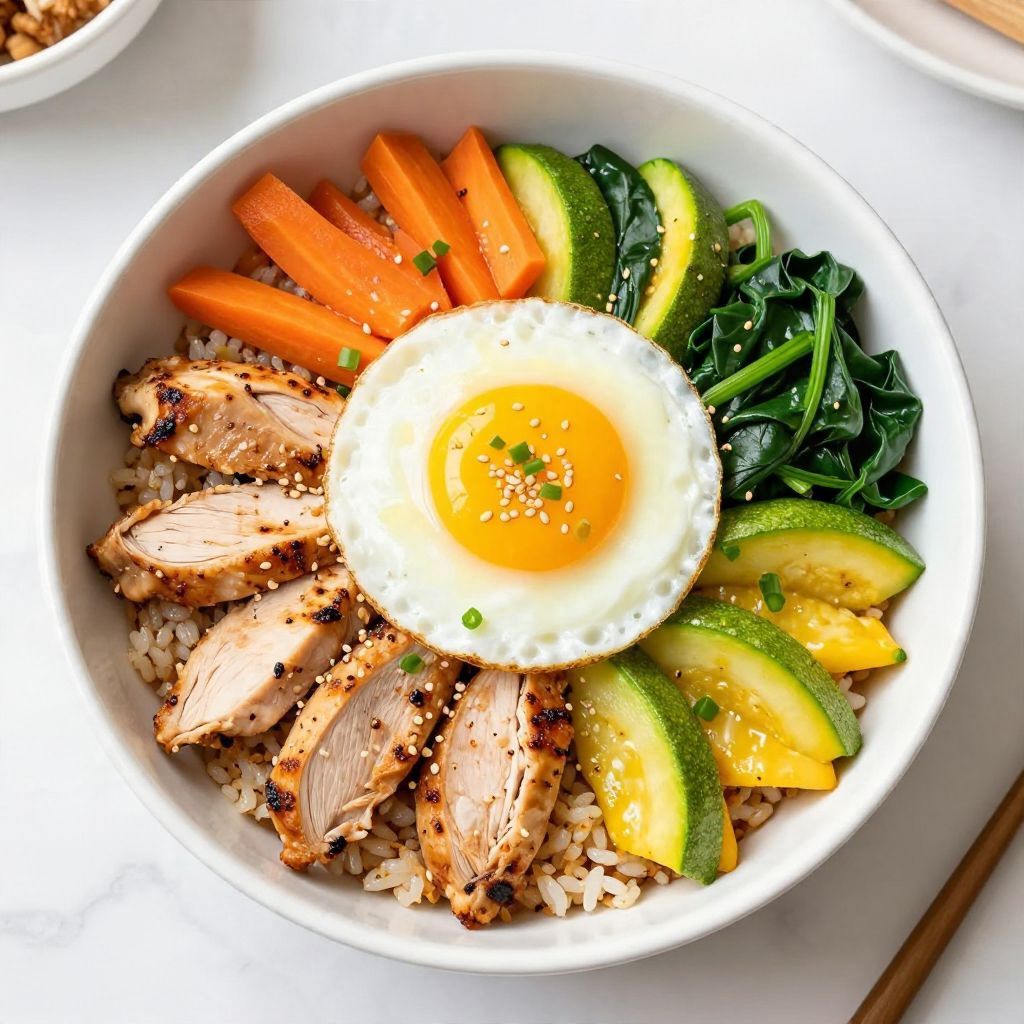
Chicken Bibimbap
Ingredients
Equipment
Method
- Start by cooking your rice according to package instructions.
- In a large skillet, heat the vegetable oil over medium heat.
- Add the sliced chicken and cook for about 5-7 minutes until fully cooked, stirring often.
- Once the chicken is cooked, add soy sauce and sesame oil for flavor.
- In the same skillet, add your assorted vegetables and sauté for about 3-5 minutes until tender but still crisp.
- In a separate pan, fry the eggs sunny-side up.
- In serving bowls, layer the cooked rice, topped with the seasoned chicken and sautéed vegetables.
- Top each bowl with a generous dollop of gochujang.
- Finish with a sprinkle of sesame seeds and chopped green onions.
- Serve immediately, allowing everyone to mix their own bowls.