
The smell of toasted coconut wafting through your kitchen hits different on a lazy Sunday afternoon. These coconut cookies transport me straight back to my grandmother’s beach house, where a tin of homemade cookies always sat waiting on the counter.
This recipe delivers everything you want in a coconut cookie: crispy edges, chewy centers, and an intense tropical flavor that store bought versions simply cannot match. The secret lies in using both shredded coconut and coconut extract, creating layers of flavor that make each bite memorable.
Whether you are baking for a holiday cookie exchange or just satisfying a weekend craving, these cookies come together in under 30 minutes of hands on time. Let me walk you through exactly how to nail them every single time.
Why You Will Love This Recipe
Some recipes earn a permanent spot in your rotation, and this coconut cookie recipe is one of them. Here is what makes it special:
- Golden, crispy edges with soft and chewy centers that stay perfect for days
- Intense coconut flavor from three different sources: shredded coconut, coconut extract, and brown butter
- Simple pantry ingredients with no fancy equipment required
- Freezer friendly dough lets you bake fresh cookies whenever the mood strikes
- Adaptable base recipe that works beautifully with chocolate chips, macadamia nuts, or citrus zest
My Experience Making This Recipe
I have made these coconut cookies at least fifty times over the past few years, and they never disappoint. The first batch I ever made disappeared within hours at a neighborhood potluck, and three people asked for the recipe before I even made it home.
What strikes me most is the aroma that fills the kitchen while these bake. The combination of browning butter and toasting coconut creates this incredible tropical bakery smell that makes waiting the full baking time genuinely difficult.
My kids now request these cookies for every school bake sale, and I have to admit they make me look like a much better baker than I probably am. The texture stays perfect even after a few days in the cookie jar, which rarely happens with homemade cookies in my experience.
Recipe Overview
- Recipe Name: Coconut Cookies
- Servings: 24 cookies
- Prep Time: 15 minutes
- Cook Time: 12 minutes per batch
- Total Time: 45 minutes
- Course: Dessert, Snack
- Cuisine: American
- Calories per Serving: 156 calories
Equipment You Will Need
- Stand mixer or hand mixer with paddle attachment
- Two baking sheets
- Parchment paper or silicone baking mats
- Medium saucepan for browning butter
- Mixing bowls in medium and small sizes
- Measuring cups and spoons
- Wire cooling rack
- Cookie scoop or two spoons
- Rubber spatula
Ingredients for Coconut Cookies
- Unsalted butter: 1 cup (2 sticks), browned and cooled slightly
- Granulated sugar: 3/4 cup
- Brown sugar: 1/2 cup, packed
- Large eggs: 2, at room temperature
- Coconut extract: 1 teaspoon
- Vanilla extract: 1 teaspoon
- All purpose flour: 2 1/4 cups
- Baking soda: 1 teaspoon
- Salt: 1 teaspoon
- Sweetened shredded coconut: 2 cups
- Unsweetened coconut flakes: 1/2 cup, for topping
Ingredient Notes and Substitutions
- Brown butter: Browning the butter adds nutty, caramelized notes that complement coconut perfectly. You can use melted regular butter if pressed for time, though you will lose some depth of flavor.
- Coconut extract: This amplifies the coconut flavor significantly. Substitute with additional vanilla extract or almond extract if unavailable.
- Sweetened shredded coconut: Provides moisture and sweetness to the cookie. Unsweetened works too, but add 2 tablespoons more sugar to compensate.
- Brown sugar: Creates chewiness and adds molasses notes. Coconut sugar makes an excellent one to one substitute with a slight caramel undertone.
- All purpose flour: Provides structure without making cookies tough. Gluten free one to one flour blends work well here.
How to Make Coconut Cookies
Step 1: Brown the Butter
Cut the butter into tablespoon sized pieces and add to a medium saucepan over medium heat. Stir occasionally as the butter melts, foams, and eventually turns golden brown with nutty aromas.
Browning butter takes about 5 to 7 minutes and adds incredible depth to these cookies. Pour the browned butter into a heatproof bowl and let it cool for 10 minutes so it does not scramble your eggs later.
Step 2: Toast the Coconut Flakes
Spread the unsweetened coconut flakes on a baking sheet in a single layer. Toast in a 325 degree oven for 5 to 7 minutes, stirring halfway through, until golden brown.
Toasting intensifies the coconut flavor and adds a beautiful visual contrast on top of each cookie. Watch closely because coconut goes from perfectly toasted to burned in about 30 seconds.
Step 3: Preheat and Prepare
Increase your oven temperature to 350 degrees Fahrenheit. Line two baking sheets with parchment paper or silicone mats.
Proper preparation prevents those frustrating moments when your dough is ready but your pans are not. The parchment also makes cleanup a breeze and prevents sticking.
Step 4: Mix the Wet Ingredients
Add the cooled brown butter and both sugars to your mixer bowl. Beat on medium speed for 2 minutes until the mixture looks slightly lighter in color.
Add the eggs one at a time, beating well after each addition, then mix in the coconut and vanilla extracts. This builds air into the dough, which creates those coveted chewy centers.
Step 5: Combine the Dry Ingredients
Whisk together the flour, baking soda, and salt in a separate bowl. This ensures even distribution of the leavening agent throughout your dough.
Uneven baking soda distribution leads to some cookies that spread too much and others that stay puffy. Trust me, the extra bowl is worth washing.
Step 6: Form the Dough
Add the dry ingredients to the wet ingredients and mix on low speed until just combined. Fold in the sweetened shredded coconut with a rubber spatula until evenly distributed.
Overmixing at this stage activates too much gluten, resulting in tough cookies. Stop mixing the moment you no longer see dry flour streaks.
Step 7: Scoop and Top
Use a cookie scoop or two spoons to portion the dough into 1.5 tablespoon balls. Place them 2 inches apart on your prepared baking sheets.
Press a few toasted coconut flakes gently onto the top of each dough ball. This creates that professional bakery appearance and adds textural contrast.
Step 8: Bake to Perfection
Bake for 10 to 12 minutes, rotating the pan halfway through. The cookies are done when the edges turn golden brown but the centers still look slightly underdone.
They will continue cooking on the hot pan after you remove them from the oven. Let them cool on the baking sheet for 5 minutes before transferring to a wire rack.
Pro Tip: For extra chewy cookies, remove them from the oven when the centers still look slightly glossy and underdone. The residual heat finishes the job perfectly, and you avoid the dreaded dry, crunchy cookie syndrome.
Tips for the Best Coconut Cookies
- Chill your dough for 30 minutes if it feels too soft or sticky to scoop. Cold dough spreads less and creates thicker cookies.
- Use room temperature eggs for better emulsification with the butter. Cold eggs can cause the batter to look curdled.
- Do not skip toasting the coconut flakes for the topping. Raw coconut tastes flat compared to the nutty, caramelized version.
- Rotate your baking sheets halfway through for even browning, especially if your oven has hot spots.
- Let cookies cool completely before storing to prevent condensation from making them soggy.
- For uniform cookies, weigh your dough balls using a kitchen scale. Aim for 35 to 40 grams each.
Common Mistakes to Avoid
- Burning the brown butter: Once the butter turns from golden to dark brown, it becomes bitter. Remove it from heat the moment it smells nutty.
- Using cold butter: Cold brown butter will not cream properly with the sugars, resulting in dense cookies with poor texture.
- Overbaking: Cookies that look perfectly done in the oven will be overdone once cooled. Pull them early.
- Crowding the baking sheet: Cookies placed too close together will merge into one giant cookie blob. Maintain that 2 inch spacing.
- Skipping the cooling time: Moving cookies too soon causes them to break apart. Patience pays off here.
Serving Suggestions
These coconut cookies shine on their own but also play well with other flavors. Consider these delicious pairings:
- A tall glass of cold milk or iced coffee for classic cookie dunking
- Tropical fruit salad with mango, pineapple, and passion fruit
- Vanilla bean ice cream sandwiched between two cookies
- Hot chai tea or Earl Grey for an afternoon snack
- A drizzle of melted dark chocolate for an elegant finish
Variations to Try
- Chocolate Coconut Cookies: Fold in 1 cup of dark chocolate chips with the shredded coconut for a flavor combination that tastes like a candy bar.
- Lime Coconut Cookies: Add 1 tablespoon of fresh lime zest to the dough for a bright, tropical twist.
- Macadamia Coconut Cookies: Roughly chop 1 cup of roasted macadamia nuts and add them with the coconut for extra crunch.
- Pina Colada Cookies: Mix in 1/2 cup of finely chopped dried pineapple for a fruity, vacation inspired treat.
- Salted Caramel Coconut Cookies: Press a small caramel square into the center of each dough ball before baking and sprinkle with flaky sea salt.
Dietary Adaptations
- Gluten Free: Replace all purpose flour with a one to one gluten free baking blend. Results are nearly identical with minimal texture difference.
- Dairy Free: Use coconut oil in place of butter. Skip the browning step and use 3/4 cup of solid coconut oil at room temperature.
- Vegan: Combine the dairy free adaptation with flax eggs. Mix 2 tablespoons ground flax with 6 tablespoons water for the egg replacement.
- Lower Sugar: Reduce total sugar to 3/4 cup and use unsweetened coconut throughout. Cookies will be less sweet but still satisfying.
Storage and Reheating
Refrigerator
Baked cookies stay fresh at room temperature for up to 5 days in an airtight container. Refrigerate cookie dough for up to 3 days.
- Store in a single layer with parchment between layers to prevent sticking
- Add a slice of bread to the container to keep cookies soft
Freezer
Both baked cookies and unbaked dough freeze beautifully for up to 3 months. Flash freeze dough balls on a baking sheet before transferring to a freezer bag.
- Label bags with the date and baking instructions
- Thaw baked cookies at room temperature for 30 minutes
Reheating
Warm cookies taste freshly baked with minimal effort. A quick reheat restores that just out of the oven texture.
- Microwave individual cookies for 10 to 15 seconds
- Warm a batch in a 300 degree oven for 5 minutes
Nutrition Information
| Nutrient | Amount |
|---|---|
| Calories | 156 |
| Total Fat | 9g |
| Saturated Fat | 7g |
| Carbohydrates | 18g |
| Fiber | 1g |
| Sugar | 11g |
| Protein | 2g |
| Sodium | 142mg |
| Cholesterol | 31mg |
Nutritional values are estimates based on standard ingredients and may vary based on specific brands and substitutions used.
Frequently Asked Questions
Can I use desiccated coconut instead of shredded coconut?
Yes, desiccated coconut works but creates a slightly drier texture. Soak it in warm milk for 10 minutes and drain before using to restore moisture.
How do I prevent my cookies from spreading too much?
Chilling the dough for at least 30 minutes solves most spreading issues. Using too soft butter or baking on a warm sheet also causes excessive spread.
Can I make the dough ahead of time?
Absolutely, and many bakers say chilled dough produces even better cookies. Refrigerate for up to 3 days or freeze for up to 3 months.
Why are my cookies flat and crispy instead of chewy?
Overbaking is the usual culprit. Pull your cookies when the centers still look slightly underdone and they will set up perfectly as they cool.
Can I use coconut flour instead of all purpose flour?
Coconut flour absorbs liquid very differently and requires a completely different recipe. Stick with all purpose or a gluten free one to one blend for this recipe.
Final Thoughts
These coconut cookies deliver that perfect balance of crispy edges and chewy centers that make homemade cookies worth the effort. The brown butter adds a sophisticated depth that elevates them far above basic cookie recipes.
Give this recipe a try and let the smell of toasted coconut fill your kitchen. Once you taste that first warm cookie, you will understand why this recipe has become a staple in my baking rotation.
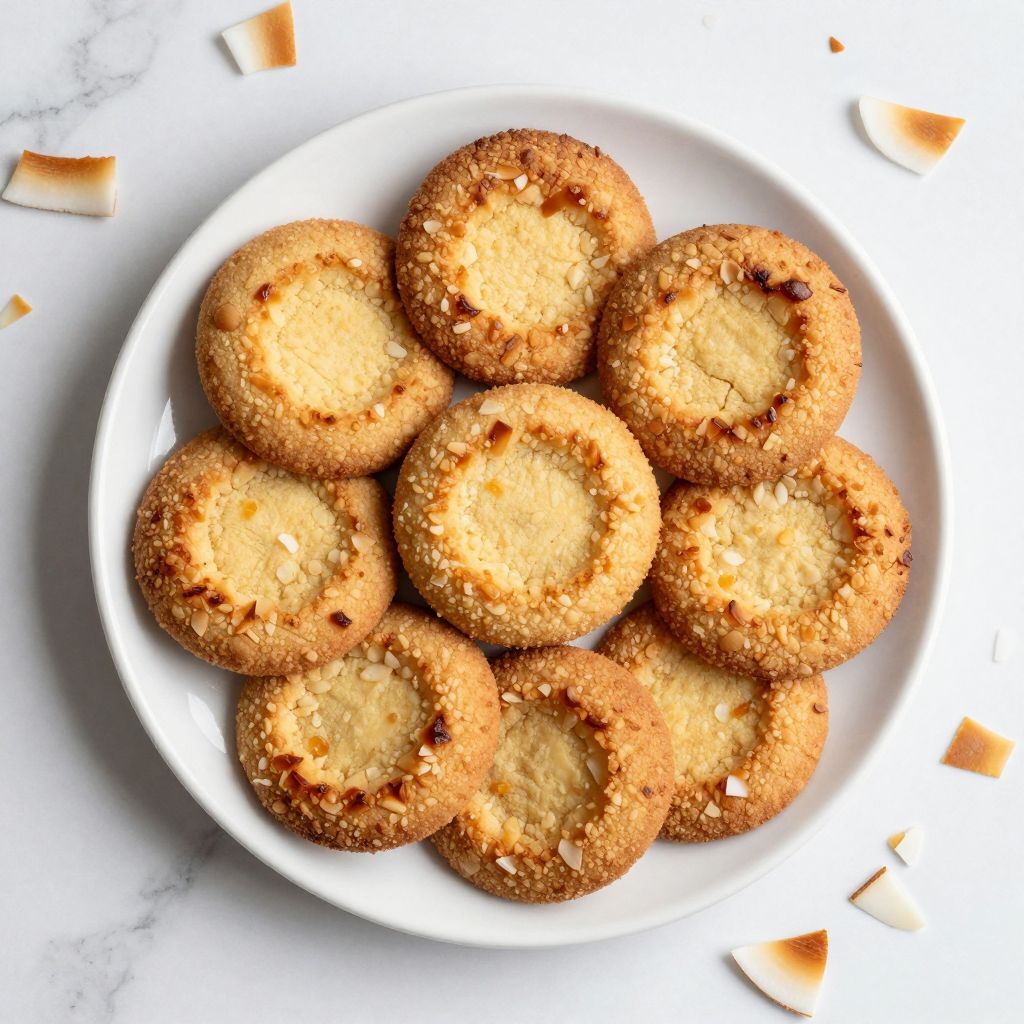
Coconut Cookies
Ingredients
Equipment
Method
- Cut the butter into tablespoon sized pieces and add to a medium saucepan over medium heat. Stir occasionally as the butter melts, foams, and eventually turns golden brown with nutty aromas, about 5 to 7 minutes. Pour into a heatproof bowl and cool for 10 minutes.
- Spread the unsweetened coconut flakes on a baking sheet in a single layer. Toast in a 325 degree Fahrenheit oven for 5 to 7 minutes, stirring halfway through, until golden brown. Set aside.
- Preheat your oven to 350 degrees Fahrenheit. Line two baking sheets with parchment paper or silicone mats.
- Add the cooled brown butter and both sugars to your mixer bowl. Beat on medium speed for 2 minutes until the mixture looks slightly lighter in color.
- Add the eggs one at a time, beating well after each addition, then mix in the coconut and vanilla extracts.
- Whisk together the flour, baking soda, and salt in a separate bowl.
- Add the dry ingredients to the wet ingredients and mix on low speed until just combined. Fold in the sweetened shredded coconut with a rubber spatula until evenly distributed.
- Use a cookie scoop or two spoons to portion the dough into 1.5 tablespoon balls. Place them 2 inches apart on your prepared baking sheets. Press a few toasted coconut flakes gently onto the top of each dough ball.
- Bake for 10 to 12 minutes, rotating the pan halfway through. The cookies are done when the edges turn golden brown but the centers still look slightly underdone.
- Let cookies cool on the baking sheet for 5 minutes before transferring to a wire rack to cool completely.