
Imagine the smell of fresh bread wafting through your home, inviting you to slice into a crusty loaf with a soft, tangy interior. The Basic Sourdough Bread Recipe With Starter is not just about satisfying cravings; it’s about the joy of creating something magical from just a few simple ingredients. The unique flavor, delightful texture, and the art of fermentation make this bread a must-try for any home baker. Ready to roll up your sleeves and get started? Let’s gather our ingredients!
Why You’ll Love This Recipe
This recipe is a favorite for many reasons.
- Simple ingredients you probably have at home.
- Deliciously tangy flavor that improves with each bake.
- Perfect for sandwiches, toast, or just enjoying with butter.
- Customizable with add-ins like herbs or cheese.
- Impressive to serve at gatherings or to gift.
My Experience Making This Recipe
Each time I bake this bread, I’m reminded of the joy of nurturing my sourdough starter. Watching it bubble and grow is oddly satisfying, and the anticipation of the baking process never fades.
When I finally slice into the finished loaf, the crust crackles, and the aroma fills the kitchen, making it hard to resist having a slice right away. Friends and family always rave about it, and I can’t help but feel proud of my homemade creation.
Recipe Overview
- Recipe Name: Basic Sourdough Bread Recipe With Starter
- Servings: 1 loaf
- Prep Time: 30 minutes (plus rising time)
- Cook Time: 45 minutes
- Total Time: 12 hours (including fermentation)
- Course: Bread
- Cuisine: Bakery-style
- Calories per Serving: Approximately 150
Equipment You Will Need
- Mixing bowl
- Bench scraper
- Dutch oven or baking stone
- Kitchen scale (optional but recommended)
- Proofing basket or bowl
- Kitchen towel or plastic wrap
Ingredients for Basic Sourdough Bread Recipe With Starter
- 500g bread flour – Provides structure and chewiness.
- 350g water – Hydrates the dough for better gluten development.
- 100g active sourdough starter – Leavening agent that adds flavor.
- 10g salt – Enhances flavor and strengthens the dough.
Ingredient Notes and Substitutions
- Bread flour: It has higher protein content for better structure. You can substitute with all-purpose flour, but the texture might be less chewy.
- Water: Use filtered water for the best results. Tap water may contain chemicals that affect fermentation.
- Sourdough starter: Use a well-fed and bubbly starter. You can purchase a starter or make your own from flour and water.
- Salt: It’s crucial for flavor and dough strength. Sea salt or kosher salt works well.
How to Make Basic Sourdough Bread Recipe With Starter
Step 1: Combine Ingredients
In a large mixing bowl, combine the bread flour, water, and sourdough starter. Mixing these together creates a wet dough that will begin the fermentation process.
Step 2: Autolyse the Dough
Let the mixture rest for about 30 minutes. This step allows the flour to absorb the water, making it easier to knead and develop gluten.
Step 3: Add Salt
Sprinkle the salt over the dough and mix it in thoroughly. Salt strengthens the gluten structure and balances the fermentation process.
Step 4: Knead the Dough
Knead the dough on a floured surface for about 10 minutes until smooth and elastic. Proper kneading develops the gluten, which is essential for the bread’s texture.
Step 5: First Rise (Bulk Fermentation)
Place the dough in a greased bowl, cover it, and let it rise at room temperature for 4 to 6 hours, or until doubled in size. This allows the flavors to develop as the dough ferments.
Step 6: Shape the Dough
Once risen, gently turn the dough out onto a floured surface and shape it into a round loaf. Shaping creates surface tension, which helps the bread rise properly during baking.
Step 7: Second Rise (Proofing)
Place the shaped dough in a proofing basket, cover it again, and let it rise for 1 to 2 hours. This final rise is crucial for achieving that lovely airy crumb.
Step 8: Preheat the Oven
About 30 minutes before baking, preheat your oven to 450°F (232°C) with a Dutch oven inside. This ensures a hot, steamy environment for the bread to rise in the first minutes of baking.
Step 9: Bake the Bread
Carefully remove the hot Dutch oven, place the dough inside, and cover. Bake for 30 minutes covered, then 15 minutes uncovered for a beautifully browned crust.
Pro Tip: Always use a kitchen scale for accurate measurements; it makes a world of difference in baking!
Tips for the Best Basic Sourdough Bread
- Use a healthy starter for the best rise and flavor.
- Experiment with hydration levels to find your preferred dough consistency.
- Keep the dough covered during rising to prevent drying out.
- Consider using a baking stone for an even crust.
- Score the dough before baking to control how it expands in the oven.
Common Mistakes to Avoid
- Not feeding your starter regularly can lead to poor fermentation.
- Skipping the autolyse step may result in a tougher dough.
- Over-kneading can make the bread dense instead of airy.
- Insufficient rising time results in flat bread.
- Neglecting to preheat the oven can yield a less-than-crispy crust.
Serving Suggestions
This sourdough bread is perfect for a variety of meals.
- Enjoy it warm with butter and jam.
- Use it for hearty sandwiches.
- Pair it with soups or stews for a comforting meal.
- Toast it for breakfast with avocado or eggs.
- Slice it thin for a cheese platter.
Variations to Try
- Add herbs like rosemary or thyme for an aromatic loaf.
- Mix in cheese for a savory flavor boost.
- Incorporate nuts or dried fruits for a unique twist.
- Experiment with different types of flours for varied flavors.
- Try adding seeds like sunflower or sesame for crunch.
Dietary Adaptations
- Gluten-free: Use a gluten-free flour blend, but results may vary.
- Dairy-free: This recipe is naturally dairy-free.
- Vegan: No animal products are used in this recipe.
- Low-carb/Keto: Traditional sourdough is not low-carb; consider almond flour recipes instead.
Storage and Reheating
Refrigerator
Store leftover bread in a paper bag or wrapped in a kitchen towel. This helps maintain the crust’s integrity.
- Keep it for up to 3 days.
- For longer storage, consider freezing.
Freezer
Wrap the bread tightly in plastic wrap and then aluminum foil. This prevents freezer burn and retains flavor.
- Store for up to 3 months.
- Thaw at room temperature when ready to eat.
Reheating
Reheat in a preheated oven at 350°F (175°C) for about 10 minutes. This revives the crust.
- Alternatively, toast slices in a toaster.
Nutrition Information
| Nutrient | Amount |
|---|---|
| Calories | 150 |
| Total Fat | 0.5g |
| Saturated Fat | 0g |
| Carbohydrates | 31g |
| Fiber | 1g |
| Sugar | 0g |
| Protein | 5g |
| Sodium | 400mg |
| Cholesterol | 0mg |
This nutrition information is approximate and may vary based on specific ingredients used.
Frequently Asked Questions
Can I use all-purpose flour instead of bread flour?
Yes, but your bread may not have the same chewy texture.
How do I know if my sourdough starter is active?
Your starter should be bubbly and have doubled in size within a few hours after feeding.
Can I make this bread ahead of time?
Yes, you can prepare the dough and refrigerate it overnight before baking.
Why is my sourdough bread dense?
Dense bread may be due to insufficient rising time or an inactive starter.
Can I add seeds or nuts to the dough?
Absolutely! Just fold them in during the kneading process for added flavor and texture.
Final Thoughts
Baking your own sourdough bread is a rewarding experience that fills your home with warmth and wonderful aromas. With practice, you’ll refine your technique and create the perfect loaf every time.
If you’re eager to explore more bread recipes, check out this same day sourdough bread recipe or try the King Arthur sourdough recipe for more inspiration!
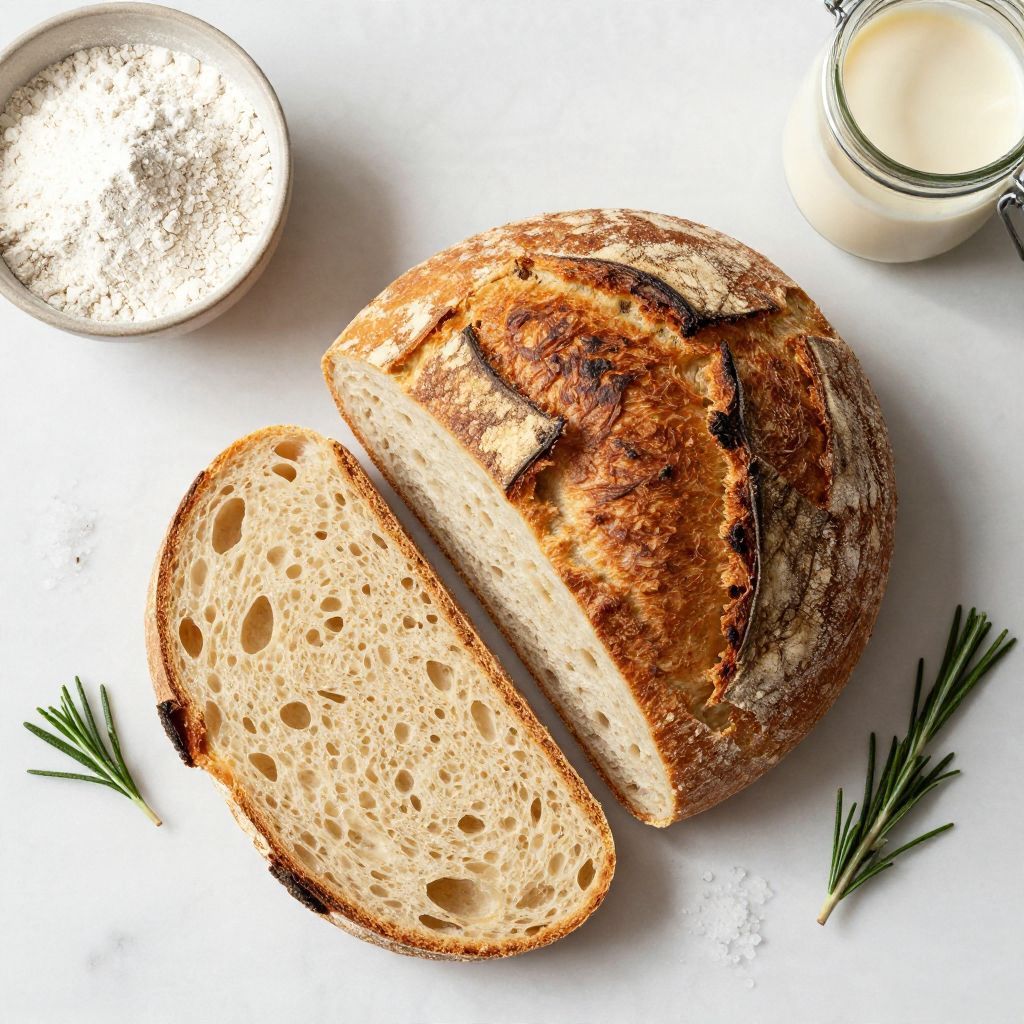
Basic Sourdough Bread Recipe With Starter
Ingredients
Equipment
Method
- In a large mixing bowl, combine the bread flour, water, and sourdough starter.
- Let the mixture rest for about 30 minutes.
- Sprinkle the salt over the dough and mix it in thoroughly.
- Knead the dough on a floured surface for about 10 minutes until smooth and elastic.
- Place the dough in a greased bowl, cover it, and let it rise at room temperature for 4 to 6 hours, or until doubled in size.
- Gently turn the dough out onto a floured surface and shape it into a round loaf.
- Place the shaped dough in a proofing basket, cover it again, and let it rise for 1 to 2 hours.
- About 30 minutes before baking, preheat your oven to 450°F (232°C) with a Dutch oven inside.
- Carefully remove the hot Dutch oven, place the dough inside, and cover.
- Bake for 30 minutes covered, then 15 minutes uncovered.