Monkfish recipe enthusiasts know this meaty white fish delivers restaurant quality results at home with minimal effort. Often called poor man’s lobster for its firm texture and sweet flavor, monkfish transforms into an elegant dinner that impresses every time. Whether you are hosting a special occasion or treating yourself to something extraordinary, this recipe brings out the best in this underrated seafood.
The preparation is surprisingly simple for such an impressive dish. You will master a technique that keeps the fish tender while building incredible flavor through a golden sear and aromatic butter sauce.
Why You’ll Love This Recipe
This monkfish preparation balances simplicity with sophistication, giving you professional results without complicated techniques. The fish itself does most of the heavy lifting with its naturally sweet, lobster-like taste.
- Cooks in under 20 minutes from start to finish
- The firm texture holds up beautifully without falling apart
- Requires just a handful of quality ingredients to shine
- Adaptable to various flavor profiles and dietary needs
- Impressive enough for guests but easy enough for weeknights
My Experience Making This Recipe
The first time I cooked monkfish, I was skeptical about the lobster comparison people always make. After one bite of that sweet, dense flesh with a buttery herb coating, I became a complete convert.
My dinner guests couldn’t stop asking what made the fish so special and meaty. The golden crust against the pearly white interior looked like something from a high-end seafood restaurant.
What surprised me most was how forgiving monkfish is compared to delicate fish like sole or flounder. You get a generous window to achieve perfection without the anxiety of overcooking.
Recipe Overview
- Recipe Name: Pan-Seared Monkfish with Garlic Butter
- Servings: 4
- Prep Time: 10 minutes
- Cook Time: 12 minutes
- Total Time: 22 minutes
- Course: Main Course
- Cuisine: French-Inspired
- Calories per Serving: 285
Equipment You Will Need
- Large heavy-bottomed skillet or cast iron pan
- Sharp chef’s knife
- Paper towels
- Tongs or fish spatula
- Cutting board
- Small bowl for mixing
- Meat thermometer (optional but helpful)
Ingredients for Monkfish Recipe
For the Fish
- 1.5 pounds monkfish fillets, membrane removed and cut into 4 portions
- 2 tablespoons olive oil
- 1 teaspoon sea salt
- 1/2 teaspoon black pepper, freshly ground
- 1/2 teaspoon smoked paprika
For the Garlic Butter Sauce
- 4 tablespoons unsalted butter
- 4 cloves garlic, minced
- 2 tablespoons fresh lemon juice
- 2 tablespoons fresh parsley, chopped
- 1 tablespoon capers (optional)
- Pinch of red pepper flakes
Ingredient Notes and Substitutions
- Monkfish: The star ingredient provides a meaty texture similar to lobster tail. You can substitute with halibut or cod, though the texture will be slightly more delicate.
- Olive oil: Creates the initial sear and prevents sticking without burning. Avocado oil works equally well for high-heat cooking.
- Unsalted butter: Builds richness in the sauce and allows you to control salt levels. Ghee works if you need a dairy-free option with butter flavor.
- Fresh lemon juice: Cuts through the richness and brightens the sweet fish flavor. Lime juice or white wine vinegar can substitute in a pinch.
- Smoked paprika: Adds depth and a subtle smoky note without overpowering. Regular paprika or a pinch of cayenne can replace it.
- Fresh parsley: Provides color and a fresh herbal note. Fresh basil, dill, or cilantro offer different but equally delicious flavor profiles.
How to Make Monkfish Recipe
Step 1: Prepare the Monkfish
Pat the monkfish fillets completely dry with paper towels, removing every bit of surface moisture. Season all sides generously with salt, pepper, and smoked paprika, pressing the seasonings into the flesh so they adhere properly.
Dry fish is the secret to achieving that beautiful golden crust instead of a steamed, gray exterior. The seasonings need direct contact with the protein to develop flavor during the sear.
Step 2: Heat the Pan Properly
Place your heavy skillet over medium-high heat and let it warm for 2 to 3 minutes until quite hot. Add the olive oil and swirl to coat the entire bottom surface evenly.
A properly heated pan prevents sticking and creates an instant sear that locks in moisture. If the oil shimmers and moves like water, you have reached the right temperature.
Step 3: Sear the First Side
Carefully lay each monkfish portion in the hot pan, placing them gently away from you to avoid oil splatter. Let them cook undisturbed for 4 to 5 minutes until a deep golden crust forms on the bottom.
Resist the urge to move or flip the fish too early, as this interrupts crust formation. The fish will release naturally from the pan when a proper sear develops.
Step 4: Flip and Continue Cooking
Use a fish spatula or tongs to gently flip each fillet to the opposite side. Cook for another 3 to 4 minutes until the second side achieves similar golden color.
Monkfish is done when it reaches an internal temperature of 145 degrees Fahrenheit and turns opaque throughout. The firm texture means it won’t flake like other fish, so temperature is your best doneness indicator.
Step 5: Remove Fish and Rest
Transfer the cooked monkfish to a clean plate and tent loosely with foil. Let the fillets rest while you prepare the sauce, allowing juices to redistribute throughout the meat.
Resting prevents all those delicious juices from running out when you cut into the fish. This brief pause also gives you time to build the sauce in the same flavorful pan.
Step 6: Build the Garlic Butter Sauce
Reduce the heat to medium and add butter to the same pan, scraping up any browned bits stuck to the bottom. Add minced garlic and red pepper flakes, stirring constantly for 30 to 45 seconds until fragrant but not browned.
Those browned bits carry concentrated fish and spice flavors that enrich your sauce immensely. Garlic burns quickly, so constant motion and lower heat protect it from turning bitter.
Step 7: Finish the Sauce
Stir in the lemon juice and capers if using, letting the mixture bubble for 20 seconds. Remove from heat and add the chopped parsley, swirling to combine all elements.
The acid from lemon balances the butter richness while complementing the sweet monkfish perfectly. Fresh herbs added off heat retain their bright color and fresh flavor.
Step 8: Plate and Serve
Return the rested monkfish to the pan briefly to coat with sauce, or arrange on plates and spoon the garlic butter over each portion. Serve immediately while everything is hot and the butter sauce is silky.
Monkfish cools quickly, so prompt serving preserves that just-cooked texture and temperature. The glossy sauce should pool around the fish invitingly on the plate.
Pro Tip: Always remove the thin gray membrane from monkfish before cooking, as it shrinks dramatically and causes the fish to curl and toughen. Your fishmonger can do this, or you can slide a sharp knife between the membrane and flesh to peel it away.
Tips for the Best Monkfish Recipe
- Buy the freshest monkfish possible, looking for firm, translucent flesh with a clean ocean smell rather than any fishy odor. Freshness makes an enormous difference in the final sweetness and texture.
- Cut portions into similar thickness so they cook evenly at the same rate. Uneven pieces result in some being overcooked while others remain underdone.
- Don’t overcrowd the pan, leaving at least an inch between pieces for proper air circulation. Crowding drops the pan temperature and causes steaming instead of searing.
- Use a splatter screen if you have one, as monkfish releases moisture that can cause aggressive popping. This simple tool keeps your stovetop clean without affecting the cooking process.
- Taste your sauce before adding extra salt, since capers and the seasoned fish contribute saltiness. You can always add more but can’t remove excess.
- Pair with simple sides that don’t compete with the delicate fish flavor, like roasted vegetables or a light salad. Heavy, creamy sides overwhelm rather than complement.
Common Mistakes to Avoid
- Cooking monkfish straight from the refrigerator causes uneven cooking with a cold center. Let it sit at room temperature for 15 minutes before cooking for better results.
- Using too low heat produces a pale, rubbery exterior instead of the caramelized crust you want. High heat creates texture contrast between the crispy outside and tender inside.
- Flipping the fish multiple times disrupts crust formation and can cause the fillet to break apart. One flip is all you need for perfect cooking.
- Overcooking turns the naturally firm texture into something unpleasantly rubbery and dry. Monkfish is done when just opaque, not when it’s rock hard.
- Skipping the membrane removal step guarantees a chewy, unpleasant texture that ruins the eating experience. Those extra two minutes of prep pay huge dividends.
Serving Suggestions
This elegant monkfish pairs beautifully with light, fresh accompaniments that let the sweet fish flavor shine. Think bright vegetables and simple starches rather than heavy, creamy sides.
- Serve over creamy mashed potatoes or celery root puree to soak up the garlic butter sauce
- Pair with roasted asparagus or broccolini for a pop of color and textural contrast
- Accompany with a crisp arugula salad dressed simply with lemon and olive oil
- Add crusty bread to mop up every drop of that incredible sauce
- Serve alongside sautéed spinach with garlic for a restaurant-style presentation
Variations to Try
- Mediterranean style: Replace the garlic butter with a tomato-olive sauce made from cherry tomatoes, kalamata olives, and fresh oregano. This brings bright, tangy flavors that complement the sweet fish beautifully.
- Asian-inspired glaze: Brush with a mixture of soy sauce, honey, ginger, and sesame oil during the last minute of cooking. The sweet-savory glaze creates an addictive caramelized coating.
- Herb-crusted version: Press a mixture of panko breadcrumbs, parmesan, and fresh herbs onto one side before searing. This adds wonderful crunch and makes the dish even more substantial.
- Curry-spiced variation: Season with curry powder instead of paprika and finish with coconut milk instead of butter. The warm spices and creamy sauce transport the dish to completely different flavor territory.
- Bacon-wrapped preparation: Wrap each portion in thin bacon strips before searing for added richness. The bacon fat bastes the fish while adding smoky, salty depth.
Dietary Adaptations
- Gluten-free: This recipe is naturally gluten-free as written, with no flour or breadcrumbs required. Just verify that any additional seasonings or condiments are certified gluten-free.
- Dairy-free: Replace the butter with extra olive oil or use ghee for a similar richness without the milk solids. The sauce will be lighter but still delicious.
- Low-carb/Keto: This recipe fits perfectly into low-carb plans with only 2 grams of carbs per serving. Pair with cauliflower mash and green vegetables to keep the entire meal keto-friendly.
- Paleo: The recipe is already paleo-compliant when using ghee instead of butter. Monkfish provides excellent protein without any processed ingredients.
Storage and Reheating
Refrigerator
Store leftover cooked monkfish in an airtight container for up to 2 days in the refrigerator. The texture changes slightly upon storage but remains perfectly edible.
- Let the fish cool completely before refrigerating to prevent condensation
- Store the sauce separately if possible to maintain the best texture
- Place parchment paper between stacked pieces to prevent sticking
Freezer
Freezing cooked monkfish is not recommended as the texture becomes quite rubbery and unpleasant upon thawing. Freeze raw monkfish instead for up to 3 months if needed.
- Wrap raw portions tightly in plastic wrap, then aluminum foil
- Label with the date and use within 3 months for best quality
- Thaw overnight in the refrigerator before cooking
Reheating
Gentle reheating preserves the texture better than high heat, which toughens the fish further. The goal is to warm through without additional cooking.
- Reheat in a covered skillet over low heat with a splash of water or broth for 3 to 4 minutes
- Microwave on 50% power in 30-second intervals until just warmed through
- Avoid reheating more than once, as repeated heating degrades texture significantly
Nutrition Information
| Nutrient | Amount |
|---|---|
| Calories | 285 |
| Total Fat | 18g |
| Saturated Fat | 8g |
| Carbohydrates | 2g |
| Fiber | 0g |
| Sugar | 0g |
| Protein | 28g |
| Sodium | 720mg |
| Cholesterol | 95mg |
Nutritional values are estimates based on standard ingredient databases and may vary depending on specific brands and preparation methods used. Monkfish is naturally low in calories and high in protein, making it an excellent choice for health-conscious diners.
Frequently Asked Questions
Can I use frozen monkfish for this recipe?
Yes, but thaw it completely in the refrigerator overnight and pat it extremely dry before cooking. Frozen fish releases more moisture during cooking, so extra drying time prevents a soggy result.
What does monkfish taste like compared to other fish?
Monkfish has a mild, slightly sweet flavor with a dense, meaty texture similar to lobster tail or scallops. The firm flesh holds up better than delicate fish like cod or tilapia.
Can I prepare this recipe ahead of time?
You can season the fish and prep all ingredients up to 4 hours ahead, storing everything refrigerated separately. Cook just before serving for the best texture and temperature.
Why is my monkfish rubbery after cooking?
Rubbery texture usually results from overcooking the fish past 145 degrees internal temperature. Use a thermometer and remove the fish from heat when it just turns opaque for perfect tenderness.
What size monkfish fillets work best?
Look for portions between 6 to 8 ounces each, roughly 1.5 inches thick for even cooking. Thinner pieces cook too quickly and risk drying out before developing a good crust.
Can I grill monkfish instead of pan-searing?
Absolutely, monkfish is sturdy enough for grilling and develops beautiful char marks over direct heat. Oil the grates well and cook for 4 to 5 minutes per side over medium-high heat.
Is the pink or gray membrane edible?
While technically edible, the membrane becomes extremely tough and chewy when cooked, ruining the eating experience. Always remove it completely before cooking for the best results.
Final Thoughts
This monkfish recipe proves that restaurant-quality seafood belongs in your home kitchen without intimidation or complexity. The sweet, meaty fish paired with aromatic garlic butter creates a meal that feels special every single time you make it.
Give this recipe a try the next time you spot fresh monkfish at your seafood counter. You might just discover your new favorite way to enjoy fish that rivals any high-end dining experience.
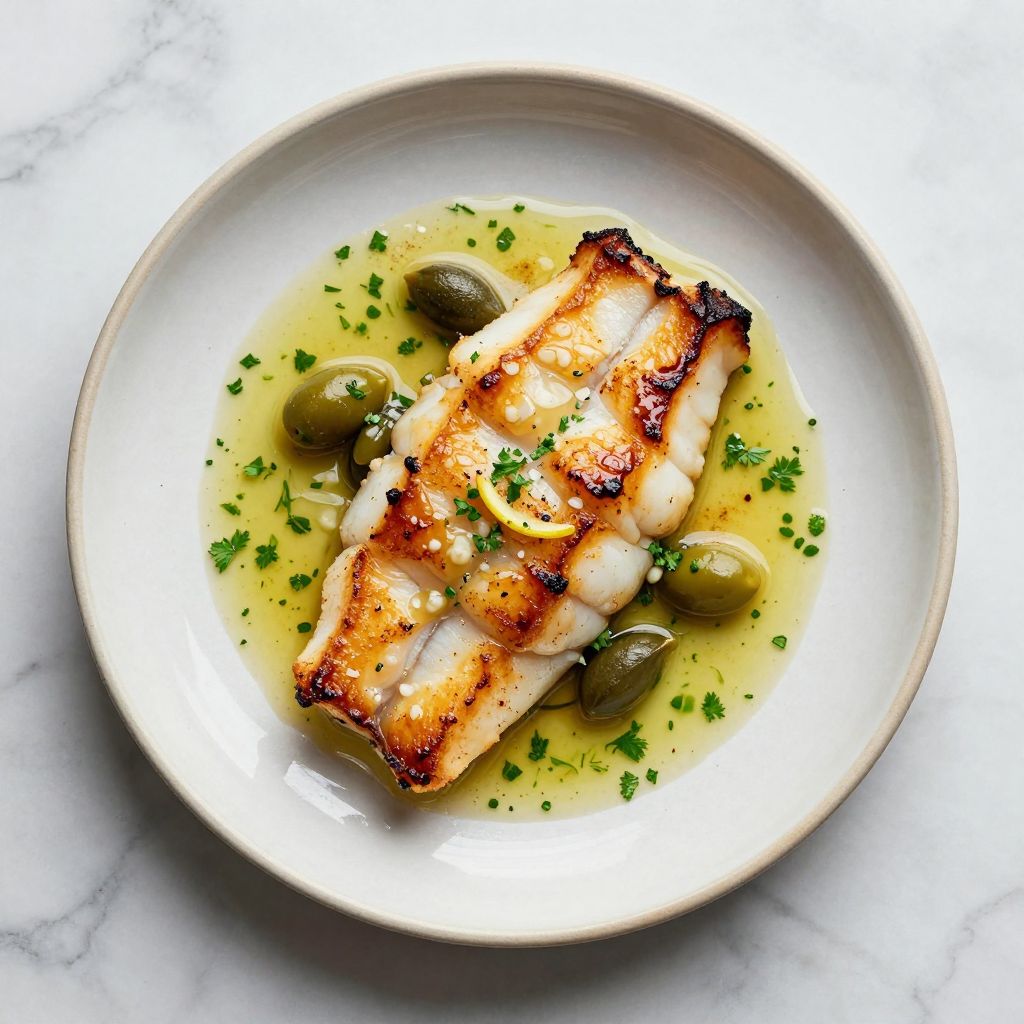
Pan-Seared Monkfish with Garlic Butter
Ingredients
Equipment
Method
- Pat the monkfish fillets completely dry with paper towels, removing every bit of surface moisture. Season all sides generously with salt, pepper, and smoked paprika, pressing the seasonings into the flesh so they adhere properly.
- Place your heavy skillet over medium-high heat and let it warm for 2 to 3 minutes until quite hot. Add the olive oil and swirl to coat the entire bottom surface evenly.
- Carefully lay each monkfish portion in the hot pan, placing them gently away from you to avoid oil splatter. Let them cook undisturbed for 4 to 5 minutes until a deep golden crust forms on the bottom.
- Use a fish spatula or tongs to gently flip each fillet to the opposite side. Cook for another 3 to 4 minutes until the second side achieves similar golden color and the internal temperature reaches 145°F.
- Transfer the cooked monkfish to a clean plate and tent loosely with foil. Let the fillets rest while you prepare the sauce.
- Reduce the heat to medium and add butter to the same pan, scraping up any browned bits stuck to the bottom. Add minced garlic and red pepper flakes, stirring constantly for 30 to 45 seconds until fragrant but not browned.
- Stir in the lemon juice and capers if using, letting the mixture bubble for 20 seconds. Remove from heat and add the chopped parsley, swirling to combine all elements.
- Return the rested monkfish to the pan briefly to coat with sauce, or arrange on plates and spoon the garlic butter over each portion. Serve immediately while everything is hot.