
Imagine the moment you pour warm oil over fresh, vibrant scallions, instantly filling your kitchen with a fragrant aroma. This Scallion Oil is a delightful condiment that adds a burst of flavor to dishes, making it a must-have in your culinary repertoire.
It’s incredibly easy to make and takes mere minutes to prepare, yet it elevates everything from noodles to grilled meats. With its rich, savory taste and versatility, this oil can transform any meal into something special.
Why You’ll Love This Recipe
This recipe is all about simplicity and flavor, making it a perfect addition to your kitchen.
- Quick to prepare and requires minimal ingredients.
- Perfect for drizzling over various dishes.
- Adds a fresh and savory kick to your meals.
- Great for meal prep—store it and use it later.
- Customizable to suit your taste preferences.
My Experience Making This Recipe
The first time I made Scallion Oil, I was amazed at how such a simple process could yield such rich flavor. The bright green scallions sizzled in the hot oil, filling my kitchen with an irresistible aroma that made my mouth water.
When I drizzled it over some simple rice noodles, it was like a flavor explosion. Friends and family couldn’t believe how easy it was to make this delightful condiment.
Recipe Overview
- Recipe Name: Scallion Oil
- Servings: 8 servings
- Prep Time: 5 minutes
- Cook Time: 5 minutes
- Total Time: 10 minutes
- Course: Condiment
- Cuisine: Asian
- Calories per Serving: 120
Equipment You Will Need
- Small saucepan
- Wooden spoon or spatula
- Heatproof jar or container for storage
Ingredients for Scallion Oil
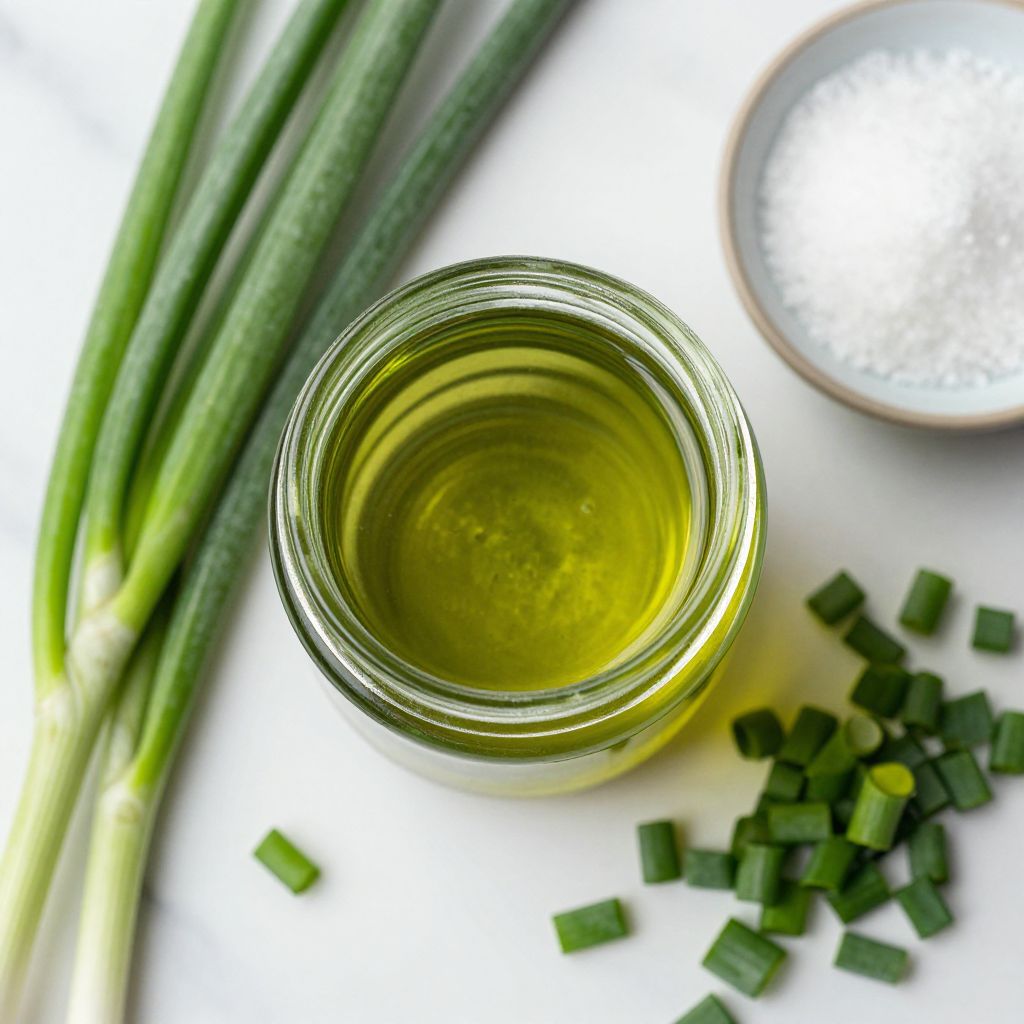
- 1 cup chopped scallions (green parts only)
- 1 cup neutral oil (such as vegetable or canola)
- 1 teaspoon salt (optional)
Ingredient Notes and Substitutions
- Scallions: These add a fresh onion flavor. You can substitute with green onions if needed.
- Neutral oil: This allows the scallion flavor to shine. Olive oil can be used, but it may alter the taste.
- Salt: This enhances the flavor. Omit if you’re watching your sodium intake.
How to Make Scallion Oil
Step 1: Prepare the Scallions
Wash the scallions thoroughly and chop them into small pieces. This allows for maximum flavor extraction into the oil.
Step 2: Heat the Oil
In a small saucepan, pour in the neutral oil and heat it over medium heat. You want it hot but not smoking, which can ruin the flavor.
Step 3: Add the Scallions
Once the oil is hot, add the chopped scallions carefully. The sizzling sound is a good sign that the oil is ready to extract their flavor.
Step 4: Cook Until Fragrant
Stir the scallions in the oil for about 2-3 minutes. You will know it’s ready when they turn bright green and fragrant.
Step 5: Remove from Heat
Take the saucepan off the heat as soon as the scallions are cooked. Overcooking can lead to bitterness, and nobody wants that.
Step 6: Let it Cool
Allow the scallion oil to cool down in the saucepan for about 10 minutes. This helps the flavors meld together beautifully.
Step 7: Strain the Oil
Using a fine mesh strainer, strain the oil into a heatproof jar. This removes the scallion pieces, leaving you with a smooth oil.
Step 8: Store the Oil
Seal the jar tightly and store it in the refrigerator. It should last for up to two weeks, but trust me, it won’t last that long!
Pro Tip: For an extra kick, consider adding a pinch of red pepper flakes to the oil while cooking the scallions.
Tips for the Best Scallion Oil
- Use fresh scallions for the best flavor.
- Don’t rush the heating process; let the oil get hot enough.
- Store in a dark container to keep it fresh longer.
- Try adding garlic for a different flavor profile.
- For a smoky taste, use sesame oil instead of neutral oil.
Common Mistakes to Avoid
- Overheating the oil can lead to a burnt taste. Always keep a close eye.
- Not chopping the scallions small enough may result in uneven flavor extraction.
- Using old scallions will yield less flavor than fresh ones.
- Skipping the cooling step can affect the oil’s flavor and texture.
Serving Suggestions
This scallion oil is incredibly versatile and can enhance many dishes.
- Drizzle over steamed vegetables for a flavor boost.
- Use it as a dipping oil for dumplings.
- Top your favorite rice or noodle dishes for an extra kick.
- Add to grilled meats for a savory glaze.
- Mix into salad dressings for a refreshing twist.
Variations to Try
- Add ginger for an aromatic twist.
- Incorporate citrus zest for a bright flavor.
- Use infused oils like chili oil for added heat.
- Mix in herbs like cilantro or basil for freshness.
Dietary Adaptations
- Gluten-free: Naturally gluten-free, so enjoy without worry.
- Dairy-free: This recipe is dairy-free by default.
- Vegan/Vegetarian: A perfect choice for plant-based diets.
- Low-carb/Keto: Fits well into low-carb eating plans.
Storage and Reheating
Refrigerator
Store the scallion oil in the refrigerator for up to two weeks.
- Use a dark jar to protect it from light.
- Always seal it tightly to keep it fresh.
Freezer
This oil can be frozen for longer storage if needed.
- Use ice cube trays for easy portioning.
- Transfer to a freezer-safe container after solidifying.
Reheating
Reheat gently on low heat to restore its warmth before using.
- Avoid overheating to maintain its flavor.
- Use it while still warm for the best taste experience.
Nutrition Information
| Nutrient | Amount |
|---|---|
| Calories | 120 |
| Total Fat | 14g |
| Saturated Fat | 1.5g |
| Carbohydrates | 0g |
| Fiber | 0g |
| Sugar | 0g |
| Protein | 0g |
| Sodium | 0mg |
| Cholesterol | 0mg |
This nutritional information is an estimate and may vary based on specific ingredients used.
Frequently Asked Questions
Can I use different types of oil?
Yes, you can experiment with different oils like sesame or olive oil for unique flavors.
How long can I make this oil ahead of time?
You can make this scallion oil up to two weeks in advance and store it in the refrigerator.
What should I do if the oil solidifies in the fridge?
Simply let it sit at room temperature for a few minutes or warm it slightly before use.
How do I know if my scallion oil is going bad?
If it develops off odors or changes color, it’s best to discard it.
Can I use the leftover scallions after making the oil?
While they are not as flavorful, they can be added to soups or stir-fries to use them up.
Final Thoughts
Making Scallion Oil is a wonderful way to add flavor to your meals with minimal effort. With just a few ingredients, you can create a delicious condiment that transforms any dish.
So why not give it a try? You may find it becomes a staple in your kitchen, just like it has in mine.
If you’re looking for more delicious recipes, explore my Chili Oil Recipe or try out my creamy Garlic Mayo Recipe.
Scallion Oil
Ingredients
Equipment
Method
- Wash the scallions thoroughly and chop them into small pieces.
- In a small saucepan, pour in the neutral oil and heat it over medium heat until hot but not smoking.
- Carefully add the chopped scallions to the hot oil.
- Stir the scallions in the oil for about 2-3 minutes until they turn bright green and fragrant.
- Remove the saucepan from heat to avoid overcooking.
- Allow the scallion oil to cool down in the saucepan for about 10 minutes.
- Using a fine mesh strainer, strain the oil into a heatproof jar.
- Seal the jar tightly and store it in the refrigerator.