
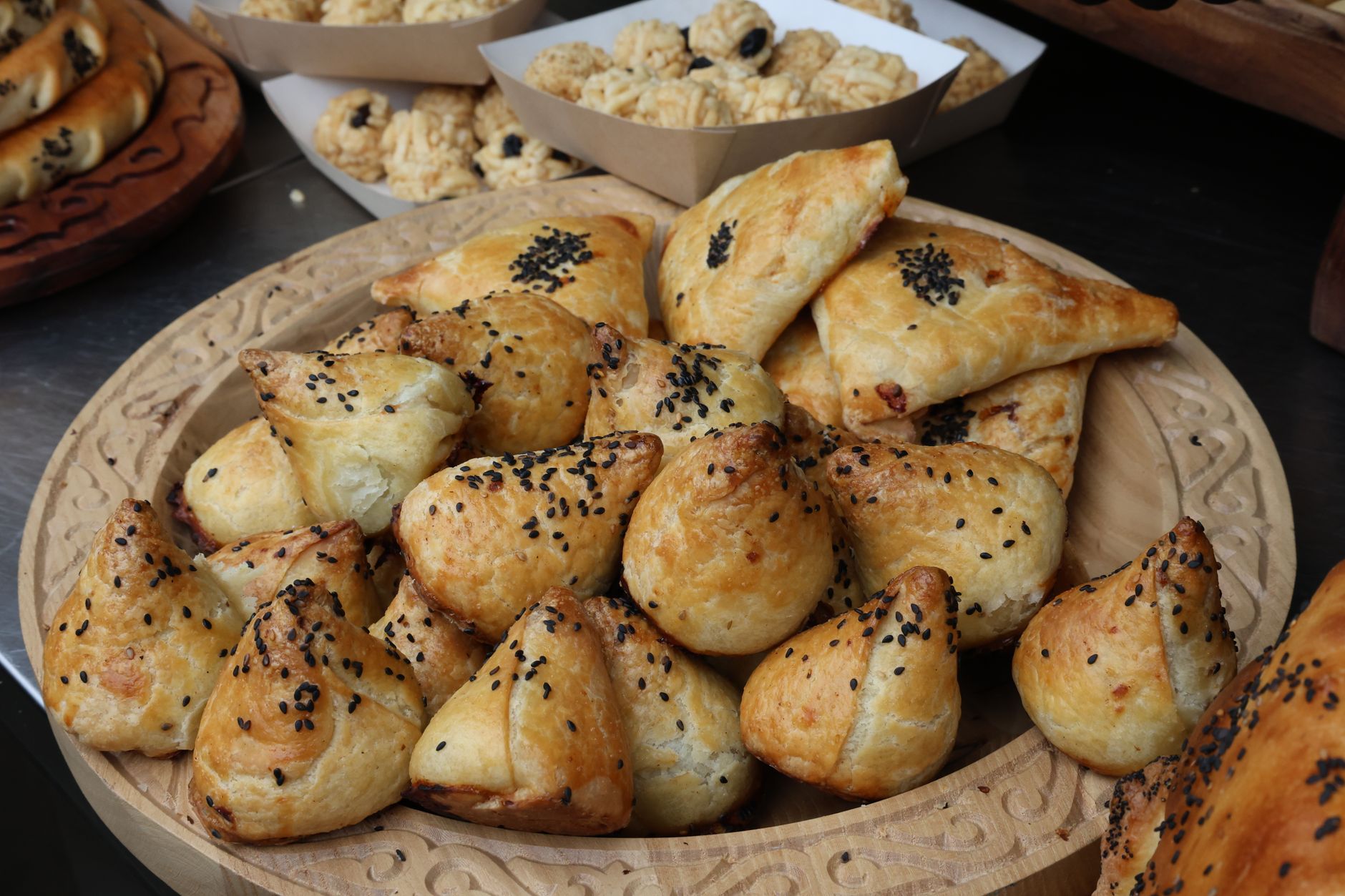
Fatayer is a type of savory pastry that originates from the Middle East, particularly popular in countries like Lebanon, Syria, and Jordan. These delicious treats are typically made with a thin, flaky dough and filled with various savory fillings.
The fillings can range from seasoned meats to vegetables and even cheese, making fatayer versatile and appealing. They are commonly served as appetizers, snacks, or part of a meal, often enjoyed at gatherings and celebrations.
What Is Fatayer?
Fatayer are delightful, stuffed pastries that boast a flaky, golden crust and a variety of flavorful fillings. They can be categorized mainly into three types based on their fillings: fatayer bil lahmeh (meat), fatayer bil jabna (cheese), and fatayer bil sabsar (spinach). Each variant offers a unique taste experience, appealing to both meat lovers and vegetarians.
Ingredients of Fatayer
The ingredients for fatayer can vary according to the filling chosen. However, the dough itself remains fairly consistent. Below is a breakdown of key ingredients commonly used for making fatayer:
- For the dough:
- 2 cups all-purpose flour
- 1/2 cup yogurt
- 1/4 cup vegetable oil
- 1/2 teaspoon salt
- 1 teaspoon baking powder
- Water, as needed
- For the meat filling (fatayer bil lahmeh):
- 1/2 pound ground beef or lamb
- 1 onion, finely chopped
- 2 tablespoons pine nuts (optional)
- 1 teaspoon allspice
- Salt and pepper, to taste
- For the cheese filling (fatayer bil jabna):
- 1 cup akawi or feta cheese, crumbled
- 1/4 cup chopped parsley
- 1 tablespoon olive oil
- Black pepper, to taste
- For the spinach filling (fatayer bil sabsar):
- 1 cup spinach, chopped
- 1 onion, finely chopped
- 1 tablespoon olive oil
- 1 teaspoon sumac (optional)
- Salt and pepper, to taste
Flavor Profile of Fatayer
The flavor profile of fatayer varies significantly depending on the filling used. The dough is usually mild, providing a perfect canvas to highlight the filling’s flavors. Here’s a closer look at the various fatayer fillings:
- The meat filling is rich and savory, featuring spiced ground meat complemented by caramelized onions and the nutty crunch of pine nuts.
- The cheese filling leans towards creamy and salty, with the addition of fresh parsley providing a burst of herbal flavor.
- The spinach filling is fresh and tangy, especially if sumac is included, creating a flavorful balance against the slight earthiness of the spinach.
Overall, fatayer presents delicious layers of flavor and texture, combining the flaky pastry with the satisfying, often herbaceous, fillings, making each bite a fulfilling experience.
How to Serve Fatayer
Fatayer can be served in several ways, depending on the occasion or personal preference. Here are some of the most popular serving suggestions:
- As an appetizer: Serve fatayer hot with a side of yogurt or tahini sauce for dipping. This is a common practice during gatherings or celebrations.
- In a mezze platter: Include fatayer as part of a larger mezze spread, accompanied by hummus, tabbouleh, baba ghanoush, and olives.
- As a snack: Fatayer can be enjoyed on their own as a quick snack, either warm or at room temperature, making them perfect for picnics or lunch boxes.
- For breakfast: Some people enjoy fatayer with a side of fresh fruit and tea or coffee to start their day with a savory treat.
How to Make Fatayer: A Step-by-Step Recipe
Follow this guide to prepare your own fatayer from scratch, using the basic dough recipe and your choice of filling.
Yield and Timing
This recipe yields approximately 12 fatayer. The preparation time is about 30 minutes, while the cooking time is around 20–25 minutes. The total time needed is about 1 hour.
Essential Equipment
- Mixing bowl
- Rolling pin
- Baking sheet
- Parchment paper (optional)
- Pastry brush (for egg wash)
- Sharp knife or pastry cutter
Method
- Prepare the dough: In a mixing bowl, combine the flour, salt, and baking powder. Add the yogurt and vegetable oil, mixing until the dough starts to come together. Add water gradually, a tablespoon at a time, until you reach a workable but soft dough. Knead for about 5 minutes until smooth.
- Let the dough rest: Cover the dough with a clean cloth or plastic wrap and let it rest for at least 20 minutes. This helps relax the gluten, making it easier to roll out.
- Prepare the filling: While the dough is resting, prepare your filling of choice. For the meat filling, cook the onions in a skillet until translucent, then add the ground meat, allspice, salt, and pepper. Cook until browned and set aside to cool. For the cheese filling, mix the cheese, parsley, olive oil, and black pepper in a bowl. For the spinach filling, sauté onions in olive oil, add spinach, and cook until wilted. Season with sumac, salt, and pepper.
- Shape the fatayer: Preheat your oven to 375°F (190°C). Divide the rested dough into equal portions, rolling each into a small ball. On a floured surface, roll out each ball into a circle about 5–6 inches in diameter.
- Fill the pastries: Place 1–2 tablespoons of the chosen filling in the center of each dough circle. Fold the dough over to create a half-moon shape, pinching the edges to seal tightly. Alternatively, you can join the corners together to form a triangle, sealing by pinching the edges.
- Prepare for baking: Arrange the fatayer on a baking sheet lined with parchment paper, ensuring they are spaced apart. Brush the tops with a beaten egg for a golden finish, if desired.
- Bake: Transfer the baking sheet to the preheated oven and bake for 20-25 minutes, or until the fatayer are golden brown. Keep an eye on them to prevent burning.
- Serve: Allow the fatayer to cool briefly before serving. These pastries are best enjoyed warm, but can also be served at room temperature.
Variations and Substitutions
Fatayer can be adapted to suit various preferences or dietary needs. Here are some substitutions and variations to consider:
- Gluten-free dough: Substitute all-purpose flour with a gluten-free flour blend. Be aware that the texture may differ slightly.
- Vegetarian options: For a vegetarian filling, consider using mushrooms, roasted vegetables, or a mix of beans and spices for added protein.
- Spices: Experiment with spices such as cumin, coriander, or paprika for the meat filling to create a different flavor profile.
- Herbs: Fresh herbs, like dill or mint, can be added to the cheese or spinach filling for extra freshness.
Common Mistakes and Troubleshooting
Here are some common mistakes to avoid when making fatayer and tips for troubleshooting:
- Overworking the dough: Kneading too much can result in tough dough. Aim for a smooth, soft texture without over-kneading.
- Too much filling: Overfilling fatayer can lead to bursting during baking. Stick to recommended amounts to allow for proper sealing.
- Not sealing properly: If the edges aren’t sealed well, filling may leak out during baking. Ensure you pinch firmly to secure.
Storage and Reheating
Fatayer can be stored in an airtight container in the refrigerator for up to 3 days. For longer storage, consider freezing them. Here’s how:
- To freeze: Place cooked fatayer in a single layer on a baking sheet and freeze until solid. Then, transfer them to an airtight container or freezer bag and freeze for up to 2 months.
- To reheat: Bake frozen fatayer directly from the freezer at 375°F (190°C) for about 20-25 minutes, or until heated through and crispy.
Fatayer is an incredibly versatile and satisfying dish that can be enjoyed in numerous ways. Whether you are hosting a gathering, packing a snack, or looking for a satisfying meal, these stuffed pastries offer delightful flavors that can be customized to your liking.
For those eager to explore more culinary delights, consider trying your hand at other traditional Middle Eastern dishes or enhancing your mealtime experiences with complementary dips and sides.