
Soy sauce is an essential condiment in many cuisines around the world, particularly in Asian dishes. Its rich umami flavor enhances a variety of foods, making it a pantry staple for cooking and dipping. But where does soy sauce come from, and how is it made?
In this article, we will explore the origins of soy sauce, its historical significance, the fermentation process involved in its production, and various types of soy sauce available in the market today. By the end, you’ll have a comprehensive understanding of this beloved condiment.
Where Does Soy Sauce Come From?
Initially developed in ancient China over 2,500 years ago, soy sauce has influenced cuisines around the world, particularly in East and Southeast Asia. It is crafted from fermented soybeans, wheat, salt, and a specific type of mold that kickstarts the fermentation process. Today, its flavors have evolved, leading to various types and uses among different cultures.
The Historical Origins of Soy Sauce
The history of soy sauce dates back to the Han Dynasty (206 BC – 220 AD) in China. Initially, a thicker paste made from fermented soybeans was used in cooking and as a flavoring agent. Over time, this evolved into a thinner liquid form as the brewing techniques improved.
It is believed that the process of making soy sauce was influenced by the Chinese technique of fermenting grains, which later spread to other regions. As trade routes expanded, soy sauce was introduced to Japan and Korea, where it was adapted to suit local tastes.
Soy Sauce in Japan and Korea
In Japan, soy sauce, known as “shoyu,” became a fundamental ingredient in Japanese cuisine by the 7th century. The Japanese perfected the brewing process, emphasizing the use of high-quality soybeans and wheat, resulting in a distinct flavor profile that differs from Chinese soy sauce.
In Korea, soy sauce is called “ganjang,” and its production also dates back to ancient times. The Korean version often combines fermented soybeans and brine in a process that creates a different flavor complexity than its Japanese and Chinese counterparts.
The Fermentation Process of Soy Sauce
The production of soy sauce involves a complex fermentation process that typically includes several key steps: preparation, fermentation, pressing, and aging. Understanding these phases is essential to appreciate the craftsmanship behind this condiment.
1. Preparation of Ingredients
The primary ingredients in soy sauce are soybeans, wheat, salt, and water. Here’s how they are prepared:
- Soybeans: Dried soybeans are soaked in water for several hours to soften them before cooking.
- Wheat: Wheat is roasted and crushed into smaller pieces to enhance its flavor during fermentation.
- Brine: A saltwater solution is carefully measured to control the fermentation process.
2. Fermentation
The fermentation process is the heart of soy sauce production. This phase can be broken down further into two main processes: a mold fermentation and a brine fermentation.
- Mold Fermentation: Cooked soybeans and roasted wheat are mixed with a mold known as Aspergillus oryzae. This mixture is allowed to ferment for several days, where the mold breaks down proteins and starches into amino acids and sugars.
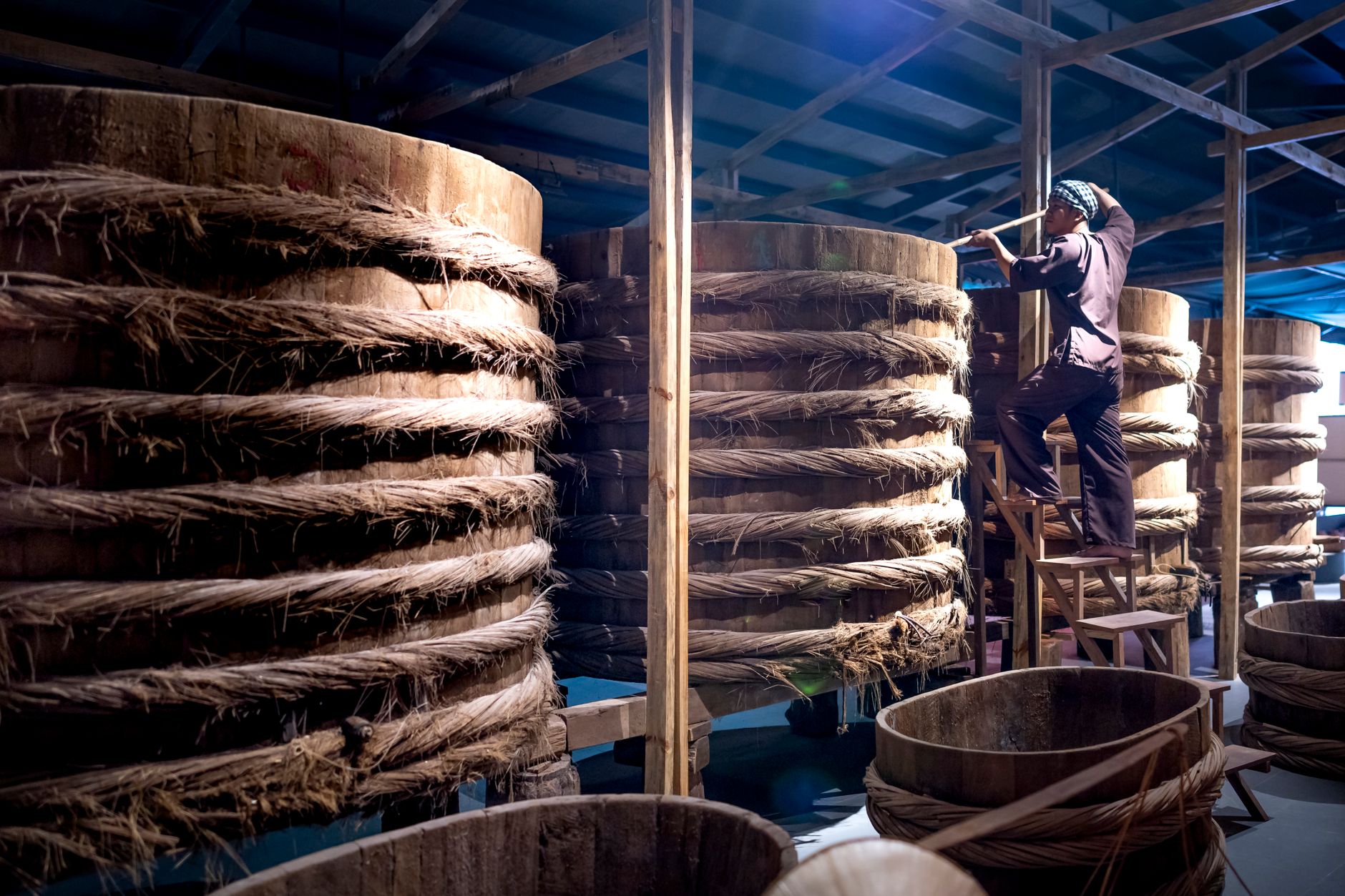
- Brine Fermentation: After mold fermentation, the mixture is combined with brine (saltwater) in fermentation tanks. Yeast and lactic acid bacteria are introduced, continuing the fermentation process. This stage can last from a few months to several years, developing a complex flavor profile.
3. Pressing and Aging
Once fermentation is complete, the mixture is pressed to separate liquid soy sauce from the solid residue. The liquid is then aged for additional flavor complexity. Aging times can vary, and some brewers opt for extra aging in wooden barrels to impart unique flavors.
4. Filtration and Bottling
After aging, the soy sauce is filtered to remove impurities and may undergo pasteurization to enhance shelf stability. Finally, it is bottled and distributed for consumer use.
Types of Soy Sauce
While many people may think of soy sauce as a singular product, there are numerous varieties available, each with distinctive flavors and uses. Here are some common types of soy sauce:
1. Light Soy Sauce
Often used in Chinese cooking, light soy sauce is thinner and saltier. It is perfect for stir-frying, marinating, and seasoning dishes. Due to its lighter color, it does not darken the food significantly.
2. Dark Soy Sauce
Dark soy sauce is thicker, with a richer, sweeter flavor, thanks to the addition of caramel or molasses. It is utilized for braising and in recipes that require a deeper color and flavor.
3. Tamari
Tamari originates from Japan and is a gluten-free variety made primarily from soybeans. It has a slightly richer flavor than regular soy sauce and is an excellent option for those with gluten sensitivities.
4. Sweet Soy Sauce
Commonly known as “kecap manis” in Indonesian cuisine, sweet soy sauce is a thicker, syrupy version that includes sugar or molasses. It is often used in marinades and as a dipping sauce.
Common Uses of Soy Sauce
Soy sauce is an incredibly versatile ingredient that enhances the umami flavor of various dishes. Here are some common applications:
- Marinades: It can be used as a base for marinades to tenderize meats and infuse flavor.
- Stir-Fries: Essential for adding depth to stir-fried vegetables, meats, and rice dishes.
- Dipping Sauce: Used as a dipping sauce for sushi, sashimi, dumplings, and spring rolls.
- Soups: Enhances flavor in broth-based soups and stews.
- Seasoning: Can be drizzled over cooked foods just before serving for extra flavor.
Substitutes for Soy Sauce
While soy sauce is a staple, there may be times when a substitute is needed. Here are some appropriate alternatives:
- Coconut Aminos: A soy-free alternative made from fermented coconut sap, suitable for those avoiding soy. It is slightly sweeter and less salty.
- Tamari: Gluten-free and richer in flavor, tamari can serve as a direct substitute in most recipes.
- Homemade Soy Sauce Substitute: Mix 1 tablespoon of Worcestershire sauce with a pinch of garlic powder and a little water for a quick alternative.
Common Mistakes and Troubleshooting
Cooking with soy sauce can enhance your dishes, but here are some common mistakes to avoid:
- Using the Wrong Type: Selecting light soy sauce for a recipe that calls for dark soy sauce can lead to a flavor imbalance. Always check the recipe.
- Overusing Soy Sauce: Despite its concentrated flavor, using too much soy sauce can overpower your dish. Start with a smaller amount and adjust to taste.
- Not Storing Properly: Soy sauce should be kept in a cool, dark place, and once opened, it can be refrigerated to preserve its flavor.
Storage and Shelf Life
When stored properly, soy sauce lasts for months, even years. Here are some storage tips:
- Keep unopened bottles in a cool, dark place, such as a pantry or cupboard.
- Once opened, store soy sauce in the refrigerator to maintain its flavor and freshness, especially for premium or artisanal varieties.
- Check expiration dates, and if the soy sauce smells off or has unusual sediment, it may be best to discard it.
Conclusion
Soy sauce, with its rich history and versatile uses, holds a place of prominence in kitchens worldwide. Understanding where soy sauce comes from and how it is made adds depth to your culinary journey. Whether you use it to enhance the flavor of a stir-fry, as part of a marinade, or as a dipping sauce, soy sauce is a truly essential ingredient.
Next time you’re in the grocery aisle, consider which type of soy sauce would best complement your dishes, and enjoy the depth it brings to your cooking. For more insights on soy sauce production, visit how soy sauce is made and expand your culinary repertoire.