
Picture this: a golden-brown salmon cake sizzling in a hot skillet, filling your kitchen with a mouthwatering aroma. The Canned Salmon Cake is not just a budget-friendly dish; it brings a delightful combination of flavors and textures that can elevate any weeknight dinner or casual gathering.
These cakes are crispy on the outside, tender on the inside, and packed with protein. They are also incredibly versatile, allowing you to customize spices or mix in your favorite herbs. Ready to whip up some deliciousness? Let’s dive into the details.
Why You’ll Love This Recipe
Not only are these salmon cakes a breeze to make, but they also deliver big on taste.
- Quick preparation with minimal cleanup.
- Great for using pantry staples.
- Perfect for meal prep or a last-minute dinner.
- Customizable with various herbs and spices.
- Delicious served warm or cold.
My Experience Making This Recipe
The first time I made these salmon cakes, I was surprised by how quickly they came together. One moment, I was mixing ingredients, and the next, I was savoring that crispy, savory bite.
My family devoured them, and I was left wondering why I hadn’t tried this sooner. They quickly became a staple in our home, and now, I can’t resist experimenting with different flavor combinations.
Recipe Overview
- Recipe Name: Canned Salmon Cake
- Servings: 4
- Prep Time: 10 minutes
- Cook Time: 15 minutes
- Total Time: 25 minutes
- Course: Main Dish
- Cuisine: American
- Calories per Serving: 250
Equipment You Will Need
- Mixing bowl
- Measuring cups and spoons
- Skillet or frying pan
- Spatula
- Serving plate
Ingredients for Canned Salmon Cake
- 1 can (14.75 oz) salmon, drained and flaked
- 1/2 cup breadcrumbs, plain or seasoned
- 1/4 cup mayonnaise, for moisture and flavor
- 1 large egg, to bind the mixture
- 1 tablespoon Dijon mustard, for tanginess
- 1/4 cup green onions, chopped for freshness
- 1 teaspoon garlic powder, for depth of flavor
- Salt and pepper, to taste
- 2 tablespoons olive oil, for frying
Ingredient Notes and Substitutions
- Salmon: Provides a rich flavor and healthy omega-3s. You can substitute with canned tuna if desired.
- Bread crumbs: Help bind the cakes and add texture. For a gluten-free option, use gluten-free breadcrumbs.
- Mayonnaise: Adds creaminess. Greek yogurt can be a lighter alternative.
- Egg: Binds the ingredients together. A flax egg works for a vegan option.
- Green onions: Bring brightness to the dish. You could use finely chopped onion or chives instead.
How to Make Canned Salmon Cake
Step 1: Prepare the Ingredients
Gather all your ingredients and tools. This makes the process smoother and more enjoyable.
Step 2: Flake the Salmon
Open the can of salmon and drain the liquid. Use a fork to flake the salmon into bite-sized pieces, ensuring no large chunks remain.
Step 3: Mix the Wet Ingredients
In a mixing bowl, combine the flaked salmon, mayonnaise, egg, and Dijon mustard. This mixture adds moisture and flavor to the cakes.
Step 4: Add the Dry Ingredients
Stir in the breadcrumbs, garlic powder, and chopped green onions. The breadcrumbs will help bind the mixture and give it structure.
Step 5: Season the Mixture
Add salt and pepper to taste. This step is crucial for enhancing the overall flavor of the cakes.
Step 6: Form the Cakes
Using your hands, shape the mixture into patties about 1 inch thick. This ensures even cooking and a nice crust.
Step 7: Heat the Skillet
Heat olive oil in a skillet over medium heat. A properly heated skillet helps achieve that golden-brown crust.
Step 8: Cook the Cakes
Place the patties in the skillet and cook for about 4-5 minutes on each side. Flip them carefully to avoid breaking, and cook until they are golden and crispy.
Pro Tip: For extra flavor, add a splash of lemon juice to the mixture before cooking.
Tips for the Best Canned Salmon Cake
- Use fresh ingredients for the best flavor.
- Don’t skip the chilling step; refrigerate the patties for 30 minutes before cooking for firmer cakes.
- Experiment with spices like Old Bay or cayenne for a kick.
- Serve with a squeeze of fresh lemon for brightness.
- Keep the cakes small for even cooking and a nice crust.
Common Mistakes to Avoid
- Using too much liquid can make the cakes mushy. Stick to the measurements for a firm texture.
- Not chilling the patties can lead to crumbling while cooking. Give them time to set in the fridge.
- Overcrowding the skillet can steam the cakes instead of frying them. Cook in batches if necessary.
- Not seasoning enough will result in bland cakes. Taste the mixture before cooking and adjust accordingly.
Serving Suggestions
These salmon cakes shine on their own, but they can be paired with a variety of sides.
- Serve with a fresh salad for a light meal.
- Pair with tartar sauce or a zesty remoulade.
- Enjoy in a sandwich with lettuce and tomato.
- Accompany with roasted veggies for a hearty dinner.
- Top with avocado slices for a creamy finish.
Variations to Try
- Add diced bell peppers for crunch and sweetness.
- Incorporate herbs like dill or parsley for an herbal twist.
- Mix in cheese such as feta or cheddar for extra richness.
- Spice it up with jalapeños for a kick.
- Swap the salmon for crab meat for a luxurious version.
Dietary Adaptations
- Gluten-free: Use gluten-free breadcrumbs.
- Dairy-free: Substitute mayonnaise with avocado or dairy-free mayo.
- Vegan/vegetarian: Use a flax egg and substitute canned salmon with chickpeas.
- Low-carb/keto: Skip the breadcrumbs and use almond flour instead.
Storage and Reheating
Refrigerator
Store leftover salmon cakes in an airtight container in the fridge for up to 3 days.
- Reheat in a skillet over medium heat for best results.
- Microwave is an option, but may yield a softer texture.
Freezer
These cakes freeze well for up to 2 months.
- Place between parchment paper to prevent sticking.
- Wrap tightly in plastic wrap and then in foil.
Reheating
Thaw in the fridge overnight before reheating.
- Reheat in a skillet for a crispy exterior.
- Oven reheating at 350°F until warmed through is also effective.
Nutrition Information
| Nutrient | Amount |
|---|---|
| Calories | 250 |
| Total Fat | 15g |
| Saturated Fat | 2g |
| Carbohydrates | 15g |
| Fiber | 1g |
| Sugar | 1g |
| Protein | 17g |
| Sodium | 600mg |
| Cholesterol | 60mg |
This nutritional information is an estimate and will vary based on specific ingredients used.
Frequently Asked Questions
Can I use fresh salmon instead of canned?
Yes, but you will need to cook and flake the salmon first, which adds time to the recipe.
Can I make these ahead of time?
Absolutely! You can prep the mixture and form the patties a day in advance.
How do I store leftover salmon cakes?
Store them in an airtight container in the refrigerator for up to three days.
Why are my salmon cakes falling apart?
This usually happens if there is too much moisture or not enough binder. Ensure you measure accurately.
Can I bake these instead of frying?
Yes, you can bake them at 375°F for about 20 minutes, flipping halfway through for even cooking.
Final Thoughts
There is something so comforting about a homemade salmon cake, especially when they are so easy to prepare. I hope you embrace this recipe and make it your own, filling your kitchen with delightful flavors and memories.
If you are looking for other delicious seafood recipes, check out my salmon loaf recipe or try out the tuna burger recipe. Happy cooking!
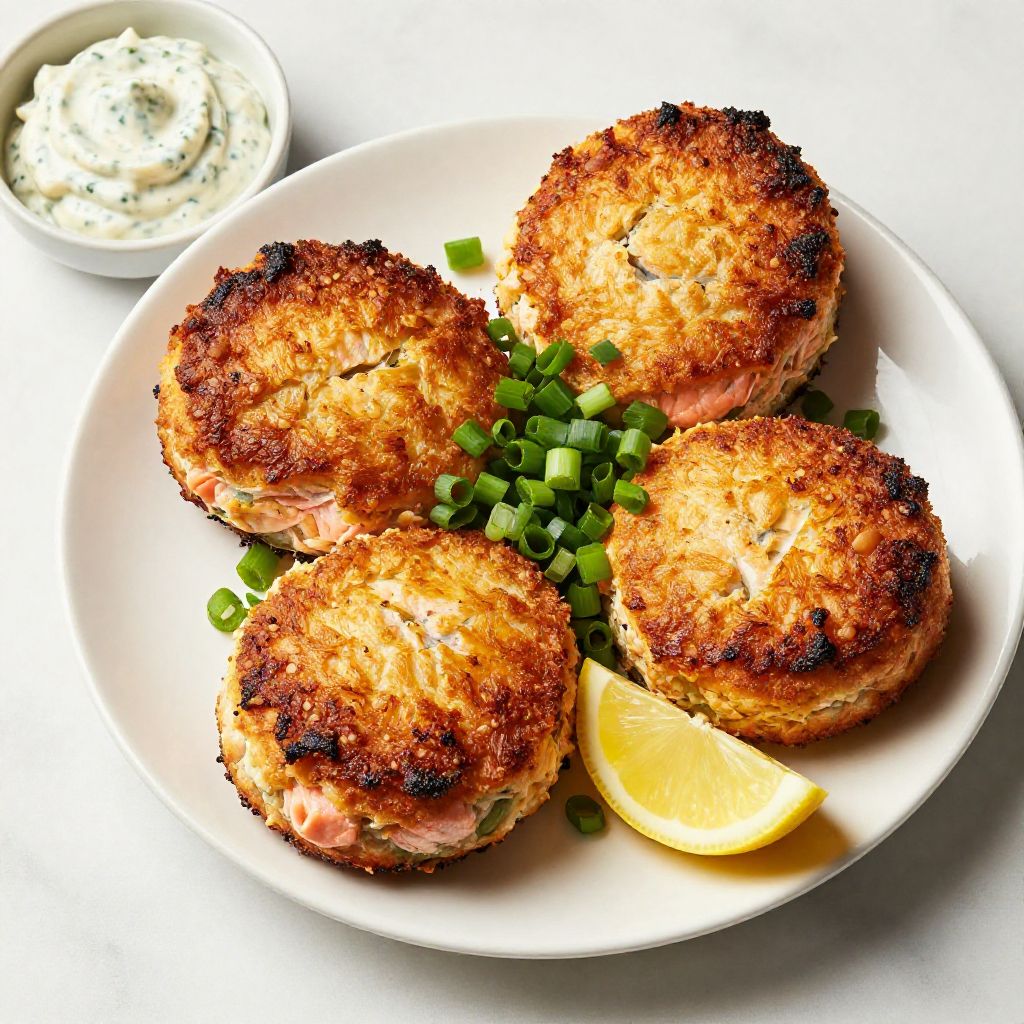
Canned Salmon Cake
Ingredients
Equipment
Method
- Gather all ingredients and tools.
- Open the can of salmon, drain the liquid, and use a fork to flake the salmon into bite-sized pieces.
- In a mixing bowl, combine the flaked salmon, mayonnaise, egg, and Dijon mustard.
- Stir in the breadcrumbs, garlic powder, and chopped green onions until evenly mixed.
- Season the mixture with salt and pepper to taste.
- Form the mixture into patties about 1 inch thick using your hands.
- Heat olive oil in a skillet over medium heat.
- Cook the patties in the skillet for 4-5 minutes on each side, or until golden brown and crispy.
- Remove the cakes from the skillet and drain on a paper towel-lined plate before serving.