
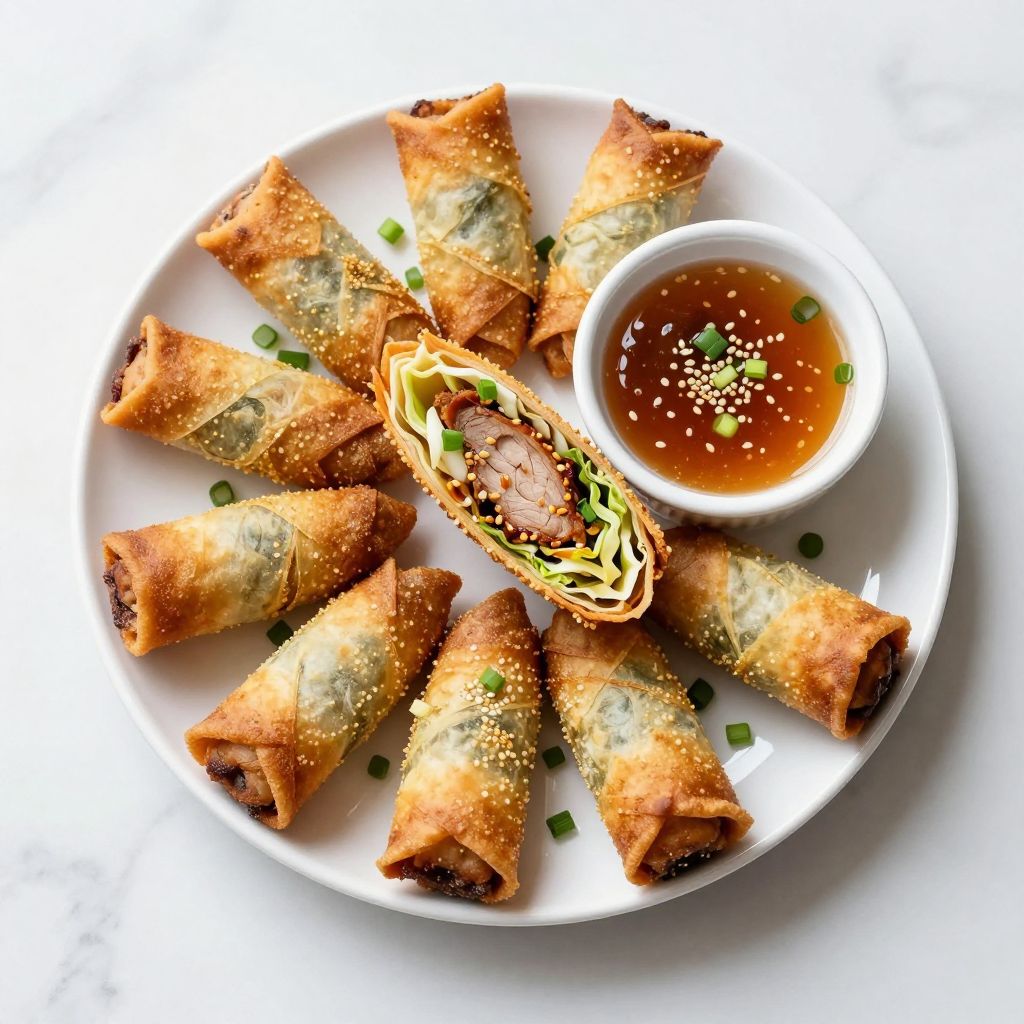
The crispy crackle of a hot egg roll hitting your teeth, followed by that savory pork filling and silky cabbage inside: that’s the moment you know you’ve nailed it.
Pork egg rolls are one of those recipes that feel fancy enough to impress dinner guests but simple enough to make on a lazy Sunday afternoon. They’re crispy, satisfying, and far cheaper than ordering takeout.
What makes these so special is the balance of textures and flavors packed into each roll. You get tender pork, crunchy vegetables, and that impossibly crisp wrapper that shatters when you bite down.
Let’s dive straight into how to make these golden beauties at home.
Why You’ll Love This Recipe
These egg rolls hit all the marks for a crowd-pleasing appetizer or main course side dish. They’re crispy, flavorful, and way better than any frozen version you’ll find at the grocery store.
- Restaurant-quality crispness that you control completely
- Customizable filling with your favorite vegetables and proteins
- Make-ahead friendly since you can assemble rolls hours in advance
- Budget-friendly and uses pantry staples you likely already have
- Perfect for game day, parties, or meal prep
My Experience Making This Recipe
The first time I made egg rolls at home, I was nervous about the frying part. I’d watched restaurant cooks flip them with such confidence that I assumed I’d either end up with a greasy mess or a burnt exterior.
Turns out, getting the oil temperature right was the secret I’d been missing all along. Once I nailed that, everything came together perfectly.
My family devoured the entire batch before dinner was even on the table. My kid actually asked for these instead of her usual chicken nuggets, which in parent language means they’re officially a winner.
Recipe Overview
- Recipe Name: Crispy Pork Egg Rolls
- Servings: 12 egg rolls (3 to 4 servings)
- Prep Time: 20 minutes
- Cook Time: 15 minutes
- Total Time: 35 minutes
- Course: Appetizer
- Cuisine: Asian Fusion
- Calories per Serving: 185 calories
Equipment You Will Need
- Large skillet or wok
- Wooden spoon or spatula
- Cutting board and sharp knife
- Measuring cups and spoons
- Medium mixing bowl
- Deep-fry thermometer or instant-read thermometer
- Paper towels
- Shallow dish or plate for rolling
- Tongs for turning rolls during frying
- Dutch oven or heavy-bottomed pot for oil
Ingredients for Pork Egg Rolls
- 1 pound ground pork
- 4 cups shredded cabbage (about half a small head)
- 2 green onions, finely chopped
- 2 cloves garlic, minced
- 2 tablespoons soy sauce
- 1 tablespoon sesame oil
- 1 teaspoon ginger, fresh and minced
- 12 egg roll wrappers
- 2 tablespoons water (for sealing wrappers)
- Oil for frying (peanut or vegetable oil preferred)
- Salt and pepper to taste
Ingredient Notes and Substitutions
- Ground Pork: This is the star protein that gives the rolls their savory depth. You can swap it for ground chicken for a leaner option, though you’ll lose some richness in flavor.
- Shredded Cabbage: Cabbage provides a light, fresh crunch that balances the rich pork. Coleslaw mix works in a pinch, but avoid pre-packaged versions with dressing already added.
- Sesame Oil: This adds a toasted, nutty flavor that makes the filling taste authentic. Regular vegetable oil will work but won’t deliver that same depth of flavor.
- Egg Roll Wrappers: These are thinner and crispier than wonton wrappers, which is exactly what you want. Wonton wrappers will work if that’s all you have, but they’ll be thicker.
- Soy Sauce: This provides saltiness and umami to the filling. Low-sodium soy sauce works if you’re watching sodium, just taste as you go.
How to Make Pork Egg Rolls
Step 1: Cook the Ground Pork
Heat a large skillet over medium-high heat and add the ground pork, breaking it up with a wooden spoon as it cooks. You want it to brown evenly, which takes about 5 to 7 minutes, so stir occasionally to avoid large clumps.
Step 2: Add Aromatics
Once the pork is cooked through, add the minced garlic and fresh ginger to the skillet and stir constantly for about 30 seconds. This wakes up the flavors and infuses the pork with aromatic depth that makes the filling taste restaurant-quality.
Step 3: Incorporate the Cabbage
Add the shredded cabbage to the skillet and stir well to combine everything. Cook for 2 to 3 minutes, stirring often, until the cabbage softens slightly but still retains some crunch and the excess moisture cooks off.
Step 4: Season the Filling
Pour in the soy sauce and sesame oil, then add the chopped green onions and stir everything together for another minute. Taste the filling and adjust salt and pepper as needed, keeping in mind that soy sauce is already salty.
Step 5: Cool the Filling
Transfer the filling to a medium bowl and let it cool to room temperature for about 5 to 10 minutes. This step is critical because hot filling will make the wrappers soggy and harder to seal properly.
Step 6: Prepare Your Workspace
Lay out an egg roll wrapper on a clean surface with one corner pointing toward you, forming a diamond shape. Keep the remaining wrappers under a slightly damp towel so they don’t dry out while you work.
Step 7: Fill and Roll
Place about 3 tablespoons of cooled filling in the center of the wrapper, just below the midpoint. Fold the bottom corner up and over the filling, then fold in the left and right corners, and finally roll tightly toward the top corner.
Before sealing the final corner, dip your finger in the water and brush it along the edges to create a seal. Press firmly so the wrapper sticks and won’t burst open during frying.
Step 8: Heat the Oil
Pour oil into a Dutch oven or heavy pot until it’s about 3 inches deep, then heat it to 350 degrees Fahrenheit. Use a deep-fry thermometer to check the temperature because oil that’s too cool makes greasy rolls and oil that’s too hot burns the wrapper before the filling cooks through.
Step 9: Fry the Egg Rolls
Carefully place 3 to 4 egg rolls into the hot oil, seam-side down, and fry for about 2 to 3 minutes until the bottom is golden brown. Use tongs to flip them carefully and fry the other side for another 1 to 2 minutes until the entire roll is golden and crispy.
Step 10: Drain and Cool
Transfer the cooked egg rolls to a paper towel-lined plate to drain excess oil. Let them cool for a minute or two before serving so you don’t burn your mouth on the hot filling inside.
Pro Tip: Keep your oil at a consistent temperature by using a thermometer and adjusting your heat as needed; this single habit will make the difference between restaurant-quality results and mediocre egg rolls.
Tips for the Best Pork Egg Rolls
- Don’t skip cooling the filling before rolling; warm filling steams the wrapper and prevents that crispy texture you’re after.
- Use a thermometer for oil temperature instead of guessing; 350 degrees is your magic number for perfect crispness without burning.
- Pat your shredded cabbage dry with paper towels before cooking to remove excess water that would make the filling soggy.
- Roll your egg rolls the day you plan to cook them for the best texture, but you can assemble them up to 8 hours ahead if needed.
- Don’t overcrowd the pan when frying; too many rolls at once drops the oil temperature and results in greasy, soggy rolls.
- Serve your egg rolls immediately for maximum crispness; they start to soften as they cool down.
Common Mistakes to Avoid
- Using hot filling is the quickest way to end up with a soggy, torn wrapper that leaks oil instead of crisping up.
- Rolling too loosely creates air pockets that cause uneven browning and wrappers that burst open during frying.
- Letting the oil temperature drop below 330 degrees makes the rolls absorb too much oil and turns them greasy instead of crispy.
- Frying too many rolls at once drops the temperature and means each roll spends longer in oil than it should.
- Skipping the water seal on the final corner means your rolls fall apart during frying and your filling leaks out.
Serving Suggestions
Pork egg rolls are incredibly versatile and work well as an appetizer, side dish, or even a light meal. Pair them with a cold beverage and you’ve got the perfect finger food for any occasion.
- Sweet and sour sauce for dipping adds brightness and cuts through the richness of the fried exterior
- Sriracha mayo mixed together creates a spicy kick that complements the savory pork filling
- Serve alongside fried rice or steamed white rice for a complete meal that feels authentic
- Pair with a crisp salad to balance the fried element with fresh vegetables and light dressing
- Offer alongside other appetizers like cream cheese wontons for a full Asian-inspired spread
Variations to Try
- Shrimp Egg Rolls: Replace the pork with finely chopped cooked shrimp for a lighter, sweeter filling that cooks faster and works great for seafood lovers.
- Vegetable Egg Rolls: Skip the meat entirely and load up on shredded carrots, bell peppers, mushrooms, and water chestnuts for a vegetarian version that’s just as satisfying.
- Spicy Sriracha Pork Rolls: Add 1 to 2 tablespoons of sriracha to the filling for a kick of heat that builds as you chew through each bite.
- Cheese and Pork Rolls: Mix 1/2 cup of cream cheese into the cooled filling for a richer, creamier texture that adds indulgence to the classic version.
- Apple and Pork Rolls: Dice a crisp apple and add it to the filling for subtle sweetness that plays beautifully against the savory pork and umami of the soy sauce.
Dietary Adaptations
- Gluten-Free: Use gluten-free egg roll wrappers and tamari instead of soy sauce; the swap works perfectly and you won’t notice any texture difference.
- Dairy-Free: The base recipe is naturally dairy-free, so you only need to check that your wrappers don’t contain eggs or dairy (most don’t).
- Vegan/Vegetarian: Replace the pork with finely chopped mushrooms cooked with extra garlic and ginger, then add more vegetables; you’ll sacrifice some savory depth but gain a lighter dish.
- Low-Carb/Keto: Egg roll wrappers aren’t keto-friendly, so use lettuce leaves or thin zucchini slices instead, though the texture and crispness will be different.
Storage and Reheating
Refrigerator
Store cooked egg rolls in an airtight container for up to 4 days. They’ll soften slightly, so reheating is important to restore some crispness.
- Uncooked rolls keep refrigerated for up to 8 hours if wrapped tightly in plastic wrap
- Cooked rolls taste best within the first 24 hours
Freezer
Freeze uncooked rolls on a baking sheet until solid, then transfer to a freezer bag for up to 2 months. Cooked rolls also freeze well but the texture after reheating won’t be quite as crispy as the fresh version.
- Uncooked rolls fry straight from the freezer without thawing
- Add 1 to 2 extra minutes to the frying time if cooking from frozen
Reheating
The best way to reheat egg rolls is in a 375-degree oven for 5 to 7 minutes, which restores crispness without drying them out. The microwave works in a pinch but will make them soggy.
- Air fryer at 350 degrees for 3 to 4 minutes gives results almost as good as fresh frying
- Skillet reheating over medium heat for 1 to 2 minutes per side works but requires attention
Nutrition Information
| Nutrient | Amount |
|---|---|
| Calories | 185 |
| Total Fat | 9 g |
| Saturated Fat | 2 g |
| Carbohydrates | 16 g |
| Fiber | 1 g |
| Sugar | 2 g |
| Protein | 12 g |
| Sodium | 420 mg |
| Cholesterol | 28 mg |
These values are estimates based on a serving size of one egg roll and may vary slightly based on your specific ingredients and cooking method.
Frequently Asked Questions
Can I Bake Egg Rolls Instead of Frying Them?
Yes, you can bake them at 400 degrees for 12 to 15 minutes, but they won’t develop the same crispy, golden exterior that makes them so satisfying. Brushing them with oil before baking helps, but the texture will still be different from the fried version.
What’s the Difference Between Egg Rolls and Spring Rolls?
Egg rolls use thicker wrappers and are always fried, while spring rolls use thinner rice paper wrappers and are often served fresh and uncooked. Egg rolls have a crispier exterior and sturdier texture that holds up well to frying and dipping.
Can I Make the Filling a Day Ahead?
Absolutely, and it actually saves you time on cooking day. Store the cooled filling in an airtight container in the refrigerator for up to 2 days, then roll and cook whenever you’re ready.
How Do I Know When the Oil is Hot Enough?
Use a deep-fry thermometer and aim for 350 degrees Fahrenheit consistently. If you don’t have a thermometer, drop a small piece of wrapper into the oil and it should sizzle immediately and float to the top within a few seconds.
Why Do My Egg Rolls Keep Bursting Open?
This usually means either your filling was too hot when you rolled them, you didn’t seal the wrappers tightly enough with water, or your oil temperature was too high. Check all three factors and you should see improvement on your next batch.
Can I Use Ground Turkey or Chicken Instead?
Yes, ground chicken or turkey works well and creates a lighter version. Since poultry is leaner, add a tablespoon of sesame oil to the filling to maintain that savory depth that makes pork egg rolls so delicious.
Final Thoughts
Making pork egg rolls at home is simpler than you might think, and the payoff is absolutely worth the effort. Your family will be impressed, and you’ll save money compared to ordering takeout.
The next time you’re craving that crispy, savory satisfaction, skip the delivery app and make these instead. You’ve got this.
Explore More Recipes
Once you’ve mastered pork egg rolls, expand your appetizer game with similar recipes that deliver restaurant-quality results at home.
Try making cream cheese wonton recipe for another crispy favorite that’s just as addictive. If you want to explore more pork-based dishes, check out this ground pork recipe that opens up countless dinner possibilities.
Crispy Pork Egg Rolls
Ingredients
Equipment
Method
- Heat a large skillet over medium-high heat and add the ground pork, breaking it up with a wooden spoon. Cook for 5 to 7 minutes until browned evenly.
- Add the minced garlic and fresh ginger to the skillet and stir constantly for about 30 seconds.
- Add the shredded cabbage and chopped green onions, stir to combine, and cook for 2 to 3 minutes until the cabbage softens slightly.
- Pour in the soy sauce and sesame oil, stir for 1 minute, then season with salt and pepper to taste.
- Transfer the filling to a medium bowl and let it cool to room temperature for 5 to 10 minutes.
- Lay out an egg roll wrapper on a clean surface with one corner pointing toward you.
- Place about 3 tablespoons of cooled filling in the center of the wrapper, fold the bottom corner over, fold in the sides, and roll tightly toward the top corner. Seal the edge with water.
- Heat oil in a Dutch oven or heavy-bottomed pot to 350°F (175°C) using a thermometer.
- Carefully fry 3 to 4 egg rolls seam-side down for 2 to 3 minutes, then turn and fry the other side for 1 to 2 minutes until golden and crispy.
- Transfer the egg rolls to a paper towel-lined plate to drain excess oil and let cool for 1 to 2 minutes before serving.